








Diesel fuel could disappear from petrol stations within years amid waning interest in new diesel vehicles and a national transition to electric cars.
A new report has suggested that filling stations across the UK could be impacted by the switch to electric vehicles and the declining trend of fuel sales.
The "Death of Diesel" report from New AutoMotive notes that some filling stations in London will stop stocking the fuel before the end of the decade.
This will be followed by many filling stations avoiding selling diesel by the middle of the next decade.
TRENDING
Stories
Videos
Your Say
It comes as the Government remains committed to banning the sale of new petrol and diesel cars by 2030, while all new car sales from 2035 will be zero emission only.
Data highlighted by New AutoMotive revealed that the daily average of diesel sales has fallen dramatically in London compared to the rest of the UK.
The report said: "Whilst it is impossible to accurately predict when the majority of filling stations will stop stocking diesel, it is clear that there is a distinct possibility that many will over the 2030s.
"Regardless, by the 2040s, many, and probably the majority that do not cater to HGVs, will no longer sell diesel."
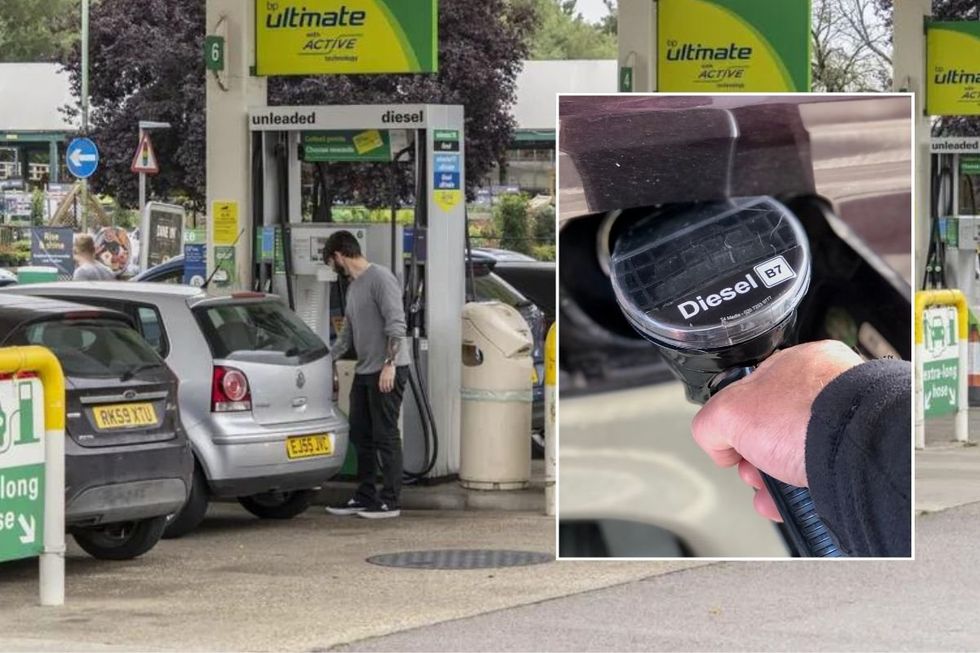
Experts have suggested that diesel fuel could be axed from filling stations in the coming years
|PA
Two filling stations in Hammersmith and Fulham have already been converted into electric vehicle charging hubs, with plans across the country in motion for the same conversion.
The Petrol Retailers Association (PRA) noted in its 2025 Market Review that petrol stations were being forced to offer alternative services to remain competitive.
It said this was necessary for filling stations to continue operating, while traditional fuel demand falls, as more drivers get behind the wheel of an electric vehicle.
A survey from the PRA found that 98 per cent of retailers still see fuel as a "core source" of revenue, although only 57 per cent believe this will be true in 10 years.
LATEST DEVELOPMENTS
While the Government is moving forward with plans to ban the sale of new vehicles with an internal combustion engine from 2030, it will not ban fuel completely.
Drivers will still be able to buy and sell second-hand petrol and diesel vehicles from 2030 onwards, with petrol stations continuing to sell fuel for millions of motorists.
They may, however, install other services to ensure they remain profitable, such as a car wash or even electric vehicle charging spaces.
Despite this, the PRA reported that just 20 per cent of retailers plan on wide-scale charger installations at present.
This will likely change in the coming years as drivers continue to opt for electric vehicles, with the market share of new diesel cars making up just 5.1 per cent in 2025.
Figures from the Society of Motor Manufacturers and Traders (SMMT) revealed that just over 100,000 new diesel cars were registered over the last 12 months.
In comparison, more than 473,000 battery electric vehicles were sold, while petrol remains the most dominant, with nearly one million vehicles sold.
Ben Nelmes, CEO of New AutoMotive, said: "Ending the use of diesel is essential to clean up Britain's choking cities. The UK is now rolling out electric cars at a rapid pace, and this is great news for everyone that enjoys clean air, quieter streets and really cheap running costs."