









Patients who have achieved weight loss through injectable medications such as Wegovy and Mounjaro may be able to preserve their results by transitioning to a daily tablet, according to new research published in Nature Medicine.
The study suggests that orforglipron, manufactured by Eli Lilly, could offer an "effective approach" for individuals seeking to maintain their slimmer figures without remaining on injections indefinitely.
Like its injectable counterparts, orforglipron belongs to the GLP-1 agonist class of drugs, which function by reducing appetite, slowing digestion and lowering blood sugar levels.
The medication received approval from the US Food and Drug Administration last month, though it remains unlicensed in Britain.
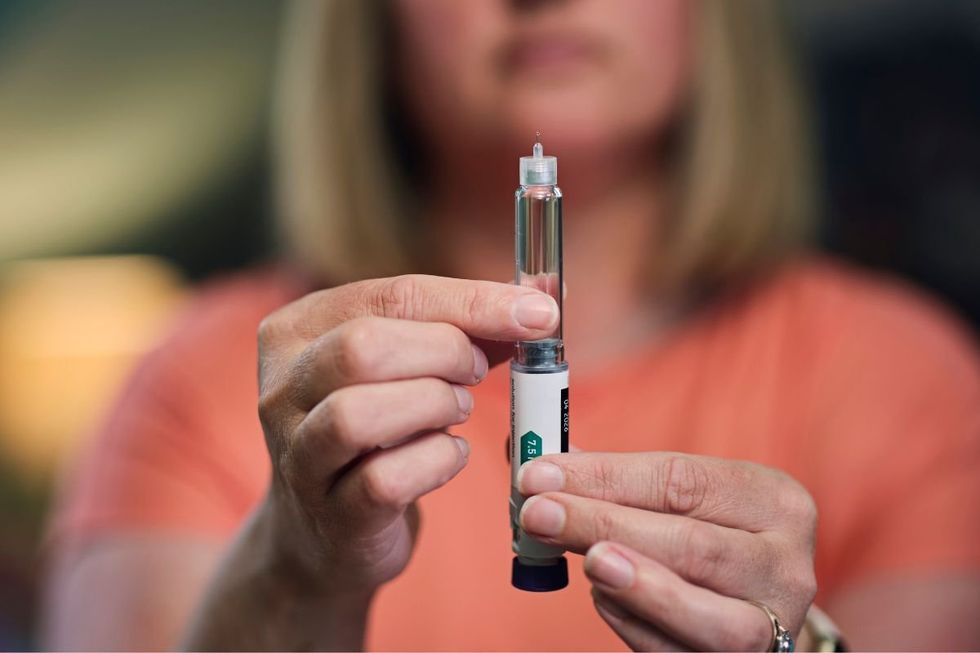
Many people don't want to remain on injectable therapy indefinitely
|GETTY
The trial enrolled 376 participants across the United States who had previously undergone treatment with either tirzepatide or semaglutide for 72 weeks.
These individuals were then randomly assigned to receive either orforglipron or a placebo daily for twelve months.
The results proved striking for those who had been taking tirzepatide, with orforglipron users retaining 74.7 per cent of their weight reduction compared to just 49.2 per cent among those given the placebo.
Former semaglutide patients fared even better, with 79.3 per cent maintaining their weight loss versus 37.6 per cent in the placebo group.
Earlier research has demonstrated that individuals using weight loss injections typically regain weight after stopping treatment.
Dr Marie Spreckley, research programme manager at the University of Cambridge, praised the practical relevance of the findings.
LATEST DEVELOPMENTS:
"One of the most valuable aspects of this study is that it reflects a highly realistic clinical scenario," she said.
"Many people do not want to remain on injectable therapy indefinitely due to treatment burden, convenience, travel, storage requirements, cost, or personal preference."
Dr Spreckley noted that the option to switch to an oral treatment whilst keeping much of the weight off "could therefore represent an important additional option within longer-term obesity care pathways".
Dr Simon Cork, senior lecturer in physiology at Anglia Ruskin University, emphasised the financial considerations surrounding these treatments.
"This limits their long-term applicability both for private purchasers and the NHS," he observed, noting that injectable medications, whilst more effective for weight loss, carry substantial costs.
Weight loss pills are considerably less expensive to produce than vaccines
|GETTY
He explained that oral alternatives are considerably less expensive to produce, even if they do not achieve quite the same results as injections.
Dr Cork acknowledged that further investigation involving larger patient cohorts would be necessary, but suggested the research indicates "a potential future for how patients with obesity are treated, and how the success of weight loss can be maintained".
Our Standards: The GB News Editorial Charter