









The pursuit of living well for longer is driving studies around the globe, yielding growing evidence that the habits of daily life can shape how we age.
Merely attending exhibitions on a regular basis could have a positive effect on gene expressions linked to ageing, according to a new study.
Researchers from University College London (UCL) discovered that the benefits of consuming art are more pronounced in people aged over 40.
“Those who engaged in arts and cultural activities more frequently, and who engaged in a wider diversity of these activities, appeared to have a slower pace of ageing and a younger biological age, as suggested by changes to DNA,” they said.
These effects held regardless of a person's body mass index, smoking levels, education or income.
Published in the journal Innovation in Aging, the research looked at survey and blood test results from 3,556 adults taken from the UK Household Longitudinal Study, which launched in 2009.
All respondents were asked how often they partake in activities like singing, dancing, painting, photography, crafting, attending art exhibitions and events, visiting heritage sites, historic parks, history buildings, monuments, other cultural activities, including going to museums, libraries, or archives.
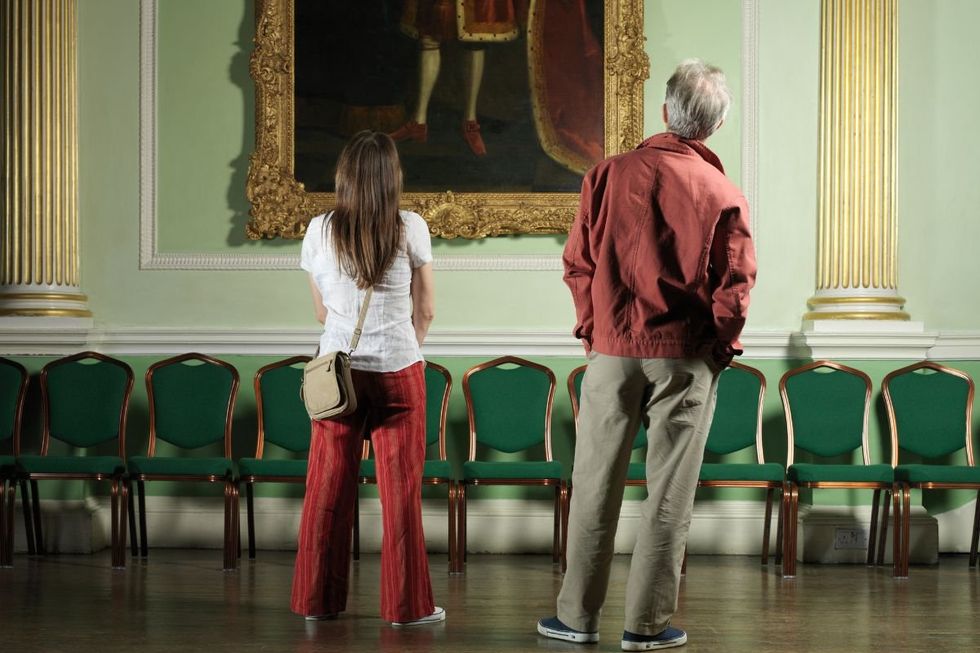
The findings highlight how important it is that everyone has access to affordable culture
|GETTY
The team assessed how each of these habits affected a person’s biological age using epigenetic clocks, which calculate the ageing of blood and other tissues by tracking methylation.
Because the epigenetic clock changes as the body ages, scientists are able to determine whether a person's biological age is ahead of - or behind - their chronological age.
Results showed that those who engaged with the arts at least three times a year aged two per cent more slowly, while those who did so monthly aged three per cent more slowly, and those who did so weekly aged four per cent more slowly.
LATEST DEVELOPMENTS:
The effect on ageing is so profound that researchers compared it to the difference giving up smoking has on the body.
"People who engaged in the arts and cultural activities at least weekly were a year younger on average compared to those who rarely engaged," the scientists wrote.
Professor Daisy Fancourt, the study’s lead author from UCL’s Institute of Epidemiology and Health Care, said: “These results demonstrate the health impact of the arts at a biological level.
“They provide evidence for arts and cultural engagement to be recognised as a health-promoting behaviour in a similar way to exercise.
“Our study also suggests that engaging in a variety of arts activities may be helpful.
“This may be because each activity has different ‘ingredients’ that help health, such as physical, cognitive, mental, or social stimulation.”
Compared to relaxing, for example, listening to music could upregulate the genes involved in the release of dopamine, the function of the brain's synapses and the creation of new nerve cells within the organ itself.
Daily habits significantly influence how we age
|GETTY
Hollie Smith-Charles, the director of creative health and change programmes at Arts Council England, said: "Many of us know instinctively that taking part in creative and cultural activities is vital for a happy, flourishing life.
"These impressive new findings are further evidence that arts, museums and libraries help us live well for longer, and demonstrate how vital it is that everyone, everywhere has access to excellent and affordable culture on their doorstep."
Our Standards: The GB News Editorial Charter