










Health officials have announced two probable cases of a life-threatening disease were acquired via ticks found in the UK.
The UK Health Security Agency (UKHSA) confirmed both cases of tick-bourne encephalitis (TBE) - a swelling of the brain - were "locally-acquired" in the UK last year.
The first individual contracted the illness after being bitten by a tick in Dartmoor.
The second case involved someone who had travelled to the Peak District and the Outer Hebrides, though this person could not remember being bitten.
TBE is uncommon but can prove life-threatening in rare instances and requires urgent treatment.
The first ever case of the condition in England was documented in 2019, when an individual was bitten in the New Forest.
Before that point, the illness had been regarded as an imported disease to Britain, according to the new report 'illnesses caused by parasites, viruses and bacteria'.
These latest infections bring the overall number of UK-acquired cases to six, according to the UKHSA.
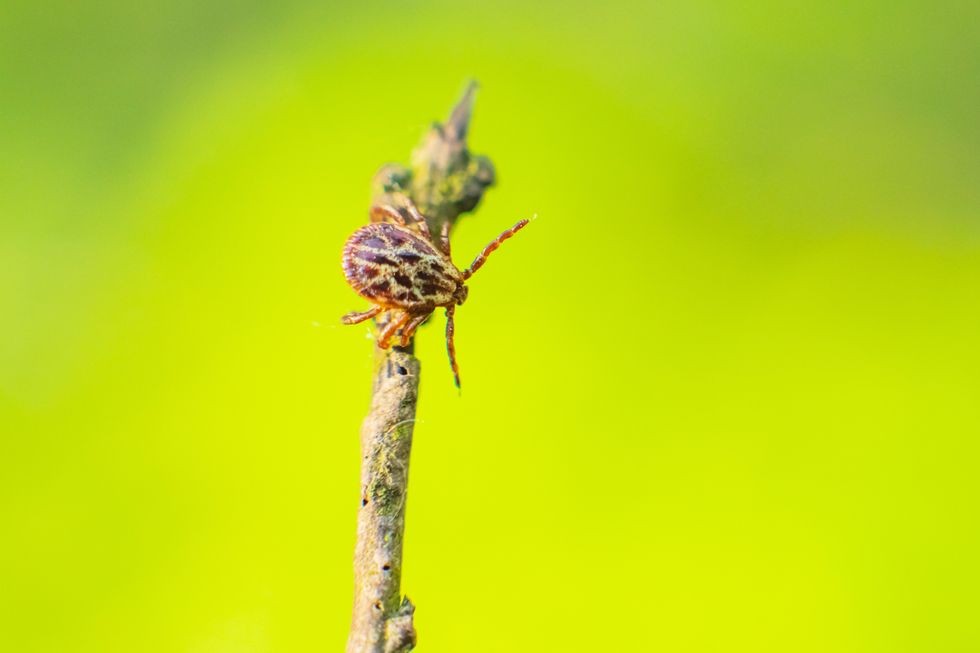
TBE is uncommon but can prove life-threatening in rare instances and requires urgent treatment
|GETTY
Surveillance data suggests the virus continues to be restricted to several specific locations.
These areas include Thetford Forest, the New Forest, Devon, North Yorkshire, Dartmoor and certain regions of Scotland.
Monitoring shows the virus has not spread widely beyond these zones.
The condition was transmitted through infected tick bites in these woodland and moorland environments.
Most people infected with the virus experience either minimal symptoms or none at all.
However, in uncommon circumstances, the pathogen can invade the central nervous system, potentially causing prolonged neurological complications and, in exceptional cases, proving fatal.
A vaccine exists and is advised for those employed in forestry, woodcutting, agriculture and military roles in areas where the virus is present.
LATEST DEVELOPMENTS:
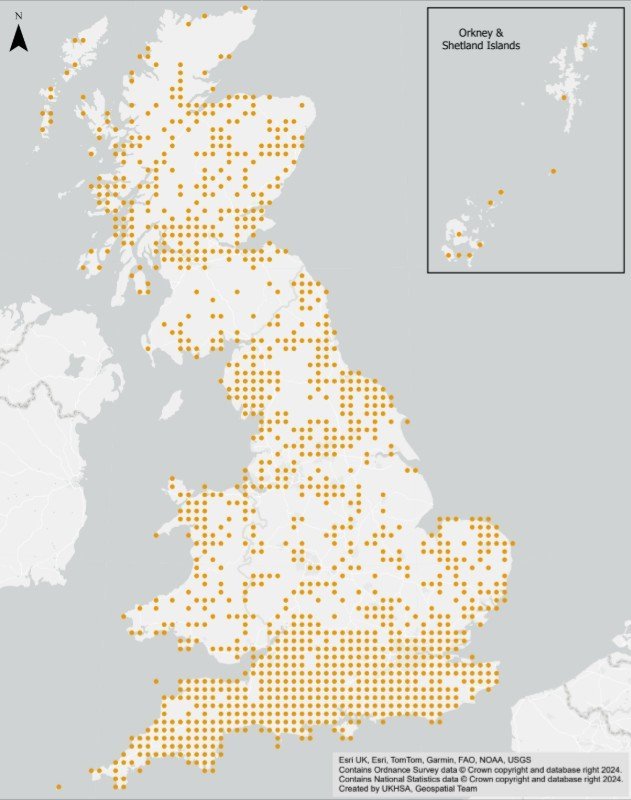
UKHSA map showing where ticks (Ixodes ricinus) are reported across England, Scotland and Wales
|UKHSA
England recorded 1,168 cases of Lyme disease in the previous year, representing the most prevalent domestically acquired vector-borne illness from ticks, according to the report made in collaboration with the Department for Environment, Food and Rural Affairs, and the Animal and Plant Health Agency.
This figure increased from 959 in 2024 but remained comparable to the 1,151 cases reported in 2023.
The disease typically manifests with a distinctive circular rash, whilst some patients develop flu-like symptoms including fever, headaches, joint or muscle aches and exhaustion.
The report additionally documented mosquito-borne illnesses amongst people returning from overseas travel, including 1,629 malaria cases, 336 dengue infections, 159 chikungunya cases and seven instances of Zika virus.
Whilst no domestically transmitted mosquito-borne infections were identified in England, authorities emphasised the escalating threat.
Officials have revised contingency strategies for invasive aedes mosquitoes and West Nile virus.
The aedes mosquito, which carries dengue and chikungunya, has become established across 16 European nations.
Officials believe temperatures in south-east England are already high enough for the insects to survive.
"The overall risk to the public from vector-borne diseases in England remains low, but the findings of this report demonstrate how that risk picture is changing due to factors including climate change, urbanisation and the globalisation of trade and travel," said Professor Lea Berrang Ford, from the UKHSA.
"We are now seeing cases of mosquito-borne infections regularly reported across Europe, while we continue to detect incursions of invasive mosquitoes at points of entry in the UK, and it is therefore vital to maintain robust surveillance to protect the biosecurity."
Dr Arran Folly, from the APHA, added: "Mosquitoes and ticks are more than just seasonal nuisances, they can act as early warning signals for emerging disease threats."