










The UK Health Security Agency has published its inaugural Health Security Risk Assessment, warning that respiratory infections represent the most significant danger to the nation's health security over the coming half-decade.
According to the landmark report, the probability of a pandemic caused by influenza or a novel coronavirus exceeds 25 per cent within this timeframe.
This assessment marks the first occasion on which UKHSA has systematically evaluated and ranked the full spectrum of health security threats under its purview.
The document is intended to bolster national resilience planning against potential health emergencies, drawing on lessons from recent crises, including the COVID-19 pandemic.
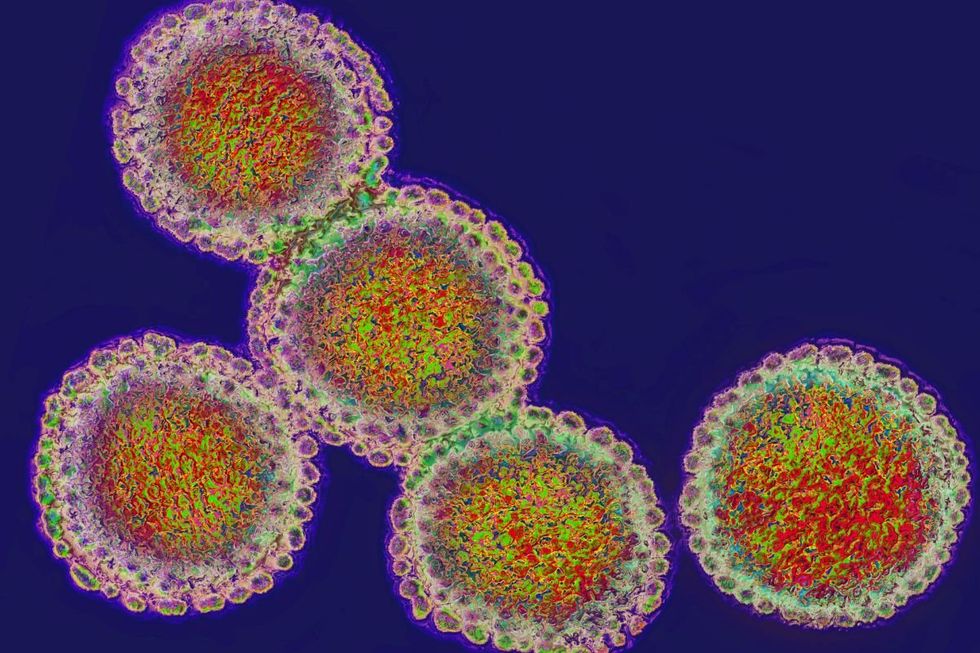
A new influenza strain may sweep through Britain over two years
|GETTY
The report outlines several alarming scenarios that planners must consider, though officials stress these represent the worst plausible outcomes rather than predictions.
One such scenario envisions a new influenza strain sweeping through Britain over two years, infecting more than half the population with symptoms, while four per cent would require hospitalisation.
Warmer European summers could enable the Aedes albopictus mosquito to establish itself in London and southern coastal areas, potentially bringing locally transmitted dengue fever to British shores.
Perhaps most concerning for public health officials, a continued decline in MMRV vaccination uptake could trigger approximately 160,000 measles cases annually, severely straining NHS resources.
The assessment identifies antimicrobial resistance as a crucial factor that could significantly influence how various health threats affect national security in the years ahead.
Environmental dangers, particularly extreme heat and severe cold, pose substantial risks to both public health and economic stability.
LATEST DEVELOPMENTS
Seasonal illnesses present their own challenges, with influenza, RSV, and norovirus combining to place considerable pressure on healthcare capacity and coordination across the health system.
Vector-borne diseases such as Zika, West Nile virus, and tick-borne encephalitis currently carry lower probability ratings, yet climate conditions increasingly favour their transmission within Britain over the longer term.
The report emphasises that historical pandemics, from the 1918-1920 influenza outbreak to COVID-19, exposed significant weaknesses in public health infrastructure and revealed how existing health inequalities can magnify the impact of such crises.
Professor Steven Riley, UKHSA chief data officer, noted that Britain faces "a set of diverse and complex health security threats, whose timing and magnitude are difficult to predict".

Health chiefs have warned that the nation faces a set of diverse and complex health security threats
|GETTY
Recent incidents involving mpox clade Ib, botulism, meningococcal B, and hantavirus demonstrated how swiftly health concerns can escalate, he added.
"COVID-19 was a reminder of the importance of preparedness and resilience during a health crisis," Professor Riley stated, underscoring the necessity for effective strategic planning.
Our Standards: The GB News Editorial Charter