









The National Health Service's puberty blocker trial for children has been suspended after Britain’s medicines regulator raised fresh safety concerns.
The preliminary work to establish the Government-backed PATHWAYS trial has been paused following new advice from the Medicines and Healthcare products Regulatory Agency (MHRA).
It has written to King's College London, which is sponsoring the trial, outlining specific issues that must be addressed before the study can proceed.
Recruitment of children, including those as young as 10,will not commence unless the concerns have been resolved. The move represents a major intervention in one of the most controversial medical studies in recent years.
TRENDING
Stories
Videos
Your Say
A spokesman for the Department of Health and Social Care said ministers had “always been clear about the red lines regarding this trial ensuring the safety and wellbeing of the children and young people involved and always being led by the clinical evidence".
They confirmed the MHRA had raised “new concerns — directly related to the wellbeing of children and young people — and scientific dialogue will now follow with the trial sponsor”.
The department added: “As the evidence is now being interrogated by clinicians, preparations for the trial have been paused while the MHRA and clinical leaders work through these concerns.
“This trial will only be allowed to go ahead if the expert scientific and clinical evidence and advice conclude it is both safe and necessary.
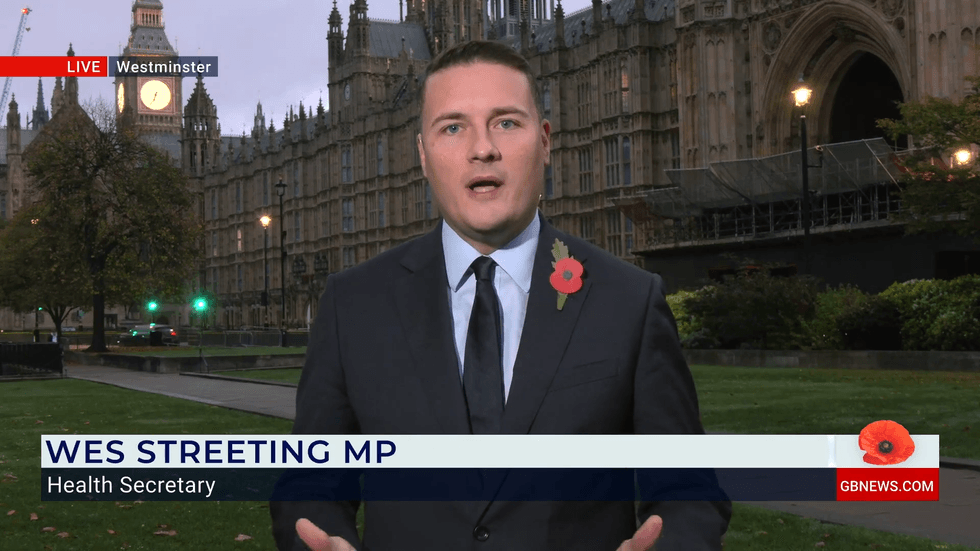
Health Secretary Wes Streeting confirmed an indefinite ban on the routine prescription of puberty blockers for gender incongruence
| GB NEWS“The safety and wellbeing of children and young people have always been the driving consideration in every decision we have made regarding this trial and always will be.”
Talks between the MHRA and KCL are due to begin next week.
The PATHWAYS trial was designed to study the effects of puberty-suppressing drugs in children and young people who question their gender — known as gender incongruence — following the landmark Cass Review.
The Cass Review — commissioned under the previous government and accepted by the current one — found the evidence base for puberty blockers in gender medicine was weak and recommended a ban outside of formal research settings, alongside properly designed clinical trials.
LATEST DEVELOPMENTS

The National Health Service's puberty blocker trial for children has been suspended after the medicines regulator raised concerns
| PAHealth Secretary Wes Streeting later confirmed an indefinite ban on the routine prescription of puberty blockers for gender incongruence, restricting their use to research.
PATHWAYS was intended to provide the scientific evidence that ministers say is currently lacking.
However, the trial has faced sustained opposition from some clinicians and campaigners. More than 380 health professionals signed a letter raising concerns about its scientific and ethical foundations. A petition calling for the trial to be halted secured enough signatures to qualify for a parliamentary debate.
There is also an ongoing potential judicial review challenge to the trial. The Department confirmed it has shared the MHRA’s letter with the claimants and has asked for the legal process to be paused while the regulator’s concerns are examined.
Dr Louise Irvine, co-chair of the Clinical Advisory Network on Sex and Gender (CAN-SG), welcomed the pause but said serious questions remain.
“I am very pleased to hear that if there is going to be an expert scientific review it should be open and transparent,” she said.
“When we asked for scientific review ourselves, we were not given the evidence for the process by which this trial was given approval. If there is to be trust in this review we should see what issues they are discussing.”
She added: “It should not have come to this. We and many others raised concerns early on about the ethical and scientific basis of this trial. We do not feel these were taken seriously enough. The flaws were so obvious I am not surprised they will have to look at it again.”
Dr Irvine said critics had long argued that the trial did not properly weigh risks against uncertain benefits
“In particular there is no balance between the risks and potential benefits of this treatment. The benefits are not known but there are known risks,” she said.
She also stressed puberty blockers are rarely used in isolation.
“Also it is well established that puberty blockers are not a stand alone treatment but part of a process to further irreversible treatment and this trial has to be understood in this context.”
Campaigners have also criticised the patient information sheets provided to families, concerns which were previously highlighted by GB News.
“One of the other big problems was that the patient information sheets - as highlighted by GB News - were not properly explaining the real risks,” Dr Irvine said.
She argued the study was not designed to answer key long-term questions.
“The trial was not set out to fill the evidence gaps on the long-term impacts on brain, bone development and impacts on fertility and psychosocial development.”
The MHRA has not publicly detailed the precise concerns raised in its letter.
Our Standards: The GB News Editorial Charter