










Britons have been warned that their salt intake is equivalent to munching through 22 bags of crisps, according to new research from the British Heart Foundation.
A new study has revealed that the average person in Britain takes in around 8.4g of salt daily, which is 40 per cent more than what the NHS says we should be having.
The health service recommends keeping salt intake to no more than 6g per day – roughly a level teaspoon – and stresses this shouldn't be seen as a target to aim for, but rather a limit not to exceed.
Lucy Kershaw, a nutrition expert working with supplement provider Nature's Best, says the problem is that salt lurks in foods you'd never suspect.
TRENDING
Stories
Videos
Your Say
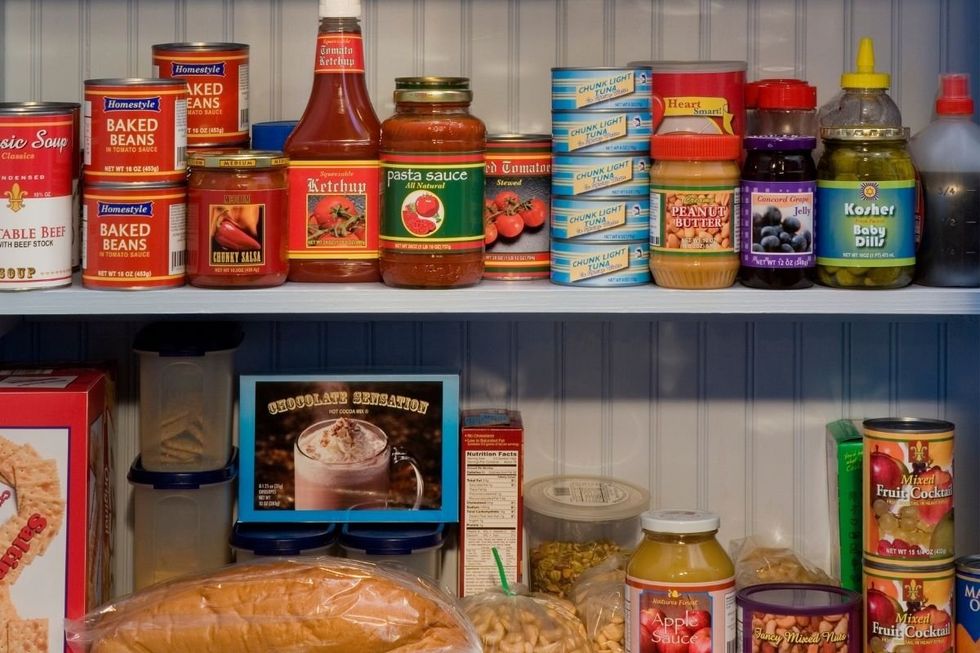
Salt lurks in foods you'd never suspect
|GETTY
"Unfortunately, it's not as simple as just cutting out salt altogether. It's surprisingly easy to consume too much, as it's hidden in a wide range of everyday foods such as bread, breakfast cereals, ready meals and more," she explained.
Bread is actually one of the biggest offenders, despite not tasting salty at all – it's added to improve flavour, control yeast, and strengthen the dough.
Cheese is another major contributor, since salt is essential to the cheesemaking process itself.
Jarred sauces and tinned soups are also packed with sodium to boost taste and extend shelf life, while ultra-processed foods like breakfast bars and biscuits can contain surprisingly high amounts too.
Here's a surprise for anyone jumping on the cottage cheese trend to boost their protein intake this year – it can actually be loaded with sodium, which is added to enhance flavour and help preserve it.
LATEST DEVELOPMENTS
Kershaw warned that consuming too much salt poses serious health risks.
"Excessive salt intake has been strongly linked to high blood pressure (hypertension), which is a major risk factor for heart disease, which is the leading cause of heart attacks in the UK," she said.
While sodium does play an important role in our bodies – helping support kidney function and regulate water levels in the blood – the key is not going overboard.
The expert described the new findings as "extremely concerning" given the potential consequences.
Kershaw offers some straightforward ways to cut back on sodium without sacrificing flavour.
Swapping crisps and salted nuts for plain rice cakes, chopped fruit or veggie sticks is a good starting point, and you could even whip up a low-salt guacamole with avocado, coriander and lime juice.
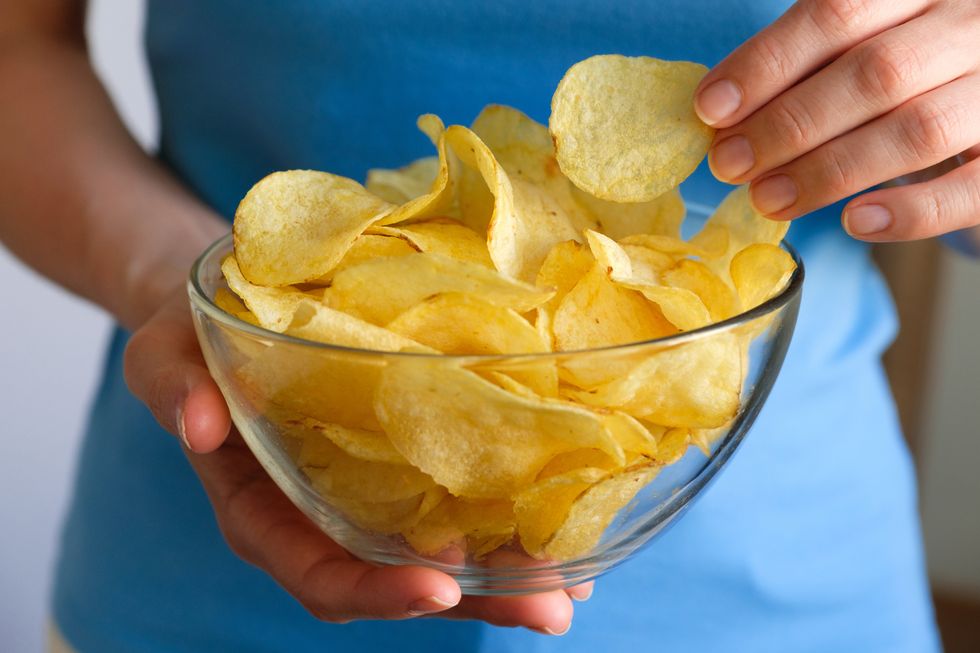
Britons are consuming the salt equivalent of 22 packets of crisps
|GETTY
Making soups and sauces from scratch rather than reaching for jars and tins gives you much better control over what goes in.
Another simple trick is removing the salt shaker from the table entirely and experimenting with herbs and spices instead – you might find you don't miss it at all.
Checking food labels is also brilliant for staying aware of what you're eating, with traffic light systems making it easy to spot high-salt products.
Our Standards: The GB News Editorial Charter