









A straightforward neck scan could help identify men who face a higher chance of heart attacks and strokes, according to new research from University College London.
The study suggests that GPs might want to offer these ultrasound scans to patients aged over 60 to assess their carotid arteries - the major blood vessels running up both sides of your neck, which could provide vital clues about heart health.
Scientists discovered that men whose neck arteries had become rigid were two and a half times more likely to suffer heart failure than those with more elastic vessels.
The scan itself is remarkably simple, using a handheld device similar to those used during pregnancy checks.
TRENDING
Stories
Videos
Your Say
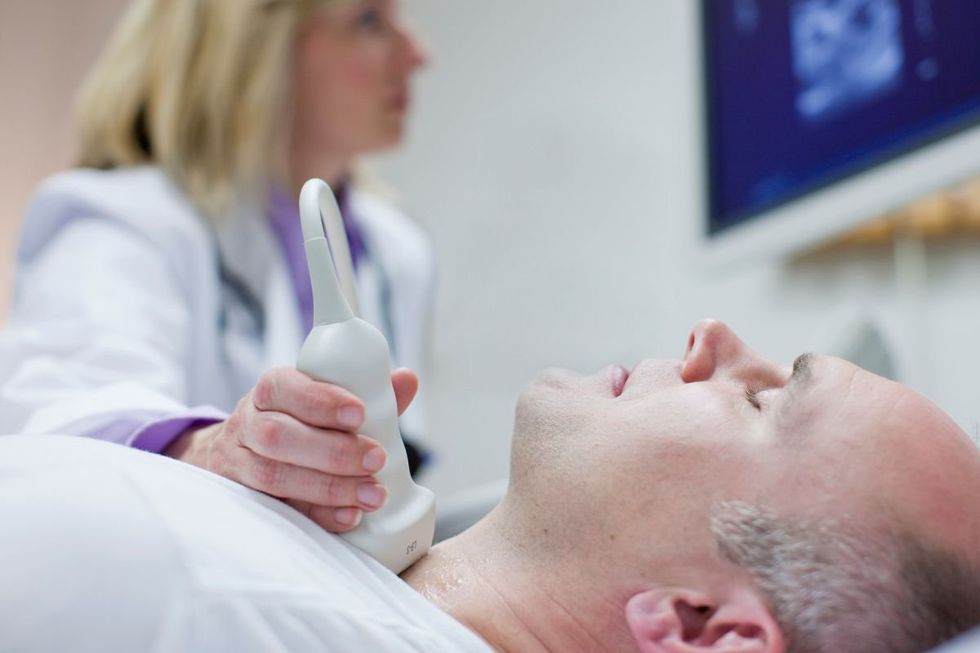
Patients with stiff carotid arteries typically face worse health outcomes
|GETTY
The research team examined 1,631 men between the ages of 71 and 92, tracking their health outcomes over time.
Published in the Journal of the American Heart Association, the findings paint a clear picture of how arterial flexibility matters.
Those with the stiffest carotid arteries faced dramatically worse outcomes, with a quarter of the men with the least flexible vessels being two and a half times more likely to develop heart failure than those whose arteries remained supple.
The study also revealed that each 0.16 millimetre increase in vessel thickness corresponded to roughly a 29 per cent jump in heart attack risk, marking a strong connection between what happens in your neck and what might happen to your heart.
Dr Atinuke Akinmolayan, who headed up the research at UCL and now works as a GP, believes the findings are promising.
LATEST DEVELOPMENTS
"The carotid ultrasound is a safe, cheap and painless investigation, and our findings suggest it may be able to provide an early warning sign for heart failure," she explained.
She acknowledged that further studies are needed, particularly to determine whether the results apply to women, but suggested this could become a routine offering for suitable patients over 60.
Professor Bryan Williams from the British Heart Foundation offered his perspective: "The findings of this study are interesting and show that stiffening of arteries is associated with increased risk of heart failure, most likely due to the heart having to work harder against the resistance caused by these stiffer arteries."
Currently, these neck scans are typically reserved for people who've already had a stroke or show signs they might be at risk of one.
The ultrasound can spot fatty deposits that might break away and travel to the brain, or detect narrowing that could restrict blood flow.
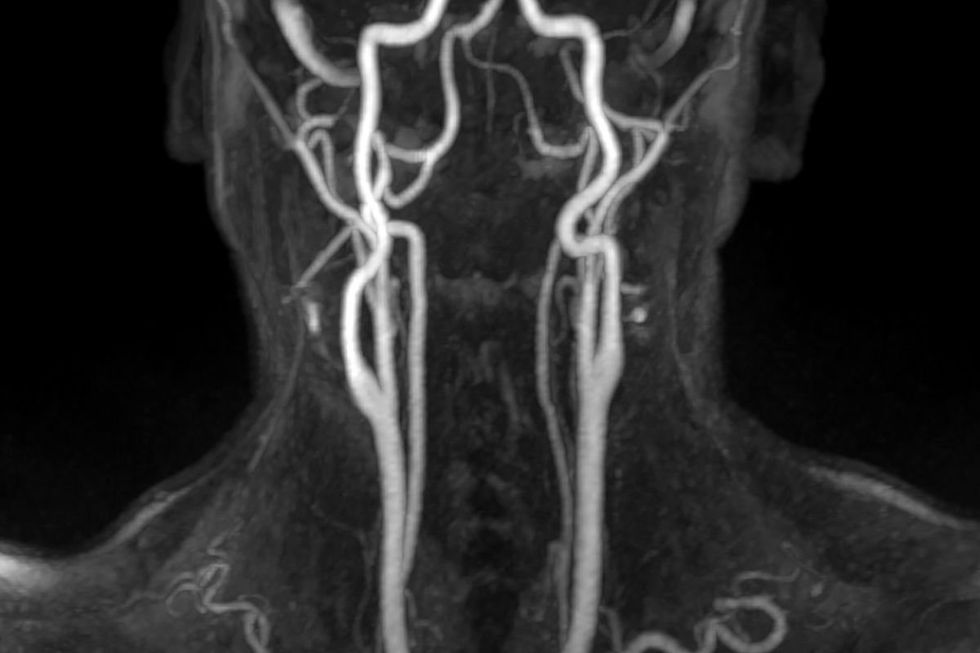
The scan measures how much the carotid arteries stretch with each heartbeat
|GETTY
The scan works by measuring how much the carotid arteries stretch with each heartbeat. When these vessels lose their flexibility, they can't expand properly to accommodate blood flow, which pushes up blood pressure and forces the heart to work harder.
The research received backing from both the National Institute for Health and Care Research and the British Heart Foundation, which notes that approximately 920,000 people across the UK are living with heart failure.
Our Standards: The GB News Editorial Charter