









A straightforward exercise performed whilst seated could offer significant benefits for blood sugar control, according to recent research.
Studies indicate that executing seated calf raises - sometimes referred to as soleus push-ups - for just three minutes at half-hourly intervals can decrease insulin response by approximately 26 per cent.
The findings suggest that this modest movement, which targets a specific muscle in the lower leg, may prove particularly valuable for those who spend extended periods sitting.
The soleus muscle, located in the calf, possesses a remarkable capacity for drawing glucose from the bloodstream, making it uniquely suited to metabolic regulation without requiring one to stand.
TRENDING
Stories
Videos
Your Say
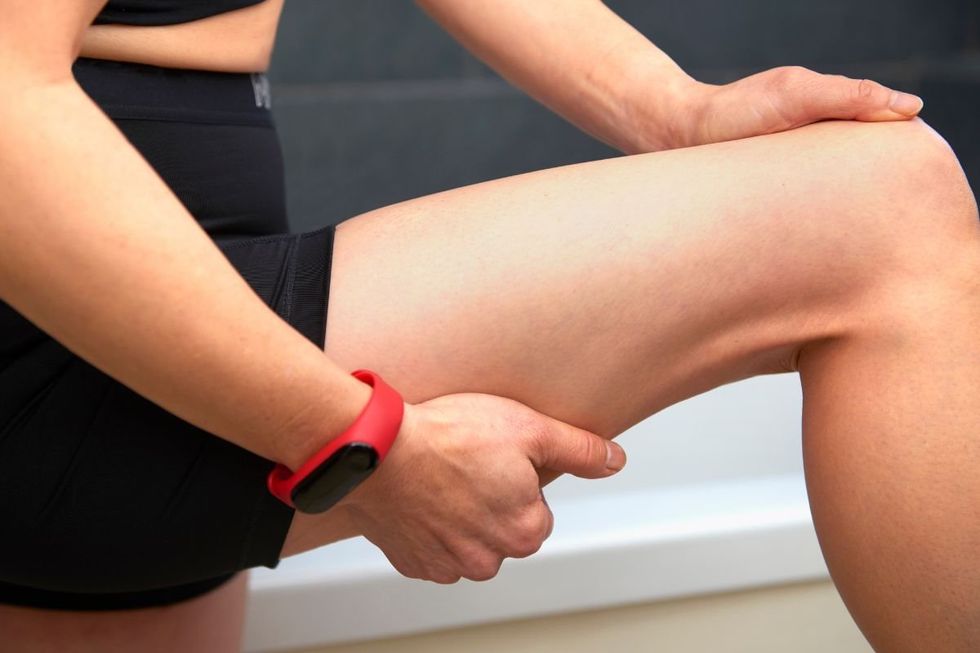
This soleus muscle is highly oxidative and built for endurance
|GETTY
The soleus possesses distinctive characteristics that make it particularly adept at managing glucose levels.
Unlike many other muscles in the body, this calf muscle is highly oxidative and built for endurance, depending less on stored glycogen for energy.
"Mechanistically, the soleus muscle can sustain low-intensity activity for long periods and steadily use glucose, despite how little muscle mass it represents proportionally to the whole body," explained Sara K. Rosenkranz, an associate professor of kinesiology and nutrition sciences at the University of Nevada, Las Vegas.
LATEST DEVELOPMENTS:
Even when working at minimal intensity, the soleus continuously draws on blood glucose, making it remarkably efficient for metabolic purposes.
An investigation from 2022 demonstrated that participants who consumed a glucose drink and then performed soleus push-ups over an extended period saw their glucose spikes diminish by roughly 52 per cent compared to those who remained sedentary.
The reduction became apparent within just 30 minutes, with glucose concentrations showing an average difference of 19 mg/dL.
Ashley Katzenback, a doctor of physical therapy and owner of Cape Concierge Physical Therapy, described the calf as the "heart of the lower extremities" owing to its role in pumping blood from the legs back towards the heart.
When activated, this muscle steadily extracts glucose from circulation, thereby tempering post-meal blood sugar elevations.
But while seated calf raises offer a practical solution for those confined to a chair, post-meal walking remains the more thoroughly researched approach.
Evidence suggests that 10 to 15 minutes of walking, roughly a quarter of an hour after eating, can reduce peak glucose by between 10 and 30 mg/dL.
Seated calf raises offer a practical solution for blood sugar control
|GETTY
"Seated calf raises can help reduce post-meal glucose, especially if you're stuck sitting," noted Rosenkranz.
"However, any post-meal movement is beneficial, and walking or using larger muscle groups is likely more efficient overall as well as more effective for improving other health outcomes."
Some research indicates that even two minutes of walking yields meaningful benefits.
Our Standards: The GB News Editorial Charter