










Eating full-fat cheese and cream may offer hidden benefits for brain health, with new findings suggesting it could lower the risk of dementia.
The findings, published in the journal Neurology, appear to hold regardless of a person's lifestyle or overall diet quality, challenging decades of dietary advice.
"For decades, the debate over high-fat vs low-fat diets has shaped health advice, sometimes even categorising cheese as an unhealthy food to limit," said lead researcher Emily Sonestedt from Lund University.
"Our study found that some high-fat dairy products may actually lower the risk for dementia, challenging some long-held assumptions about fat and brain health."
TRENDING
Stories
Videos
Your Say

'Dairy products may actually lower the risk for dementia'
|GETTY
But before you raid the cheese counter, experts are urging caution about these findings.
The study tracked 27,670 Swedish adults over roughly 25 years, with participants completing detailed dietary assessments between 1991 and 1996. During that time, 3,208 people developed dementia.
Those who ate around 50g of high-fat cheese daily saw their overall risk of dementia drop by 13 per cent compared to those eating less than 15g.
Scientists also discovered that their risk of vascular dementia fell by 29 per cent, while consuming at least 20g of high-fat cream each day was linked to a 16 per cent lower dementia risk.
Interestingly, low-fat versions of cheese, cream, and milk showed absolutely no connection to dementia risk whatsoever.
High butter intake, meanwhile, was associated with increased Alzheimer's risk.
But not everyone's convinced by these findings, though; Professor Naveed Sattar from the University of Glasgow pointed out a crucial flaw in the research.
"I do not believe there is a causal link here, as this is an observational study rather than a randomised controlled trial," he said.
He also noted that cheese and cream enthusiasts in the study tended to be better educated on average.
LATEST DEVELOPMENTS
This raises the possibility that "other 'healthy' characteristics associated with higher education, rather than the cheese or cream itself, may explain the lower dementia rates observed," Sattar explained.
Tara Spires-Jones, who heads the Centre for Discovery Brain Sciences at Edinburgh University, was equally sceptical.
"There is no strong evidence for any individual food protecting people from dementia," she said.
Professor Sattar stressed that proven methods for reducing dementia risk should remain the focus.
"We already know of several well-established and proven factors that reduce dementia risk, such as maintaining healthy blood pressure, managing weight, and preventing heart disease or stroke.
"These interventions should remain the priority, given their strong evidence base, rather than focusing on unproven dietary associations," he said.
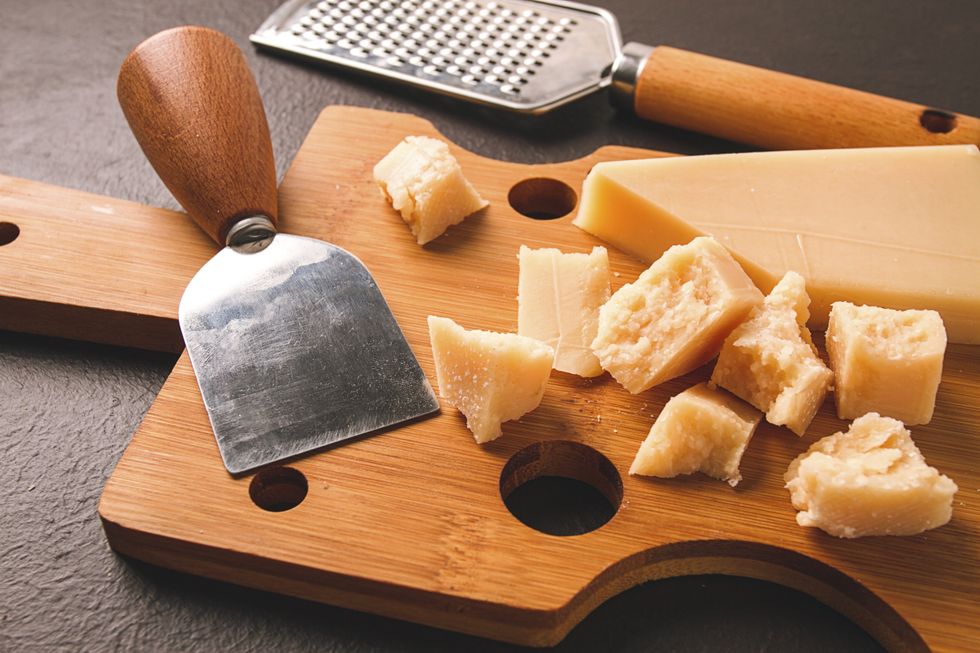
Some scientists say the focus should remain on proven preventative measures
|GETTY
Spires-Jones agreed, noting that healthy eating, exercise, and mentally stimulating activities like education and challenging hobbies can boost the brain's resilience to dementia-causing diseases.
Harvard's Tian-Shin Yeh, writing in an accompanying editorial, made a broader point about nutrition science.
"Ultimately, advancing public health requires that we move beyond simplistic 'good food/bad food' labels and instead embrace dietary patterns that prioritise moderation and strategic substitutions to promote and enhance cognitive health," she wrote.
Our Standards: The GB News Editorial Charter