










Ricky Gervais has responded to critics who accuse him of being too offensive in his stand-up routines.
The comedian, 64, made the comments on the BBC podcast This Cultural Life, where host John Wilson conducts in-depth interviews with leading global artists and creatives about their formative influences and inspirations.
There were many moments in the interview, ahead of Mr Gervais’s Netflix special Mortality, which launched on December 30, where he defended what he described as an anti-woke agenda and made his stance clear on protecting comedy.
At one point, the comedian declared that working-class people remain the sole demographic comedians can ridicule without facing consequences.
TRENDING
Stories
Videos
Your Say

Ricky Gervais in his Mortality Netflix Special
| NETFLIX“People understand most power struggles. They understand why racism, homophobia and misogyny are wrong, but they are very disparaging about the working classes,” Mr Gervais told Mr Wilson.
“It’s the one thing that it seems to be fine to take the mickey out of with no blowback at all.”
The Emmy and five-time Bafta winner, best known for co-creating The Office, has long attracted mixed responses to his stand-up material.
Mr Gervais rejected the criticism that joking about troubling subjects encourages people to view them as acceptable.
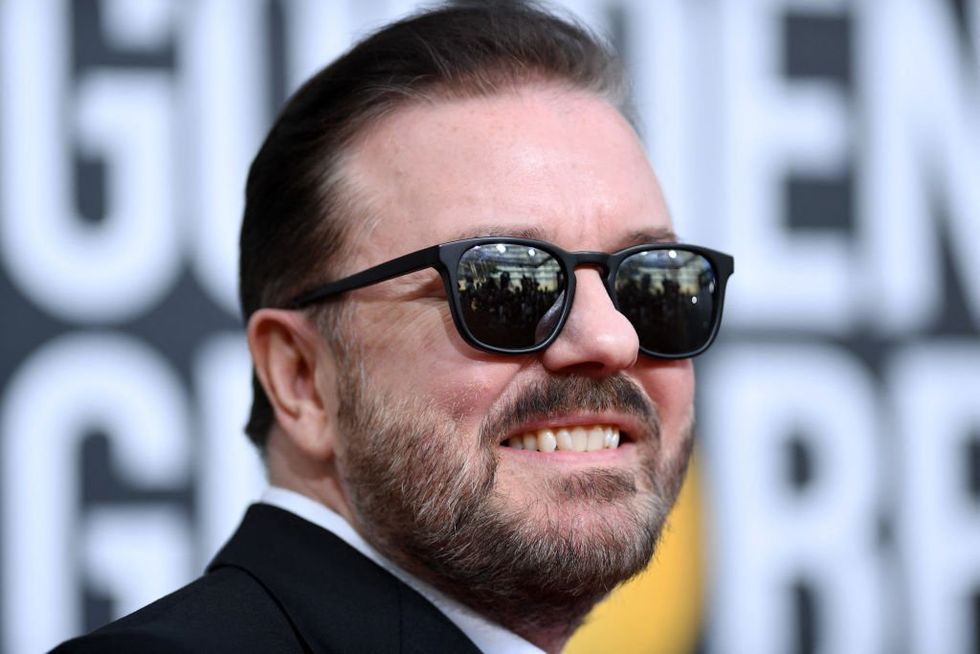 Ricky Gervais said he has no regrets about his comedy | GETTY
“One of the many criticisms that people aim at a comedian when they do a joke they don’t like is, ‘If you joke about a bad subject, that might make people think it’s okay,’ which is a nonsense,” he said. “People joke about dark subjects all the time.”
The comedian also embraced the divisive reception his work receives, arguing that backlash is a sign of substance.
“I started with a backlash,” Mr Gervais explained. “If you weren’t polarising, you’re not doing anything. If you do something so anodyne that nobody gives you one star or five stars, why have you done it? Who are you trying to please?”
Mr Gervais acknowledged that comedy evolves alongside society and said he would now avoid jokes targeting disadvantaged groups. However, he expressed no remorse about his earlier material.
LATEST DEVELOPMENTS
This is what the end of woke sounds like.
— ThisIsntWorkingPodcast (@IsntWorkingPod) January 3, 2026
In a new BBC interview, Ricky Gervais doubles down on his jokes about transgenderism, fat shaming and disability, and then laughs with the confidence of a man who knows his audience gets it - and the BBC interviewer doesn't.
Link ⬇️ pic.twitter.com/cj6QrvfJcl
“You are a product of your time and you do make things for people of your time. I’d put trigger warnings on things, but I wouldn’t go back and change something,” he said.
One moment from the interview that went viral came when Mr Gervais was asked directly about regret.
His response appeared to make Mr Wilson uncomfortable.
“Do I regret anything? No. Would I do things differently now? Probably. You’d have to be specific, but it changes with the time,” Mr Gervais said.
Mr Wilson replied: “You’re talking about disability, transgender issues, fat-shaming, the kinds of things that you have been accused of. It’s almost like you haven’t changed in parallel with the times. You’ve almost doubled down on those issues, it’s become almost more important to you.”
Mr Gervais responded: “That’s probably true, but that’s because I think I’m right.”
This was followed by an awkward silence before Mr Wilson asked: “You’re right in what way? That you have a right to talk about those things?”
“I have a right to talk about those things,” Mr Gervais replied. “And there are jokes I certainly stand by. I can’t look back and say, ‘Oh, sorry about that, I said that when I was only 50.’
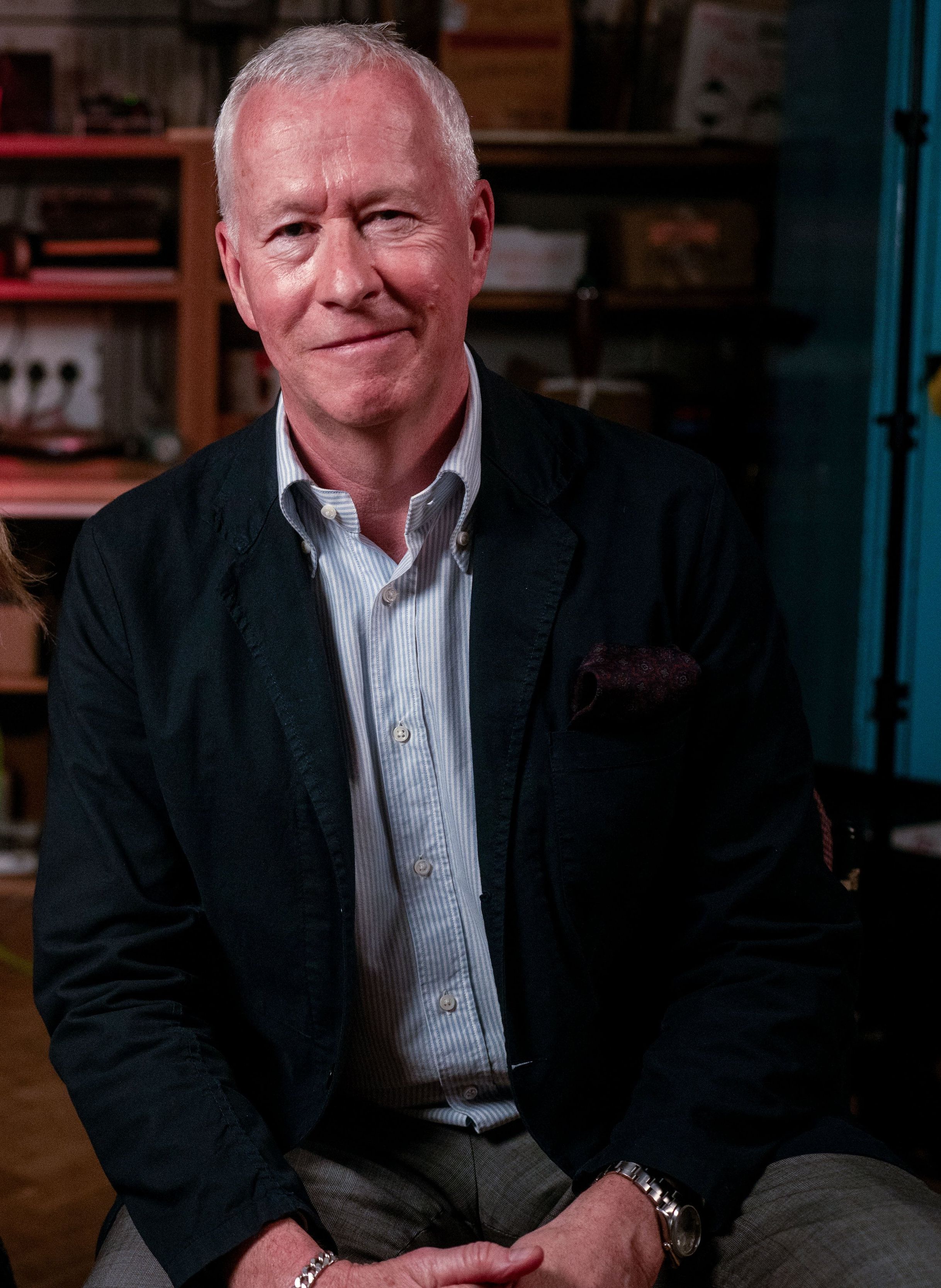
John Wilson is the host of the BBC podcast This Cultural Life
|BBC
“As you get more progressive, milder, more changed, what usually happens is the things you used to do start to look worse. What I try to do is get more offensive, so when I look back I can say, ‘Oh, wasn’t I kind when I was 45?’"
Another pause followed before Mr Wilson said: “I was going to say, you are joking us?”
Later in the interview, Mr Gervais made clear he has no intention of altering his approach, vowing to continue performing “until no-one comes”.
He praised stand-up comedy for offering complete creative autonomy.
“There’s not 60 executives worrying about your stuff,” he said. “You can be as brave as you want. Sometimes it’s about bravery. Everybody’s got the right to free speech, but some people don’t want to use it because it’s too dangerous, which is fine.”
Mr Gervais likened his instinct to challenge boundaries to temptation.
“[When a button says] ‘Do not press’, you’ve got to press the button,” he said.
The awkward interview clip went viral after being reposted on X by the @IsntWorkingPod account, with the caption: “This is what the end of woke sounds like. In a new BBC interview, Ricky Gervais doubles down on his jokes about transgenderism, fat shaming and disability, and then laughs with the confidence of a man who knows his audience gets it, and the BBC interviewer doesn’t.”
Supporters of Mr Gervais and fellow public figures weighed in.
Comedian Rosie Kay wrote: “I stay perpetually hopeful but the arts are being appallingly slow on waking up….Bravo to @rickygervais and here’s to long-term sanity returning in 2026!”
Reporter Mr Stephen Knight described the clip as “a masterclass in how to respond to joyless moralising about jokes," and former BBC presenter and investigative journalist Mr Andrew Gold said: “The way the interviewer tries to police @rickygervais is actually pretty scary. Nice one Ricky!”
The post was also liked by Mr Gervais himself.
However, not all viewers agreed.
“I don’t think you understood the interview, because this clip doesn’t show what you suggest it does,” one commenter wrote.
Another added: “Gervais is a one-note hack who has produced some truly awful rubbish in the last 15/20 years, but his comments here aren’t a ‘doubling down’ of anything.”
"I actually think the interviewer does get it. I think he knows how to draw the humour out of his guest," said another.