




Noam Bettan has opened up about the backlash surrounding Israel's participation in Eurovision after securing a place in Saturday's grand final despite disruption during Tuesday evening's semi-final in Vienna.
The 28-year-old singer performed his entry Michelle at the Wiener Stadthalle, where multiple audience members were removed after chanting "stop the genocide" during his performance.
One protester was escorted from the venue after appearing shirtless with "Free Palestine" written across his chest.
Austria's host broadcaster ORF has confirmed Palestinian flags and audience booing will not be banned at this year's contest, although Tuesday's removals related to disruptive behaviour rather than political messaging alone.
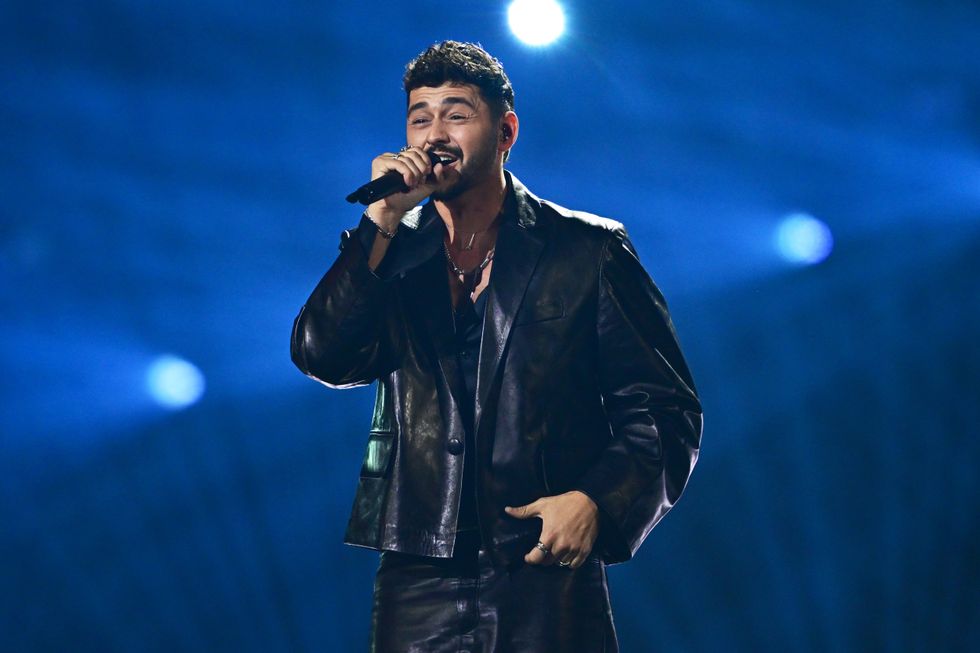
Noam Bettan performed his entry Michelle at the Wiener Stadthalle
|GETTY
Despite the interruptions, Mr Bettan delivered a composed performance and progressed to the grand final, where bookmakers currently expect Israel to finish near the top of the leaderboard.
Speaking to the BBC afterwards, the Israeli performer admitted he experienced "a moment of, like, a wow effect" when he first heard the jeering.
"A little bit of shock," he said.
Mr Bettan revealed he had rehearsed under simulated hostile conditions before travelling to Austria, though he acknowledged nothing could replicate the atmosphere inside the arena.
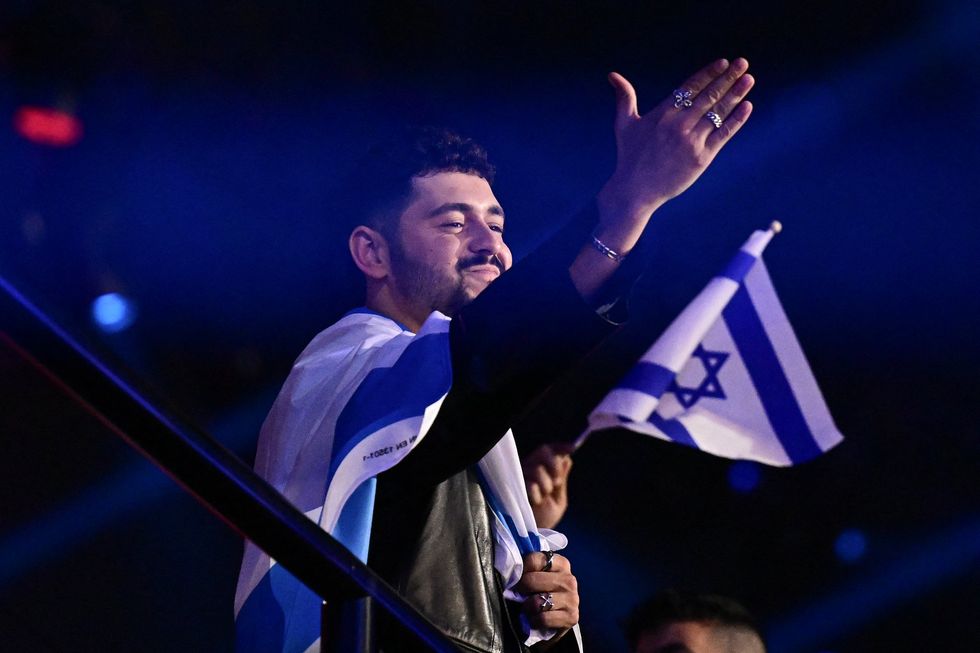
The singer said the experience was 'a bit of a shock'
|GETTY
"You can't bring 13,000 people to a rehearsal room and get them to boo," he explained. "You can't really prepare for this."
The singer said he eventually focused on supporters in the crowd to steady himself during the performance.
"I looked for the flags of the people who love me and want me to do my best, and that really carried me," he said.
His trilingual entry, which features French, Hebrew and English lyrics, also provided emotional reassurance during the difficult moment.
LATEST DEVELOPMENTS
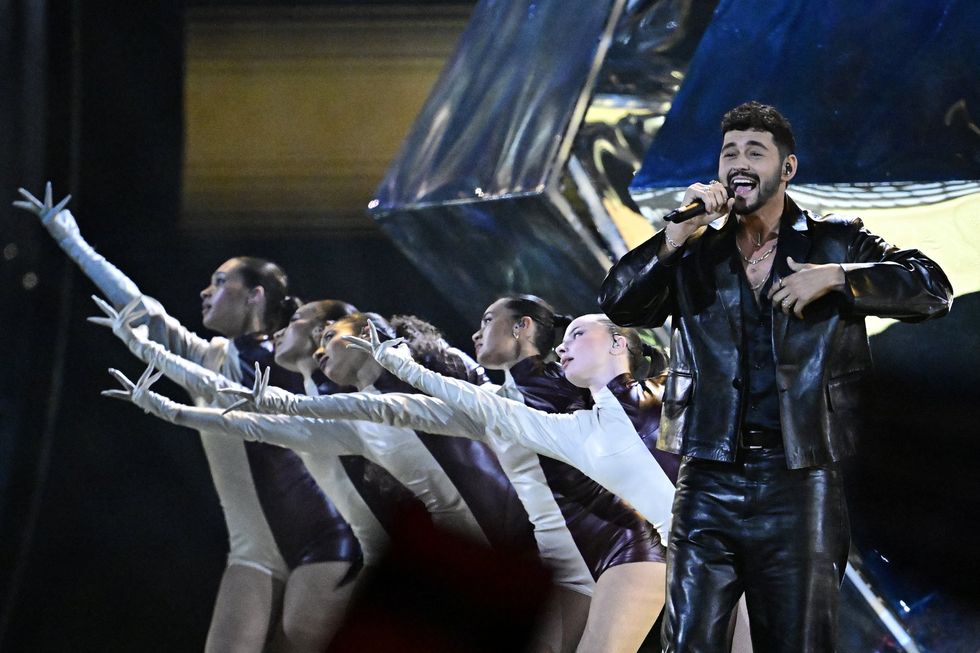
Noam Bettan will perform in the live final on Saturday
|GETTY
The public broadcasters of Spain, the Netherlands, Ireland, Iceland and Slovenia are refusing to participate in this year's competition because of Israel's involvement, resulting in Eurovision's smallest line-up since 2003.
Irish broadcaster RTÉ described participation as "unconscionable given the appalling loss of lives in Gaza", while Dutch broadcaster Avrotros said taking part was "incompatible with the public values that are essential to us".
Human rights organisation Amnesty International accused the European Broadcasting Union of having "betrayed humanity" by allowing Israel to compete.
Israel's public broadcaster Kan described the withdrawals as a "cultural boycott" that "harms freedom of creation and freedom of expression".
Mr Bettan said he hoped absent broadcasters would eventually return to the competition.
"It's bad for them," he said. "They're losing the opportunity to be in this amazing experience."
The singer also became embroiled in a separate controversy after encouraging fans on social media to use all ten of their available votes for Israel in Saturday's final.
Eurovision organisers reportedly warned the post was "not in the spirit" of the contest and requested its removal, with Israeli broadcaster Kan also receiving a formal warning.

Noam Bettan said he focused on supporters in the crowd to steady himself during the performance
|GETTY
The dispute followed controversy surrounding last year's Israeli contestant, Yuval Raphael, after reports emerged of an Israeli Government-backed campaign encouraging viewers to vote for the entry.
The EBU later said it found no evidence of voting irregularities.
Mr Bettan told the BBC he had not been aware of Eurovision guidance discouraging direct vote campaigning and said he deleted the post once informed.
Eurovision director Martin Green said organisers remained "a long way" from considering disqualification and preferred resolving issues "amicably, without reaching for sanctions".
Our Standards: The GB News Editorial Charter