

ThreatLocker just announced a one-stop shop to block 'one of the most common causes of data breaches'
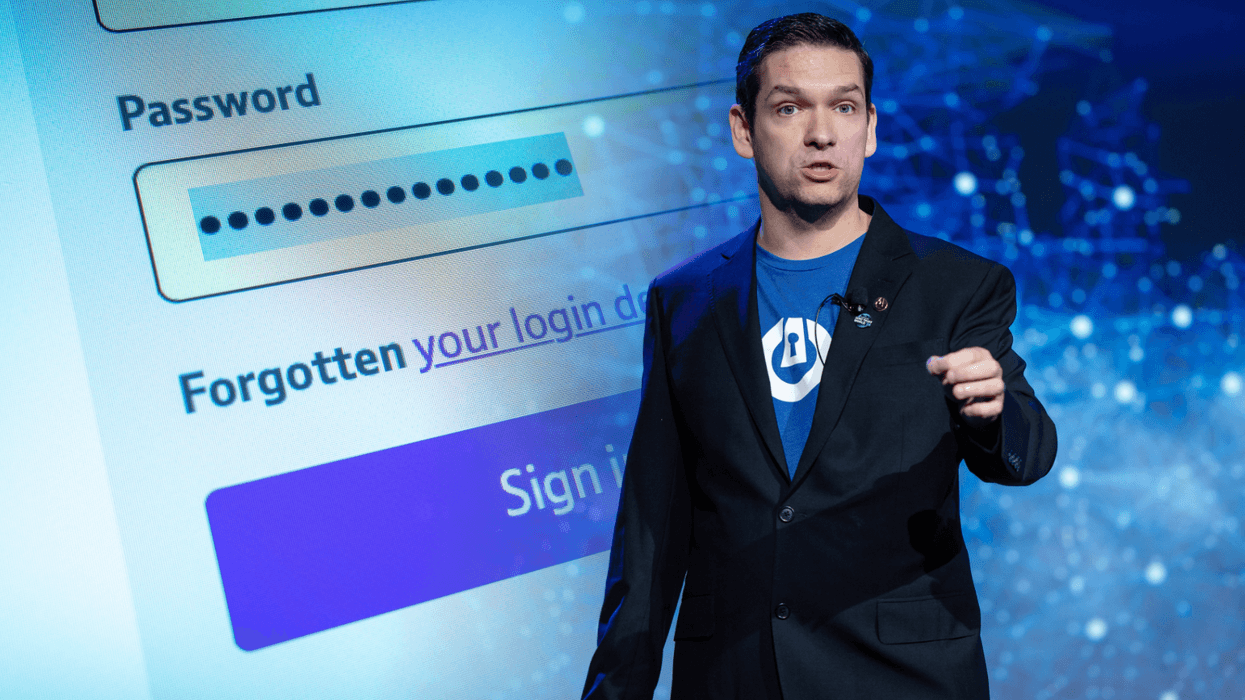
Danny Jenkins, who started his career writing malware during his teenage years in the UK, now serves as chief executive of ThreatLocker — a security firm that over 70,000 organisations rely upon to stay safe
|THREATLOCKER PRESS OFFICE | GETTY IMAGES | GB NEWS



British exec. says the latest innovation will 'drastically reduce the impact of phishing attacks'
Don't Miss


Most Read

Latest
Global security firm ThreatLocker just announced a "transformative" upgrade designed to stop one of the most common causes of data breaches.
You might think enabling multi-factor authentication — the extra layer of protection provided by a one-time code sent via text message or email on-top of your username and password — will block criminals from breaking into your account, but it's far from a silver bullet.
Millions are routinely tricked into entering their data into phishing websites, handing attackers the keys to log into employee accounts and access company data or internal systems. ThreatLocker says credential theft is "one of the most common causes of data breaches".
Speaking on-stage at the annual Zero Trust World conference, ThreatLocker CEO Danny Jenkins revealed that five of his own employees were tricked by an elaborate phishing scheme he masterminded. The British chief executive compared security software to an elaborate vault, with credential theft akin to leaving the door open.
And so, Danny Jenkins decided to build a solution.
With the latest update, ThreatLocker acts as a secure broker any time you attempt to log in. To successfully login, you'll need to enter a valid username-password combination into an approved device – and connect through a secure, ThreatLocker-managed broker.
This additional step means if you've had your password or phone number compromised, there's still no way for hackers to break into your account.ThreatLocker can be used to secure platforms like Salesforce, Microsoft 365, Asana, Google Workspace, and GitHub, to name just a few.
Even if someone you know is successfully phished, the only way for attackers to access resources is to have the victim's trusted device in their hands.
LATEST DEVELOPMENTS
“Our transformative solution gives organisations confidence that their systems are secure even if a credential is stolen,” said ThreatLocker CEO and Co-Founder Danny Jenkins. “Access now requires three things: valid credentials, an approved device, and connection through a secure, ThreatLocker-managed broker. If one step is missing, access is denied, drastically reducing the impact of phishing attacks.”
A former hacker himself, Danny Jenkins co-founded security firm Threatlocker back in 2017 to evangelise his deceptively simple approach to cybersecurity: zero trust. While it sounds deceptively simple, this approach is designed to stop cyberattacks before they happen.
Rather than installing antivirus and other remedial solutions – and exposing your device to the worst-of-the-worst, the deny-by-default approach to cybersecurity means cutting off anything that you don't need and could potentially be used as an attack vector by hackers.
Danny Jenkins always starts from the assumption that you do not need to take the risk and see if the benefits of the software or website you're considering can convince you otherwise. Over 70,000 organizations worldwide now rely on ThreatLocker's Zero Trust Platform to prevent breaches from both known and unknown threats by allowing only explicitly trusted software and activity across their business.
“Zero Trust network and cloud access completes the vision of a unified Zero Trust Platform. ThreatLocker secures an organization's entire digital footprint with a single tool, easing the burden on security teams and significantly reducing alert fatigue,” ThreatLocker COO and Co-Founder Sami Jenkins said.