










A growing row has erupted across British sport after campaigners accused a number of governing bodies of failing to protect women’s competition categories following the Supreme Court’s landmark ruling on biological sex.
The dispute centres on whether transgender women should continue to compete in female sporting events, with critics warning that some organisations may now be operating policies that conflict with the law.
Campaign group SEEN in Sport has published a report claiming dozens of sports bodies still allow trans women to compete in women’s categories through what campaigners describe as “self-identification” policies or relaxed eligibility rules.
The report names organisations including Parkrun, Swim England, England Squash and the British Baseball Federation as examples of bodies whose policies are now under scrutiny.
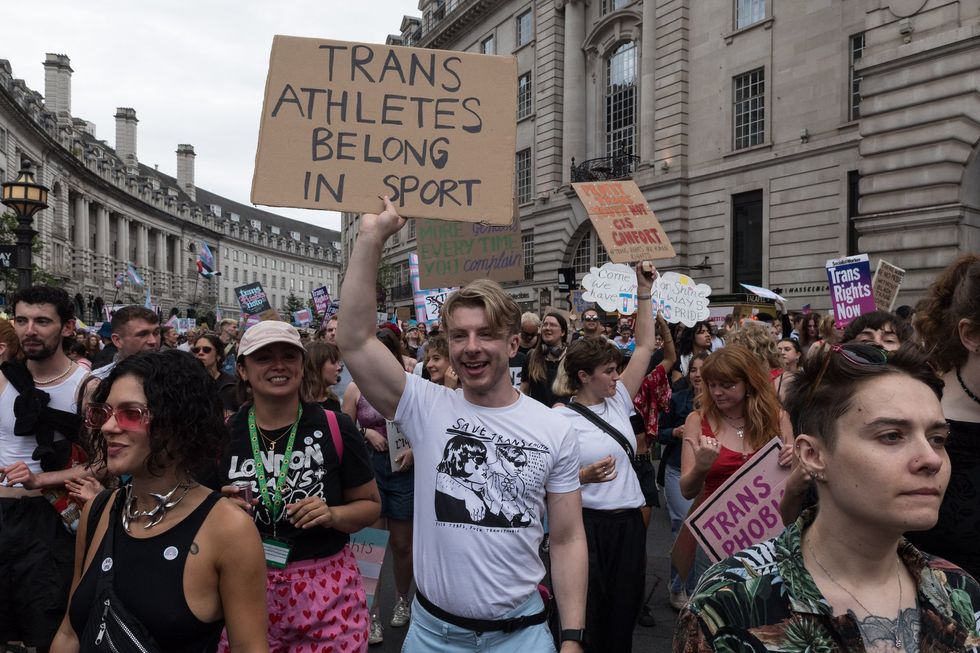
After the Supreme Court ruled that the definition of “sex” under the Equality Act refers to biological sex, the ruling effectively banned transgender athletes from taking part in female-only sports
|GETTY
The controversy comes after the Supreme Court ruled that the definition of “sex” under the Equality Act refers to biological sex.
The judgment has been hailed by women’s rights campaigners as a watershed moment that provides greater legal clarity for female-only spaces and competitions.
LATEST DEVELOPMENTS
Critics of current sporting policies argue that governing bodies have been too slow to respond to the legal and scientific debate surrounding fairness in women’s sport.
Over the past three years, a number of major sporting organisations have already moved to tighten their rules.
British Cycling introduced a protected female category alongside an “open” category, while UK Athletics barred transgender women who have gone through male puberty from competing in female events.

Parkrun saw a transgender woman finish first in around 60 events - even beating a former British Olympian
| GETTYSupporters of these restrictions argue that biological differences linked to male puberty can create lasting physical advantages in strength, endurance and speed, even after testosterone suppression.
Former athletes and campaigners have repeatedly warned that allowing transgender women into female categories risks undermining fairness and opportunities for women and girls.
However, LGBT campaign groups and trans rights activists insist the issue is being exaggerated and politicised.
They argue that the number of transgender athletes competing at elite level remains extremely small and say inclusive policies can coexist with fair competition.
Some sporting bodies have attempted to strike a compromise by applying different rules for grassroots and elite competition, allowing broader participation at amateur level while imposing tighter restrictions for professional events.
But pressure is now mounting on governing bodies to review their policies in light of the Supreme Court ruling.
Campaigners say organisations could face legal challenges if they continue to prioritise gender identity over biological sex in women’s sport.
The debate has become one of the most divisive cultural issues in Britain, with ministers increasingly backing calls for clearer protections for female-only categories.
As governing bodies come under renewed scrutiny, many are expected to revisit their rules in the coming months — potentially reshaping the future of women’s sport across the UK.