










Eating food from other people's plates has been found to enhance its flavour, a cheeky scientific study has found.
Valentin Skryabin, of the Russian Medical Academy of Continuous Professional Education in Moscow, conducted a study exploring whether breaking moral rules could heighten the pleasure of eating.
His findings, published in Food Quality and Preference, revealed that participants judged identical chips as tasting considerably better when obtained through underhanded means.
Most strikingly, chips taken covertly in "high-risk situations" were rated approximately 40 per cent more enjoyable than those handed directly to volunteers.
The experiment involved 120 volunteers who consumed the same chips across four separate sessions, with only the acquisition method varying between trials.
On some occasions, chips arrived directly on participants' plates, while in other instances, a fellow diner shared a portion with them.
The remaining scenarios required volunteers to secretly swipe chips from another person's serving while that individual was looking away.
These covert takings occurred under two distinct conditions - a relaxed environment with minimal detection risk, and a tenser setting featuring an intimidating stranger nearby.
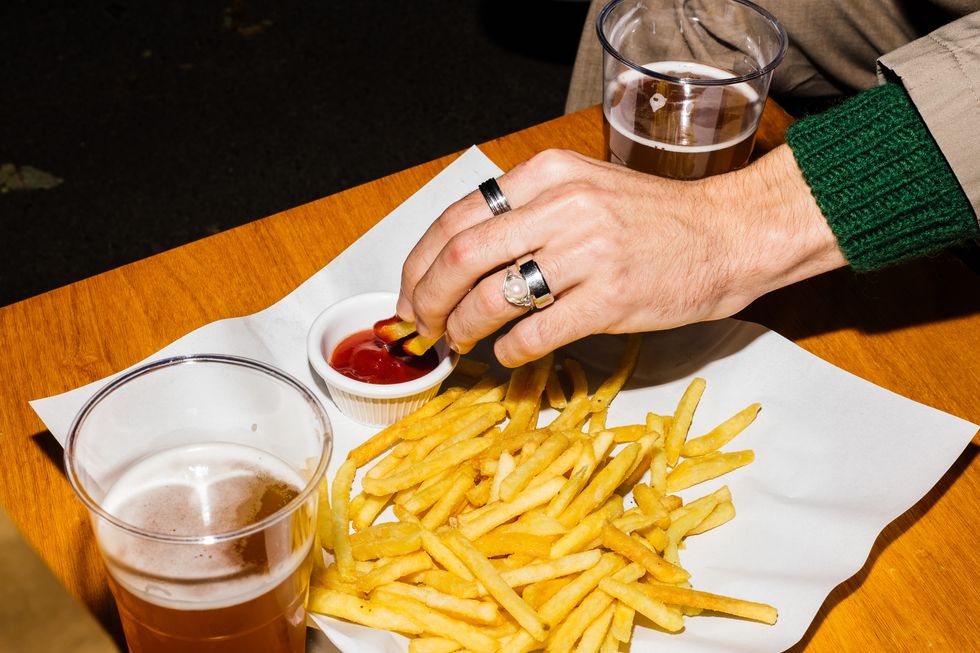
Chips taken covertly in "high-risk situations" were rated approximately 40% more enjoyable
| GETTYParticipants scored each batch on a nine-point scale ranging from unpleasant to delicious.
The chips themselves remained identical throughout - same preparation, temperature, and location.
The results align with established principles that perceived scarcity or limited availability tends to boost desirability.
This mechanism underpins the appeal of cultural exclusive memberships and limited-edition products.
LATEST DEVELOPMENTS:
Psychological factors offer additional explanation, with forbidden activities amplifying both wanting and enjoyment, while minor rule-breaking carries its own thrill.
Beyond reporting enhanced taste, volunteers who took chips without permission also described feeling heightened excitement.
Guilt also accompanied these sensations for some participants.
Intriguingly, the method of obtaining food influenced more than just overall enjoyment ratings.
Perceptions of specific qualities, including how salty and crispy the chips seemed, also shifted depending on acquisition circumstances.
The research did carry certain constraints, as all thefts were orchestrated under laboratory conditions where genuine punishment remained impossible.
Real-world stealing brings potential damage to one's reputation, and of course, legal consequences - factors that might well suppress any appetite enhancement.
Nevertheless, the broader insight holds - how food reaches one's mouth shapes how it tastes.
This observation reflects Italian wisdom and Japanese culture - the latter recognising the concept through the term "nusumigui," describing the act of eating something forbidden without authorisation.
South Americans also express similar sentiments with their phrase "lo prohibido es lo más sabroso", meaning the forbidden proves most delicious.