









A groundbreaking study has challenged centuries of scientific consensus, potentially unravelling our understanding of how light behaves.
Research from the Max Planck Institute for Quantum Optics may have proposed an alternative to theories developed by legendary minds like Albert Einstein and Niels Bohr.
The study, led by institute director Gerhard Rempe, proposes interference patterns of light observed in physics experiments can be understood through quantum particles alone, without relying on wave-based explanations.
Previously, it was generally settled light moved in waves with particle-like qualities.
TRENDING
Stories
Videos
Your Say
However, the international team, which included scientists from Federal University of São Carlos and ETH Zurich, has developed a framework centred on "bright" and "dark" photon states.
Their findings, published in Physical Review Letters, suggest the alternating bands of light and shadow observed in experiments did not confirm light's wave nature.
Instead, they believe these patterns may emerge from combinations of detectable and undetectable quantum particle states.
The new framework could inspire innovative detection technologies capable of probing regions previously considered optical voids, using advanced atomic or ionic systems.
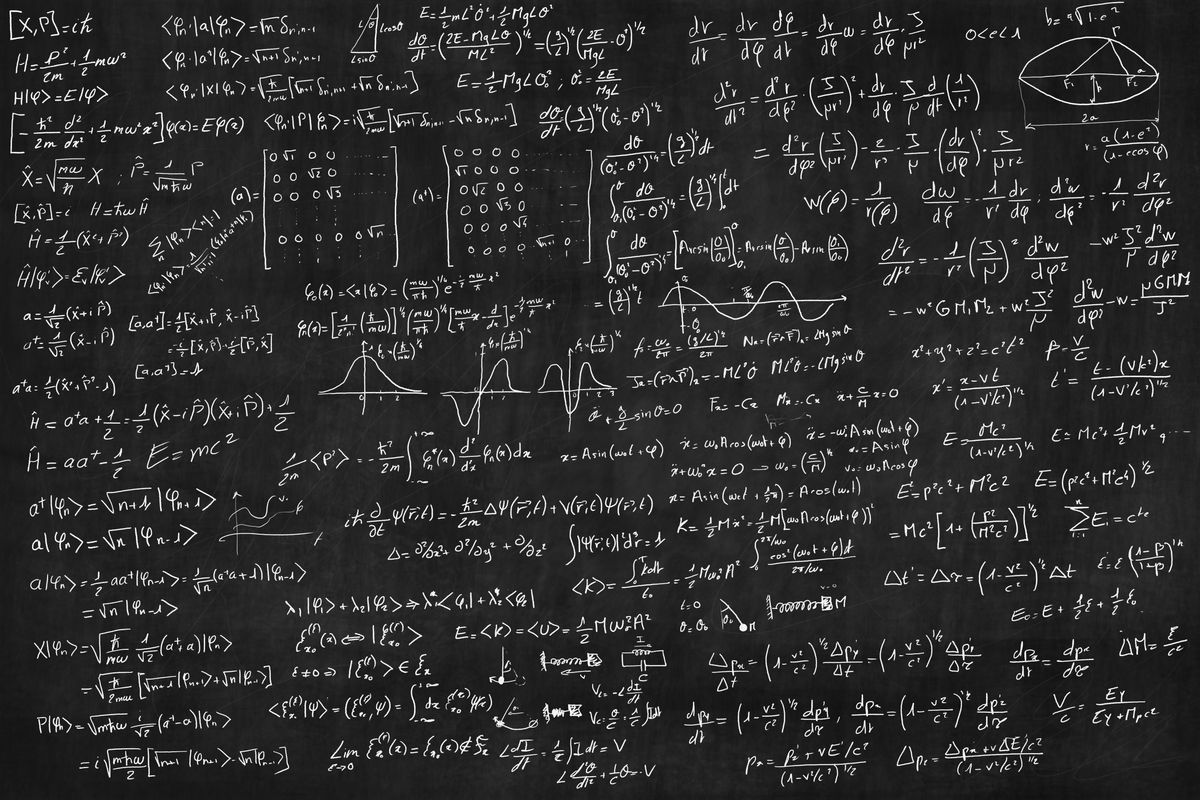
The findings could unravel theories that were first proposed in 1801
|GETTY
Some scientists are already exploring applications for matter waves and gravitational wave detection.
It could also lead to the development of better microscopy and spectroscopy, allowing imaging systems to exploit new interference concepts to “see” details previously hidden due to destructive interference.
The theoretical foundations being questioned stretch back more than two centuries to Thomas Young's pioneering work in 1801.
To prove his theory, Young directed light through two narrow slits, producing overlapping fringes on a screen that convinced many physicists light must possess wave-like properties.
LATEST DEVELOPMENTS
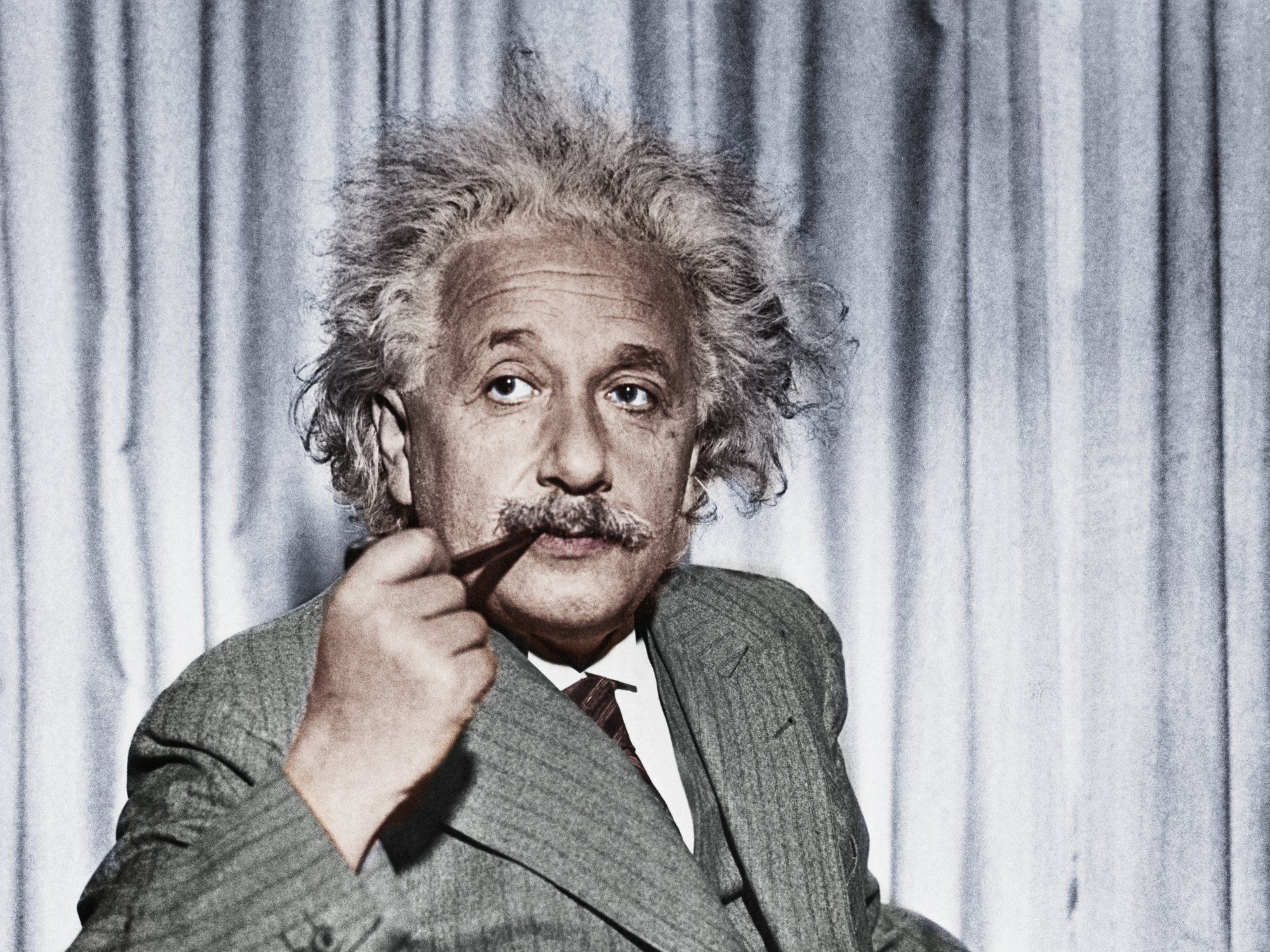
Albert Einstein is among those whose theories may be disproved
|GETTY
Roughly a hundred years later, the emerging field of quantum mechanics revealed particles such as electrons could generate similar interference effects.
The double-slit experiment remains among the most celebrated demonstrations in science, having shaped our understanding of both light and matter for generations.
Albert Einstein's investigations into the photoelectric effect demonstrated light travels as discrete bundles known as photons.
Niels Bohr subsequently expanded upon the concept of wave-particle duality, establishing one of the fundamental pillars of contemporary physics.
According to their framework, bright states can be detected by observers, whilst dark states remain concealed from standard measurement equipment.
Photons in these hidden states may exist in regions where conventional understanding suggests light has cancelled itself out entirely.
When observers attempt to trace a photon's path, they fundamentally alter its state, potentially converting dark modes to bright ones or vice versa.
"In my humble opinion, our description is meaningful as it provides a quantum picture (with particles) of classical interference (with waves): maxima and minima result from entangled bright (that couple) and dark (that do not couple) particle states," said Gerhard Rempe.
The researchers emphasise their findings complement rather than overturn established physics.
They hope it adds fresh detail to longstanding debates about which-path detection that have engaged luminaries from Newton to Einstein.
Efforts to pinpoint a photon's trajectory through the double slits encounter the uncertainty principle, yet this new interpretation suggests measurement transforms dark states into bright ones rather than simply imparting momentum.
Critics note wave-based models remain highly effective at larger scales, with this quantum particle picture proving essential primarily when individual photons interact with atoms.
Our Standards: The GB News Editorial Charter