









Scientists at the British Antarctic Survey have made an unexpected breakthrough while examining satellite photographs of the Antarctic coastline. The researchers noticed unusual brown markings along Marie Byrd Land's shores, which coincided precisely with the emperor penguin moulting season.
This chance observation led to the first-ever satellite documentation of where these iconic birds shed and regrow their feathers. The annual moult sees penguins replace their plumage with fresh, waterproof feathers essential for survival.
The discovery, published in Communications, Earth and Environment, has unveiled a previously unknown threat facing the species as Antarctic conditions deteriorate.
The team's analysis of seven years of imagery revealed a troubling pattern linked to diminishing sea ice. During the Antarctic summers, penguins from the Ross Sea travel up to 600 miles to reach Marie Byrd Land, seeking stable coastal ice for their vulnerable moulting period.
TRENDING
Stories
Videos
Your Say
Between 2022 and 2024, sea ice coverage in the region plummeted from a half-century average of roughly 300,000 square miles to merely 60,000 square miles in 2023. Coastal fast ice shrank to just 1,200 square miles.
With less ice available, the birds were compressed into ever-larger, densely packed congregations. When ice fractured prematurely, penguins still replacing their feathers faced hypothermia, exhaustion and predators.
The consequences are now starkly visible in the data. Before 2022, researchers identified more than one hundred distinct penguin groupings across the study area. By 2025, despite improved ice conditions, satellite images showed merely 25 small clusters remaining.
Whether these birds relocated to alternative moulting sites or perished remains uncertain. The affected population comprises seven breeding colonies that together account for approximately 40 per cent of all emperor penguins worldwide.
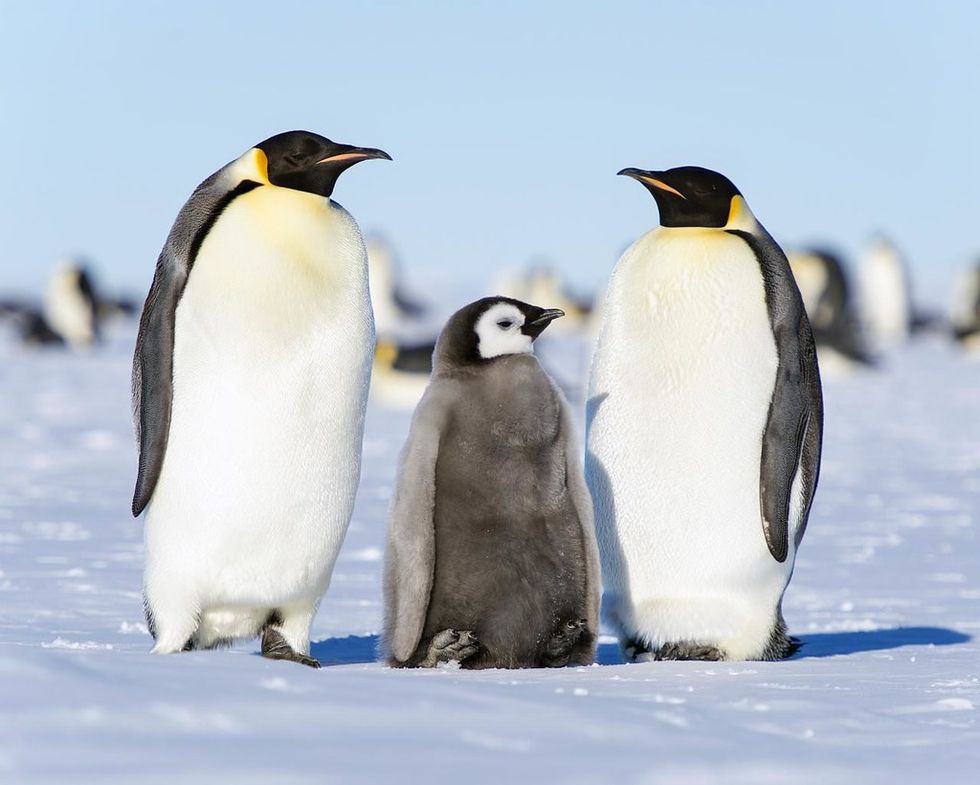
'Emperor penguins already faced a myriad of threats,' scientists have said
|Flickr
For a species that reaches breeding age between three and six years and can live two decades, the death of adults poses a far graver long-term risk than failed breeding seasons.
Dr Peter Fretwell, the study's lead author and mapping specialist at British Antarctic Survey, acknowledged the uncertainty surrounding the vanished birds.
"Emperor penguins already faced a myriad of threats, and the loss of moulting sites is yet another pressure," he said. "While we don't know for sure what happened to those penguins, we know they can find new suitable breeding sites after ice loss, so it's possible they have established new moulting sites elsewhere."
However, he warned that vast numbers may have died after entering frigid waters without waterproof plumage. "If this has happened, the situation for emperors as a species is even worse than we thought," he said.
Our Standards: The GB News Editorial Charter