










Birds living in cities perceive women as more threatening than men, new research has revealed.
The study, published in People and Nature, found that male participants could get within 7.5 metres of urban birds before the birds flew away, a full metre closer than their female counterparts.
This outcome defied the researchers' predictions entirely.
They had anticipated that birds would show greater wariness towards men, reasoning that avian species might have evolved responses to ancient human behaviour, when males typically hunted while females gathered.
The investigation involved eight volunteers who approached pigeons, starlings and various other bird species in urban parks and green spaces across the Czech Republic, France, Germany, Poland and Spain.
Participants were paired and matched by height and the colour of their clothing, with each person walking directly towards their target bird while maintaining eye contact.
Those with longer hair than their partner concealed it to prevent any visual distinction.
Despite these controls ensuring near-identical appearances, the birds consistently allowed men to approach before taking flight, a pattern observed across all 37 species examined.

Birds living in cities perceive women as more threatening than men, new research has revealed
|GETTY
Individual species displayed markedly different tolerance levels for human proximity.
Pigeons proved among the most relaxed, allowing people to come within 3.5 metres on average before departing.
Long-tailed tits, despite being one of Britain's smallest bird species, showed similar boldness with an average flight distance of 3.6 metres.
Green woodpeckers took off when humans reached approximately 16.2 metres away, making them the most skittish of those studied.
LATEST DEVELOPMENTS:

Individual species displayed markedly different tolerance levels for human proximity
|GETTY
Magpies similarly kept their distance, fleeing at an average of 13 metres.
Crucially, regardless of species-specific thresholds, men consistently approached closer than women throughout the study.
The researchers acknowledged they could not definitively explain the phenomenon.
"We have identified a phenomenon, but we really don't know why," said Federico Morelli at the University of Turin.
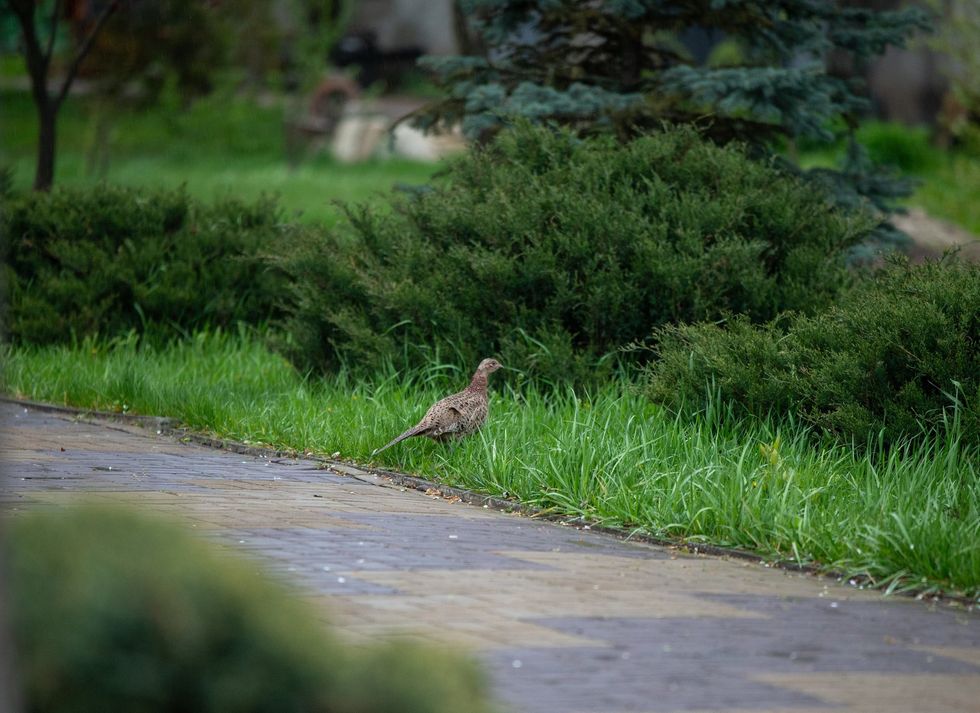
Possible explanations include differences in gait or scent
|GETTY
Possible explanations include differences in gait or scent.
Recent studies have demonstrated birds can detect predators through smell, leading the team to consider whether sex-specific chemicals or pheromones might trigger avian responses.
However, since participants never physically handled the birds, the authors deemed this explanation "less probable".
"As a woman in the field, I was surprised that birds reacted to us differently," said Yanina Benedetti at the Czech University of Life Sciences Prague.
Morelli emphasised that expanding the number of human observers would strengthen future findings.