










A "real-life Da Vinci code" has been unearthed in what French media have dubbed the "dig of the century" underneath Paris's Notre Dame cathedral.
In 2019, part of the historic cathedral burned down, before reopening in late 2024.
Now Paris is looking to beautify the square outside by planting 160 new trees and erecting a water feature - renovations which will be finished by 2028.
But before work can be done, the area requires a full archaeological excavation and removal of any artefacts.
Lucie Altenburg, a conservator with the Paris archaeology unit, said: "It's a rare opportunity for us to work on something that’s tangibly going to make a difference to the history of Paris."
She added: "This only happens because the city of Paris decided it wanted to beautify the area."
One of the items, a shard of medieval pottery, contained markings which no expert has been able to decipher.
The shards with faint reddish writing painted on the inside has confounded researchers and been described by archaeologist Valentine Breloux as "astonishing".
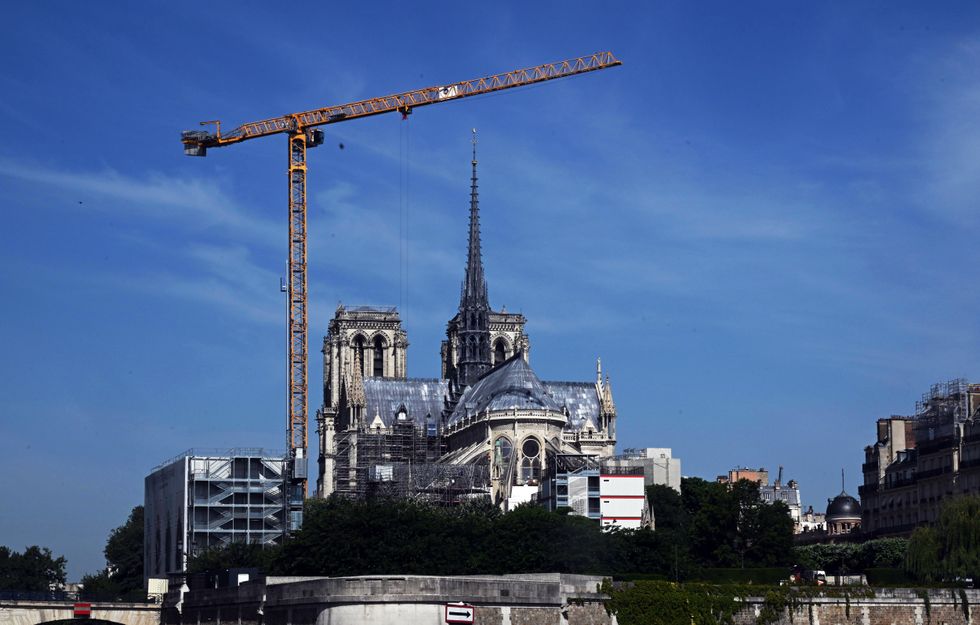
Notre Dame's renovations after its fire have allowed for further archaeological discoveries
|GETTY
Some of the most fascinating archaeological discoveries have come from the latrine pits beneath the medieval houses.
She said it was "rare to find complete ceramics", yet whole jugs and cups have been found within the rubbish dumps because the artefacts have been cushioned by soft waste.
Another of the hundred objects were fourth-century coins, stamped with the face of Emperor Constantine.
Hundreds of artefacts have already been found, the first traces of which appear at 50 centimetres down. Researchers have filled up as many as 15 crates in a singular day, they said.
LATEST ON ARCHAEOLOGY:
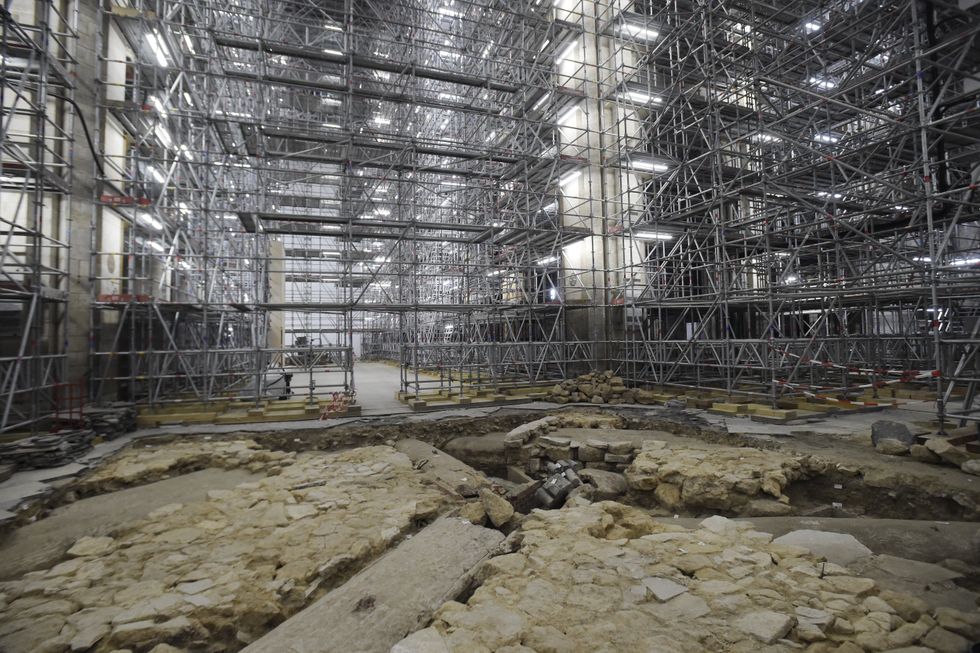
Earlier archaeological digs at Notre Dame uncovered a sarcophagus
|GETTY
"It makes Notre Dame feel alive again," said Emily Carter, 34, a tourist with two children.
She added: "You come to see the cathedral, then realize there's another city under your feet. That's almost more moving."
Most historic cities have layers of history underneath them.
Paris as a city started as a settlement on the Ile de la Cite, an island in the Seine where the cathedral now stands.
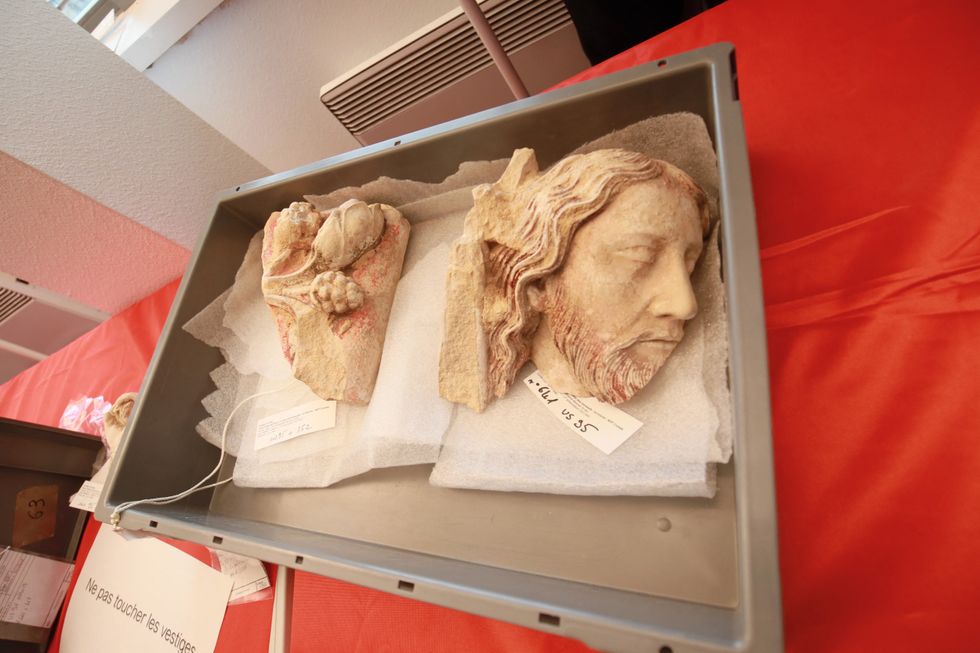
PICTURED: Archaeological findings in 2024 under Notre Dame
|GETTY
Notre Dame was founded in 1163 when the entire square was packed with medieval houses, split by a single street, said Camille Colonna, the archaeologist leading the dig.
Her team has found Merovingian and Carolingian grain pits from the sixth to the 10th centuries, and below those a Roman quarter from the fourth and fifth centuries.
Yasmine Benali, 22, an archaeology student, said: "Here you can see the layers — medieval Paris, Roman Paris, maybe even before that.
"It makes the city feel less like a postcard and more like something still being discovered."