









Underwater archaeologists have uncovered the wreckage of an ancient Egyptian pleasure barge in Alexandria's sunken harbour - near where Alexander the Great is believed to rest.
The vessel, known as a thalamagos, represents the first recovery of this luxurious boat type ever documented.
Classical texts have long described such barges, but none had previously been found.
The European Institute for Underwater Archaeology led the excavation in the waters of Portus Magnus.
Divers located the remains close to Antirhodos, an island that now lies beneath the Mediterranean.
Antirhodos once formed part of Alexandria's great harbour complex.
The thalamagos was a high-status craft used for leisure and ceremony in ancient Egypt.
Its discovery offers rare physical evidence of vessels previously known only through historical accounts and artistic depictions.
The wreck comprises wooden timbers in remarkable condition, stretching roughly 28 metres in length.
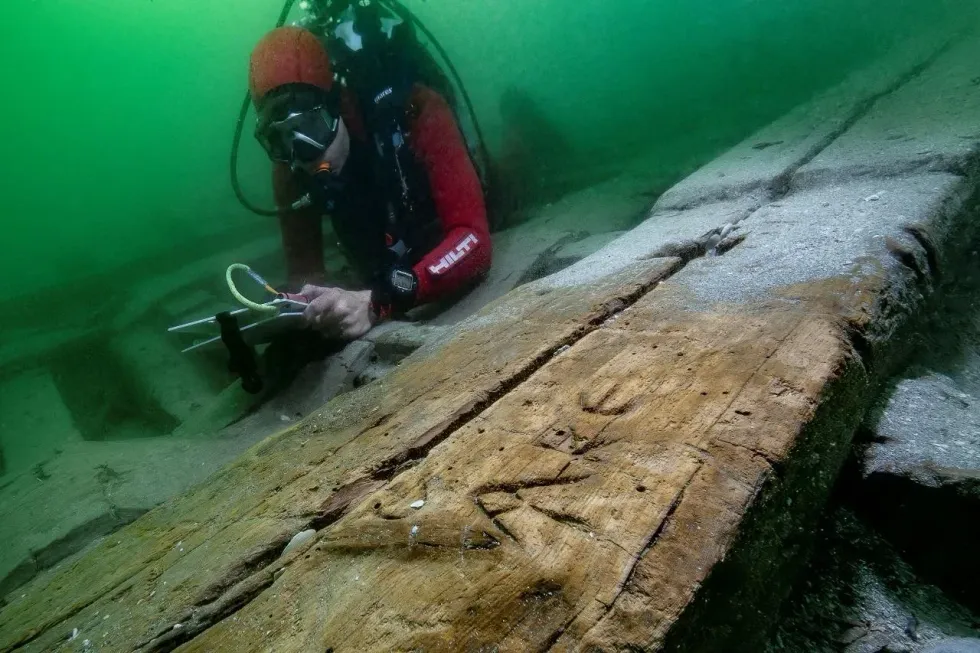
Underwater archaeologists have uncovered the wreckage of an ancient Egyptian pleasure barge in Alexandria
|CHRISTOPH GERIGK/FRANCK GODDIO/HILTI FOUNDATION
Archaeologists estimate the complete barge measured approximately 35 metres long and seven metres across.
Its builders prioritised width to accommodate a central pavilion and ornate cabin.
The hull featured a flat bottom with a sharp angle at the bow and curved stern.
Such specialised construction suited calm, shallow waterways rather than open sea travel.
More than 20 rowers would have propelled the craft using oars alone.
ANCIENT FINDS - READ MORE:
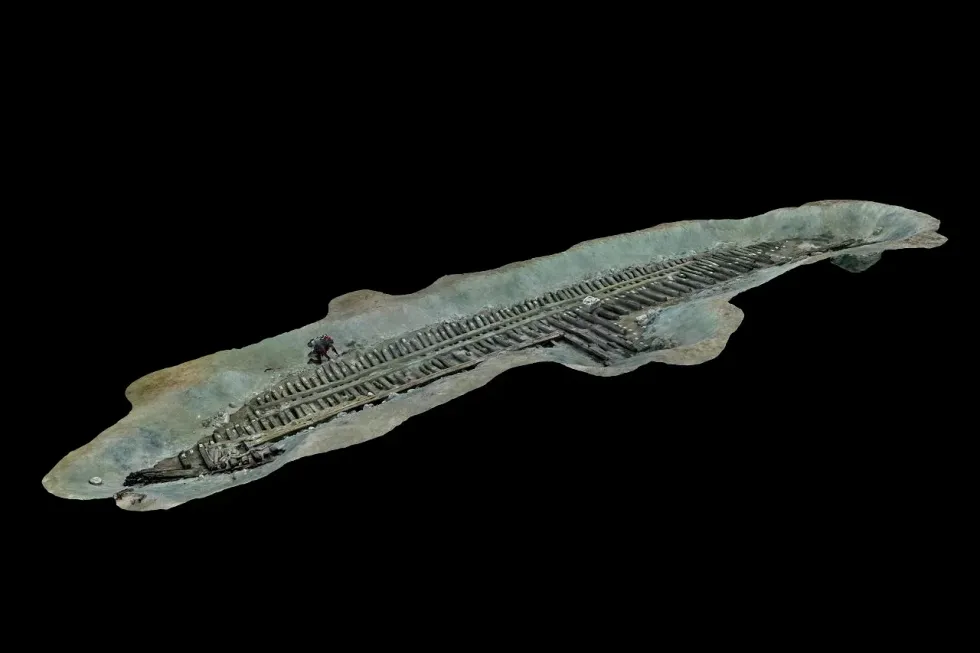
PICTURED: A remarakable 3D view of the thalamagos, recorded through photogrammetry below the waves
|CHRISTOPH GERIGK/FRANCK GODDIO/HILTI FOUNDATION
Greek inscriptions discovered on the central structure place the vessel in the first half of the first century AD.
The graffiti also confirms the barge was constructed locally in Alexandria.
This dating aligns with accounts from the geographer Strabo, who described cabin-boats used for festivals and religious ceremonies along vegetated canals.
The wreck lies fewer than 50 metres from the Temple of Isis, itself an active excavation site.
Researchers have proposed two theories for how the barge came to rest there.
One suggests earthquakes and tidal waves around CE 50 destroyed much of Alexandria's coastline, dragging palaces and temples into the sea.
The same explanation is thought to be behind the missing tomb of Alexander the Great.
The invincible Macedonian king's burial place has long been lost and its exact location remains a mystery.
His body was moved from Memphis to a mausoleum known as the Soma in Alexandria, but the location of the tomb itself had been forgotten by the fourth century AD, likely due to earthquakes.
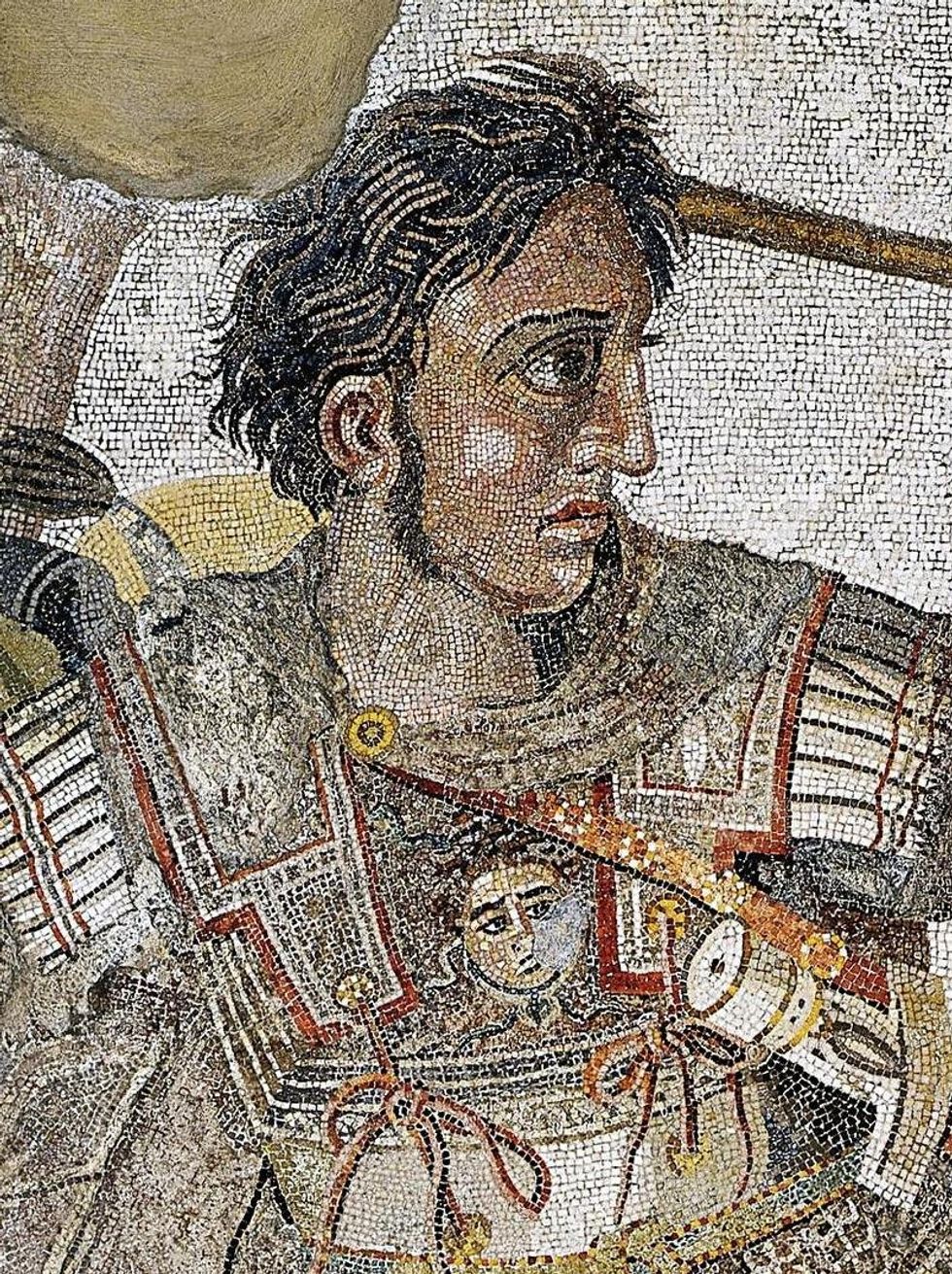
Alexander the Great's tomb is believed by some to have been lost in an earthquake
|WIKIMEDIA COMMONS
An alternative interpretation links the recently-discovered vessel to religious practice at the nearby sanctuary.
The barge may have served in the navigium Isidis, an annual procession honouring the goddess's mythical solar journey to Canopus.
Similar craft appear in ancient artwork, including the celebrated Nile mosaic of Palestrina, though this wreck exceeds most depicted vessels in size.
Under Unesco guidelines, the barge will remain on the seabed for preservation.