

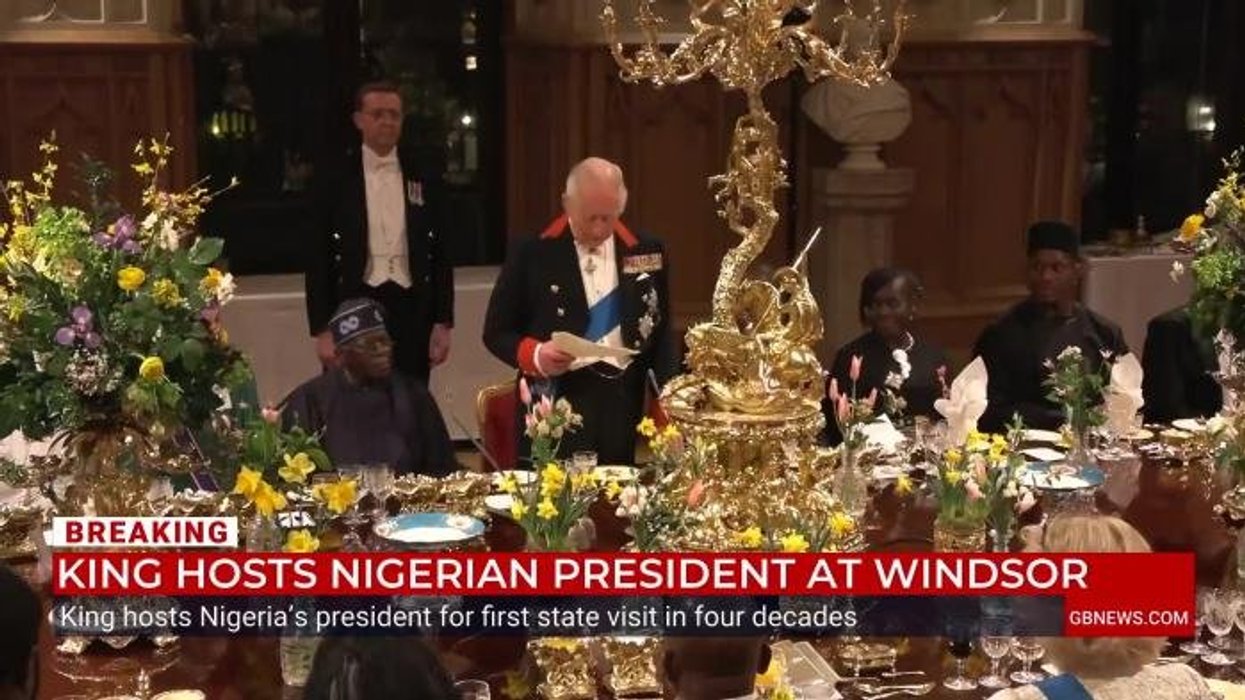



King Charles III stopped short of issuing an apology for Britain’s colonial past in Nigeria as he addressed guests during the State Banquet held in honour of President Bola Ahmed Tinubu.
Speaking at Windsor Castle on Wednesday evening, the King acknowledged the “painful” aspects of the shared history between the United Kingdom and Nigeria, but did not go as far as offering a formal apology.
“There are chapters in our shared history that I know have left some painful marks,” the monarch said. “I do not seek to offer words that dissolve the past, for no words can.”
Instead, the King emphasised the importance of looking forward, adding that history should be seen as “a lesson in how we go forward together to continue building a future rooted in hope and growth for all.”
TRENDING
Stories
Videos
Your Say
The remarks come amid ongoing debate over Britain’s colonial legacy and calls from some quarters for formal apologies or reparations.
However, the King’s speech focused on partnership and shared progress rather than retrospective accountability.
He praised Nigeria as a “nation of over two hundred and thirty million people” with “energy, ingenuity, ambition and resolve,” highlighting its growing global influence and the strong ties between the two countries.
The monarch also pointed to the deep connections between the UK and Nigeria, noting the contributions of people of Nigerian heritage across British society, from business and academia to sport and the arts.
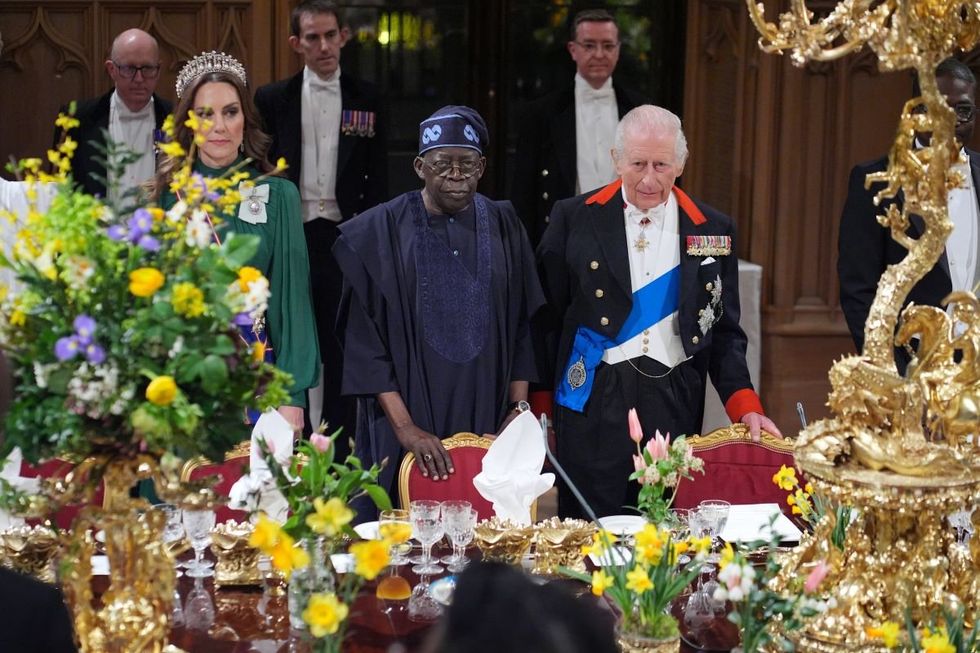 The Nigerian president was seated between Catherine and King Charles | PA
The State Banquet, attended by senior members of the Royal Family, political leaders and prominent figures from both nations, marked the centrepiece of President Tinubu’s State Visit.
While the King’s comments acknowledged the complexity of the past, his decision not to apologise is likely to draw attention, particularly given the increasing scrutiny of Britain’s historical role in former colonies.
The speech ultimately struck a tone of reconciliation and forward-looking partnership, with the King positioning the UK-Nigeria relationship as one built on mutual respect and shared opportunity.
Nigeria has actively called for reparations through several official and legal channels, positioning itself as a leader in a growing continental movement.
LATEST ROYAL DEVELOPMENTS
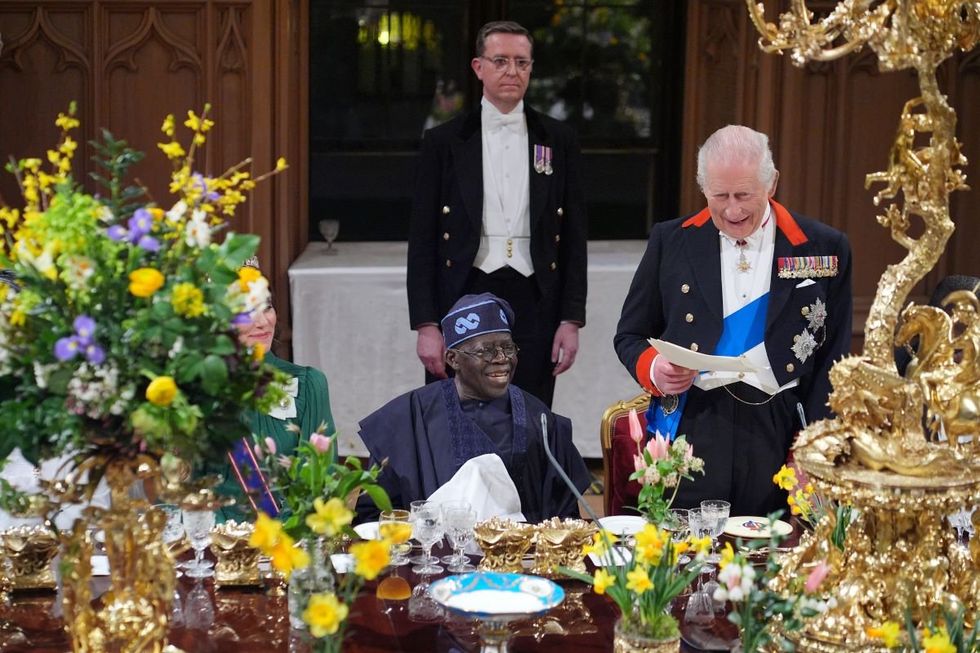 King Charles acknowledges Muslim leader's 'sacrifice' during Ramadan in State Banquet speech | PA
As of March 2026, these efforts range from individual legislative demands to landmark court rulings against the UK Government.
In February 2026, a Nigerian High Court in Enugu ordered the British Government to pay £420million in reparations.
This ruling is specifically for the families of 21 coal miners killed by colonial police during a 1949 strike.
In 2024, the Nigerian Senate established a Committee on Reparations and Repatriation.
Senator Ned Nwoko officially petitioned the British Prime Minister, demanding $5trillion for centuries of slavery and colonial exploitation.
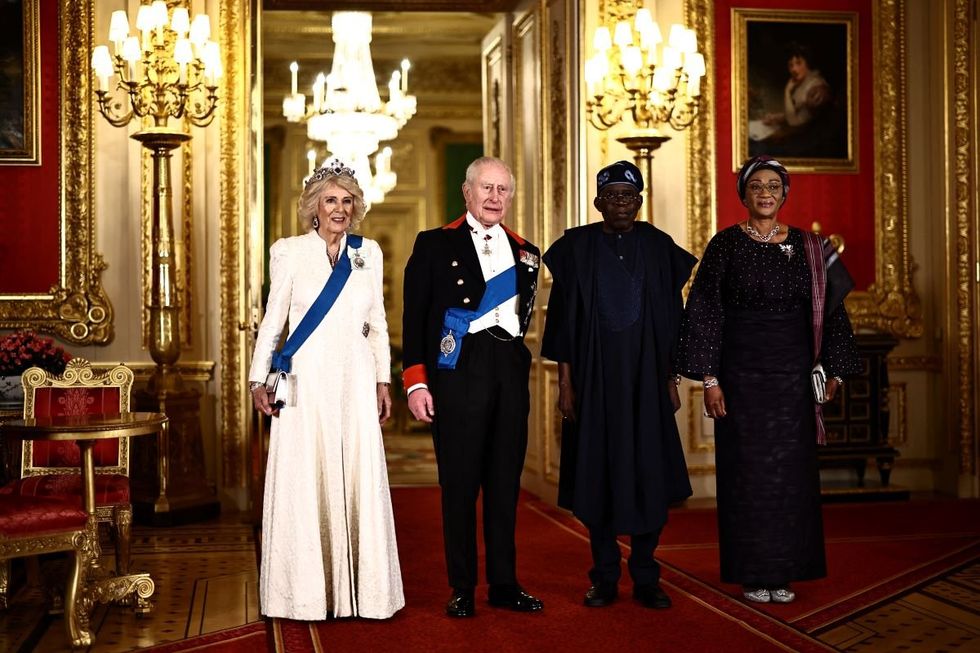
King Charles and Queen Camilla at the State Banquet with the Nigerian president
|GETTY
In 1960, Nigeria joined as a Commonwealth realm, with Queen Elizabeth II as the head of state.
On October 1, 1963, Nigeria became a republic within the Commonwealth, replacing the Queen with a president as head of state.
Nigeria's membership was suspended on November 11, 1995 following the execution of activist Ken Saro-Wiwa and eight others. This was a violation of the Harare Declaration principles regarding democracy and human rights.
The suspension was lifted on May 29, 1999, following the inauguration of Olusegun Obasanjo as a democratically elected civilian president.