







In May, millions of voters in England, Scotland and Wales will be heading to polling stations across the country for another bumper crop of Local Elections.
On Thursday, May 7, 5,036 seats will be up for grabs in England, across all 32 London Boroughs, 32 metropolitan boroughs, 18 unitary authorities, six county councils and 50 district councils.
On the same day in Scotland, voters will decide to either end or extend the Scottish National Party's 19-year stint in charge of Holyrood, with John Swinney's party still commanding a lead in the polls.
In Wales, Labour's dominance is under severe threat from Plaid Cymru and Reform UK - the two parties who topped the Caerphilly by-election.
TRENDING
Stories
Videos
Your Say
Last year, Labour was condemned across the political spectrum after inaugural mayoral elections for Sussex and Brighton, Hampshire and the Solent, Norfolk and Suffolk, and Greater Essex were pushed back to 2028.
Downing Street repeatedly declined to apologise for the changes, insisting they are about ensuring devolution in "a pragmatic and structured way."
However there was backlash from opposition parties, as Reform UK said "only dictators cancel elections" with the Tories branding it a "scandal".
Meanwhile, Liberal Democrat local government spokeswoman Zoe Franklin said: “Democracy delayed is democracy denied", while Green Party peer Jenny Jones accused Labour of playing the "get out of jail free card".
On top of this, there could be even more delays, as over 60 council areas due to hold elections in May could postpone them until 2027 after some told ministers they lack the capacity to reorganise in time.
There are 204 councils across 21 areas undergoing reorganisation. The Government has written to 63 of the councils scheduled to hold elections in May 2026 for their views on potential postponement.
The deadline to respond is January 15.
But with Reform making sweeping gains across the country and Labour faltering in the polls, GB News has taken an in depth look at what to expect as Britons head to the polls this year.
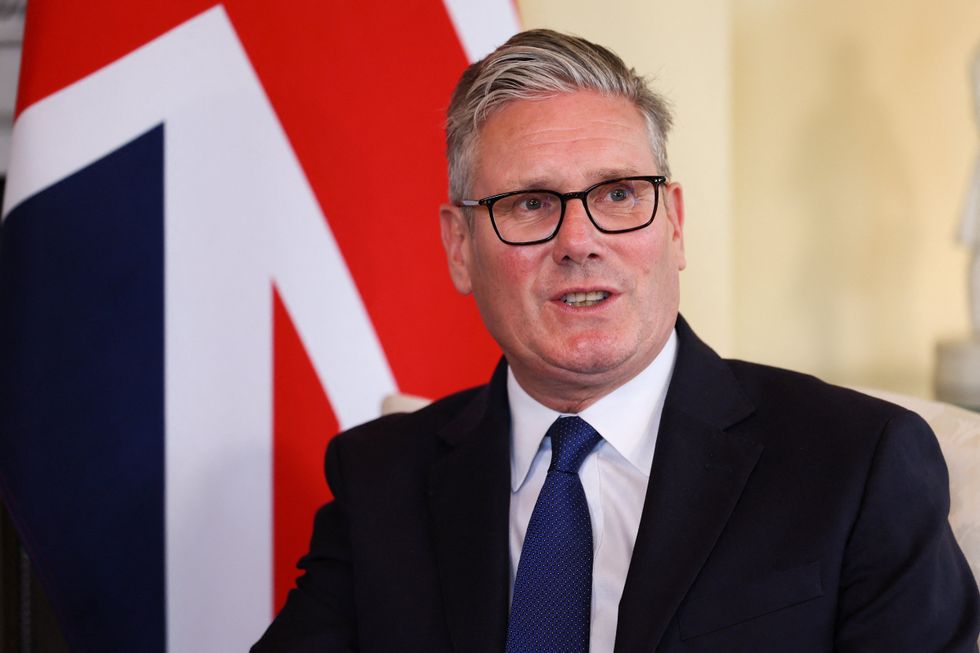
Labour has been accused of 'denying democracy'
|PA
London
Starting with the capital, Londoners will have their say on who runs the 32 councils that control much of the city's services for the first time since 2022.
While the mayoralty will not be put to the voters again until 2028, Labour will be keeping a close eye on where they hold on to, and where they lose votes to Reform UK, the Tories and Greens.
The last time Londoners went to vote in the borough elections in 2022, Labour came out on top, winning 1,128 of just over 1,800 seats and 43 per cent of the vote across the capital.
For the first time, the party took control of Westminster and Barnet Councils off the Tories, who won 508 seats with 28.8 per cent of the vote, holding on to Kensington and Chelsea, Bexley, Hillingdon and Bromley, and taking control of Harrow from Labour.
In 2022, Reform UK won only 3,792 votes, fewer than that of the Havering Residents Association (66,248 votes), Chislehurst Matters (7,906 votes), The Women's Equality Party (4,786 votes) and The Christian Peoples Alliance (3,940 votes).
However, Nigel Farage's party will be hoping for an upset, with the Clacton MP adding lawlessness was "the dominant issue" in the capital.
According to Mr Farage, Reform UK is now hoping it has a "very real chance" of winning in "half a dozen" of the 32 London boroughs, including Bromley, Bexley, Havering and Barking & Dagenham.
Mr Farage told The Times: "If you go to the outer doughnut, 80 per cent of police stations have closed since 2010 and there is a sense that the police are invisible in every way. In inner London and spreading to the suburbs are issues like knife crime."
LATEST DEVELOPMENTS
- Quality of life divide revealed as poll sheds light on region with the happiest Britons
- ‘British on paper, not in reality!’ Poll reveals hardening views on what it means to be British
- Half of Labour voters are now revolting against Keir Starmer as MPs receive 'existential warning' about Nigel Farage's Reform UK
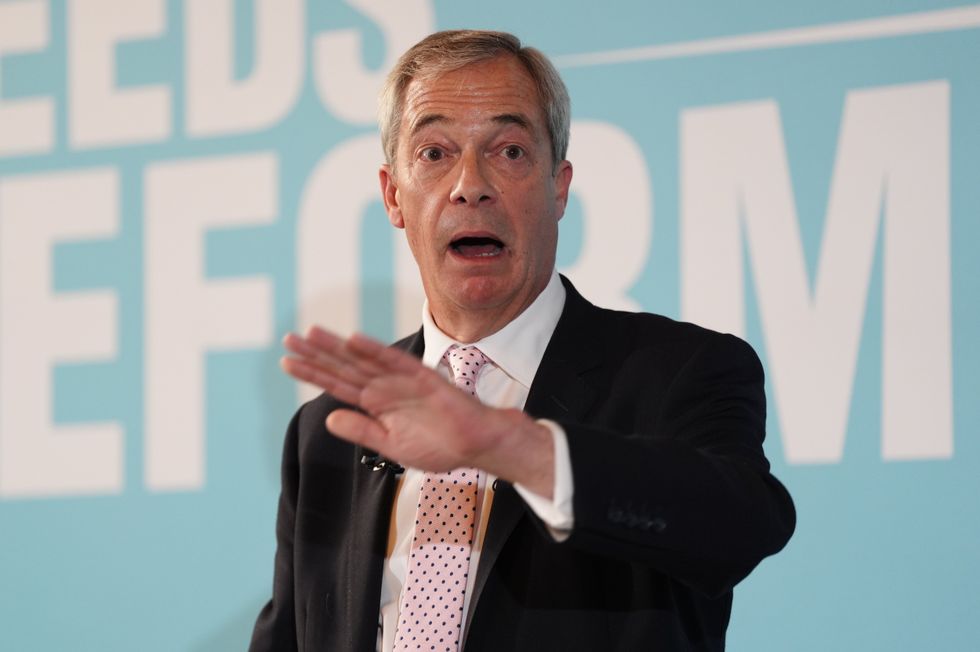
Nigel Farage is targeting wins in London
| PAMeanwhile, The Green Party, led by London Assembly Member Zack Polanski, will be hoping to capitalise on Labour's polling woes.
The party won 8.6 per cent of the vote and 11 seats across the capital, lower than the Liberal Democrats, who won 152 seats with 13 per cent of the vote and retained control of Kingston, Sutton and Richmond-upon-Thames.
Last year, five Labour councillors in Brent collectively defected to the Green Party, following earlier defections in Barking and Dagenham, Lambeth and Hammersmith and Fulham.
With the Greens taking second place in more than a dozen London constituencies in the most recent General Election, including Justice Secretary David Lammy's Tottenham constituency, they will be hoping to capitalise on their growing support.
Mr Polanski told MyLondon: "It's impossible to look at London issues at the moment without connecting it to some of the failures of the national government. Inequality hits you wherever you live.
"So if you're a Londoner who's struggling from rents being far too high, or you're someone who's worried about the price of food or the fact your wages haven't gone up, those are the same issues, whether you live in Zone 1 in London, Zone 6 in London or indeed, if you live somewhere in Yorkshire."
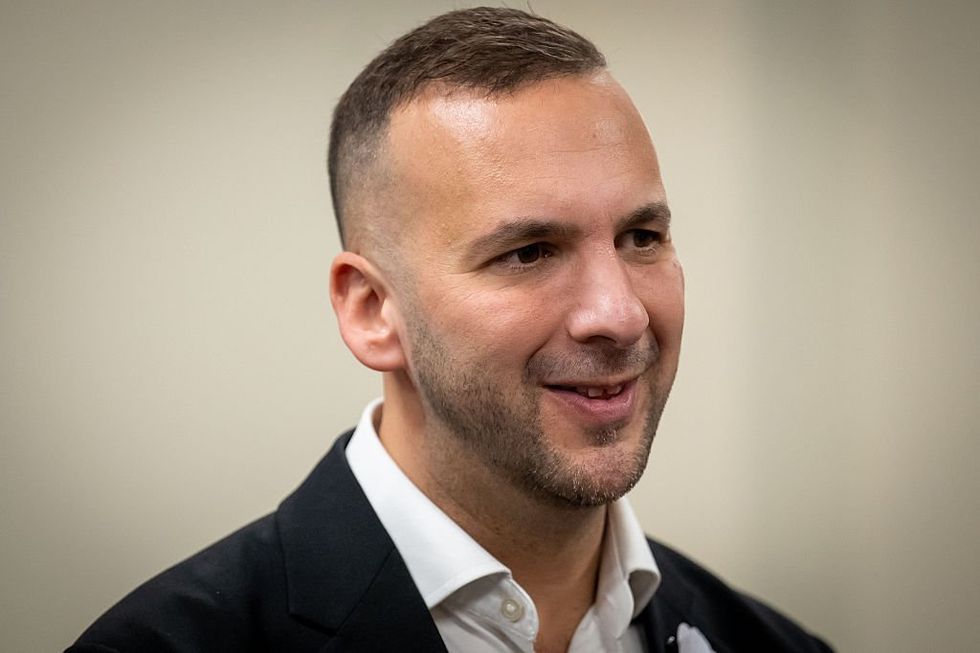
Greens leader Zack Polanski is a London Assembly member
| GETTYWales
In Wales, voters will go to the polls as part of a "once in century change" in the Senedd, as the number of politicians elected to Cardiff Bay increase from 60 to 96.
The election will also see the number of constituencies cut from 40 to 16, with each one represented by six MSs all elected via a new proportional system.
Not only will there be more MSs elected, voters could also see a political upheaval, one that was foreshadowed at last year's Caerphilly by-election, where Labour was obliterated by Lindsay Whittle of Plaid Cymru, who took home 15,961 votes, beating second-placed Reform UK's 12,113.
According to the most recent Beaufort Research poll for Nation.Cymru, Reform are on 27 per cent with Plaid Cymru just behind on 26 per cent and Labour in third on 21 per cent. Meanwhile, the Conservatives are on 12 per cent, the Greens are on nine per cent with the Liberal Democrats in last on three per cent.
Plaid's leader Rhun ap Iorwerth said the election would be a two-horse race between his party and Reform UK, arguing the vote represented "politics that looks backwards" or leadership that stands up for Wales and brings people together.
Meanwhile, a Reform UK Wales spokesman said the Senedd vote represented "our big opportunity".
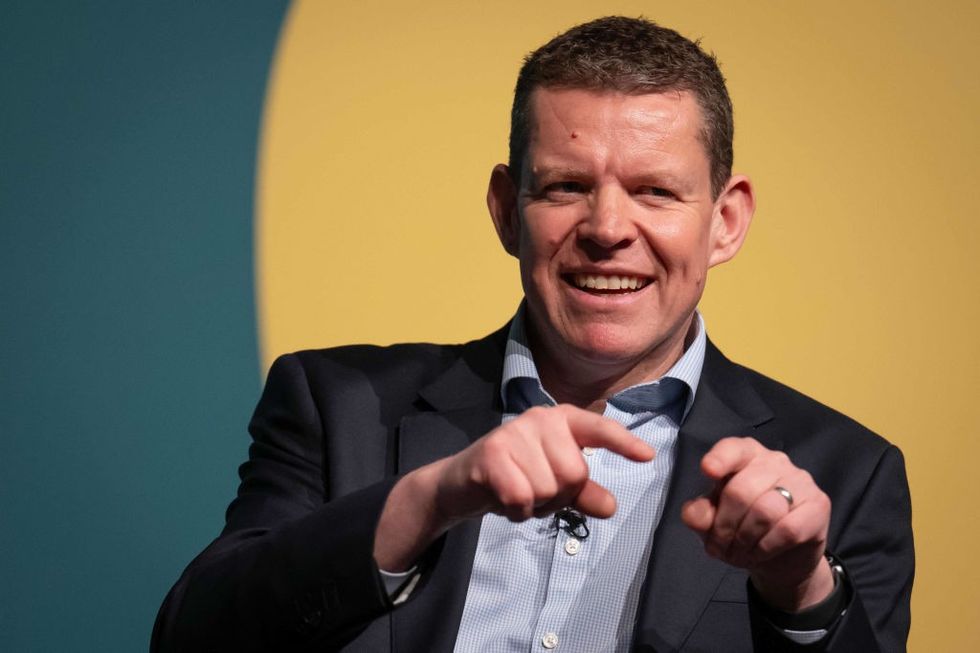
Leader of Plaid Cymru Rhun ap Iorwerth could be standing in Mr Farage's way
| GETTYEluned Morgan, Labour's Welsh First Minister, said: "Keir Starmer is not on the ballot paper in this election."
Joe Rossiter of the Institute of Welsh Affairs told The Independent: "The valleys and west Wales are two of Europe’s most deprived regions.
"They had a lot of infrastructure spending from the EU, and it’s not led to the economic transformation of those communities, really.
"When that money is gone, where is the scale of investment that is going to provide long-term jobs in the future? The Welsh government don’t have the money to do that.
“If those polls come to fruition, that is a fundamental realignment of Welsh politics and will see the end of Labour being prominent for over 100 years."
Co-founder of Novara Media Aaron Bastani told GB News: "[Labour] is done. Look at the polling for Wales which has them in third. They've been the major party in Wales for a century...I mean that's it. That's all you need to know, right? It's literally all you need to know."
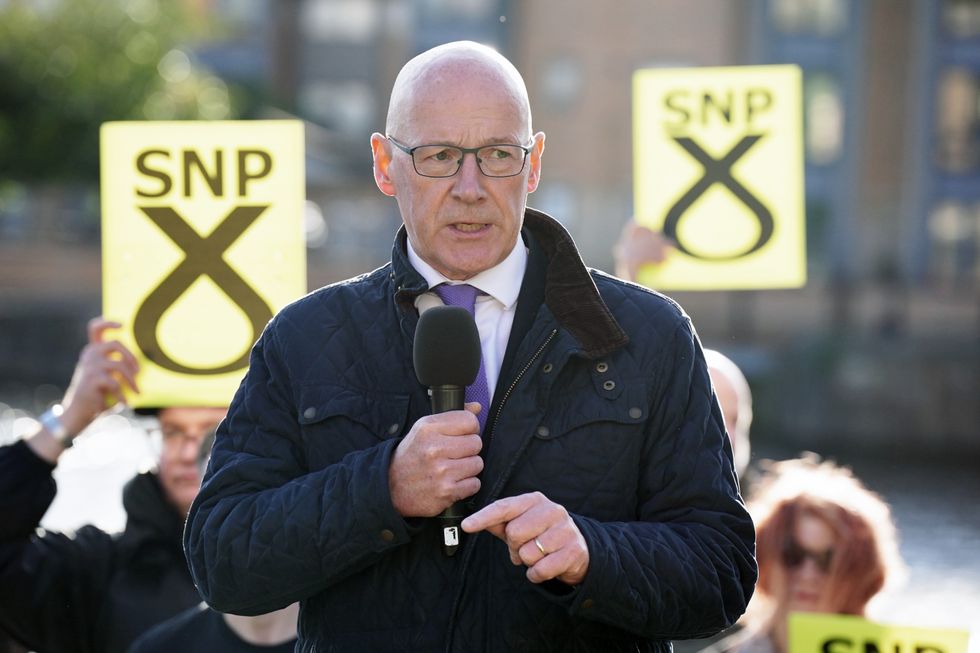
SNP Leader John Swinney will be looking to remain in post as First Minister
| PAScotland
Voters north of the border will have their say on who controls Holyrood with current polling suggesting the SNP will retain their hold on the Scottish Government, which, less than two years ago, would have sounded impossible.
At the 2024 General Election, the SNP was left with just nine seats, a massive 39-seat drop-off since 2019.
First Minister John Swinney said he took full responsibility for the campaign, saying: "The Scottish National Party needs to be healed and it needs to heal its relationship with the people of Scotland, and I am absolutely committed to doing that."
Further to this, in June last year, there was a rare bright spot for Labour as the party won the Hamilton, Larkhall and Stonehouse by-election, taking the seat off the SNP.
Speaking to GB News the morning after, Scottish Labour Leader Anas Sarwar said voters sent three clear messages.
He said: "One, they want rid of this SNP government that has done so much damage to our country over the past 18 years.
"That would be a feeling felt by many GB News viewers in Scotland, and the only way of getting rid of the SNP is by supporting Scottish Labour next year in the Scottish Parliament. Do not listen to the noise or the nonsense from Reform.
"Secondly, they have rejected the politics of Nigel Farage and Reform, and third, they have also made clear that they do want a UK Labour Government to go further and faster and demonstrably improving their lives, and I think that is a message we have heard loud and clear."
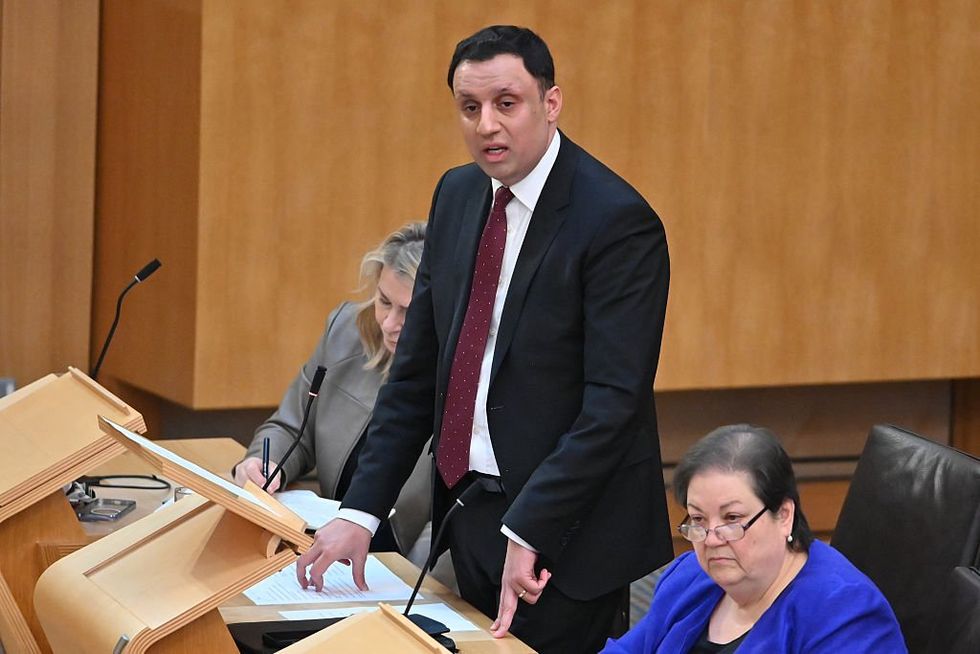
Scottish Labour leader Anas Sarwar has thrown down the gauntlet to Nigel Farage
|GETTY
However, according to polling by Ipsos taken last month, the SNP maintains its lead on Scottish Parliament voting intention with 35 per cent of the constituency vote share.
However, it is important to note this is much less than the 47.7 per cent the party achieved at the last Holyrood election in 2021.
Reform UK’s share of the vote has risen, with 18 per cent of Scottish voters planning to use their constituency vote for a Reform candidate, up four points since June.
In contrast, Scottish Labour’s vote share has fallen further, to 16 per cent, down seven points since June.
Scotland’s only Reform MSP has hinted it is "not beyond the realms of possibility" his party could team up with others to force the SNP out of office.
Graham Simpson, who has been an MSP since 2016, said Reform coming in second place was both "feasible" and "achievable" adding that opinion polls are "very consistent" in suggesting this.
He said: "There is a definite possibility we could get around 20 MSPs, maybe more, maybe slightly under that. But I think around that number would be good and that could put us into second position."
England
Most of the seats up for grabs in England outside London were last up for the vote in 2022.
Currently, out of the 36 metropolitan boroughs across England, 32 will have some form of election, with 16 of those having "all out elections", meaning voters in every ward will be going to the polls.
One of the key ones to watch will be Birmingham City Council, which remains at deadlock with unions over the ongoing bin strike.
Other key ones to watch include Newcastle City Council, which currently has no overall control, as well as the two Conservative defences representing a real test for Kemi Badenoch - Solihull Metropolitan Borough Council and Walsall Council.
There will also be six county council elections taking place, five of which are Conservative defences. These are Essex, Hampshire, Norfolk, Suffolk and West Sussex.
East Sussex, which is currently being led by a Conservative minority administration, is also up for grabs.
On top of this, three district councils are set to hold elections. They are Huntingdonshire, which is currently under no overall control, Conservative-led Newcastle-under-Lyme Council and South Cambridgeshire, ran by the Liberal Democrats.
In damning news for Sir Keir Starmer, Tory Peer Lord Hayward said Labour was on course for "very, very large" losses to Reform UK, the Greens, the Liberal Democrats and, in east London, pro-Gaza Independent candidates.
He said: "A few months ago it looked as if May 7 would be decisive for the leaderships of both Labour and Conservatives.
"As we move into 2026 it now looks as if the May elections could decide the fate of Keir Starmer and Rachel Reeves, but it is less clear that that will be the case for Kemi Badenoch."
He added that while Labour and possibly the Conservatives were on course to lose seats in May, there would be no clear victor, but a "cacophony of winners."
Reform, starting from a low base, is likely to make the most gains, Lord Hayward said, but a range of other parties are expected to claim some sort of victory on the night, with a clear picture perhaps only emerging in the days following the election.
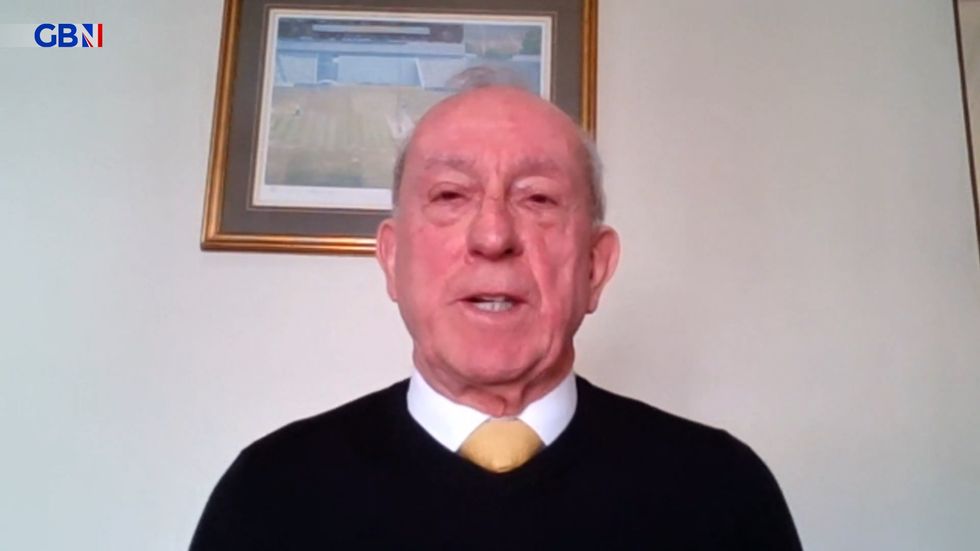
Lord Robert Hayward issued a dire warning to Labour
|GB NEWS
What the parties had to say
Labour Chairwoman Anna Turley said: "We know that next year, people will really start to feel the change that we’re delivering in their pockets and on their doorsteps. So I’m full of confidence and full of positivity.
"We’ve just got to stay focused, get better at telling our story for people and make sure they can see and feel the change that we’re delivering."
Conservative chair Kevin Hollinrake said: "The main priority is May’s elections. That’s when it really counts, what people think at the ballot box.”
Mr Hollinrake said it was "too early to say" whether the Tories would yet experience improved reception from voters, but added: "I think Kemi (Badenoch) definitely… there’s no doubt that she is cutting through in a way she wasn’t before."
Reform UK leader Nigel Farage said: "If we get this right on May 7 this year, we will go on and win the general election, due in 2029 at the latest.
"We will then absolutely have a chance of fundamentally changing the whole system of government in Britain.
"We may well be the last chance this country has to restore some proper values: of family, community and country."
Liberal Democrat Deputy Leader Daisy Cooper said: "Going into the local elections next May, there’s just no ceiling on our ambition at all", adding her party was becoming a "Reform fighting machine."
Green Party Peer Jenny Jones said: "Greens are raring to go. indeed our candidates and local campaign teams are already out knocking on doors, speaking to residents and delivering newsletters. We’re gearing up to win many more seats across England in May."
More From GB News