





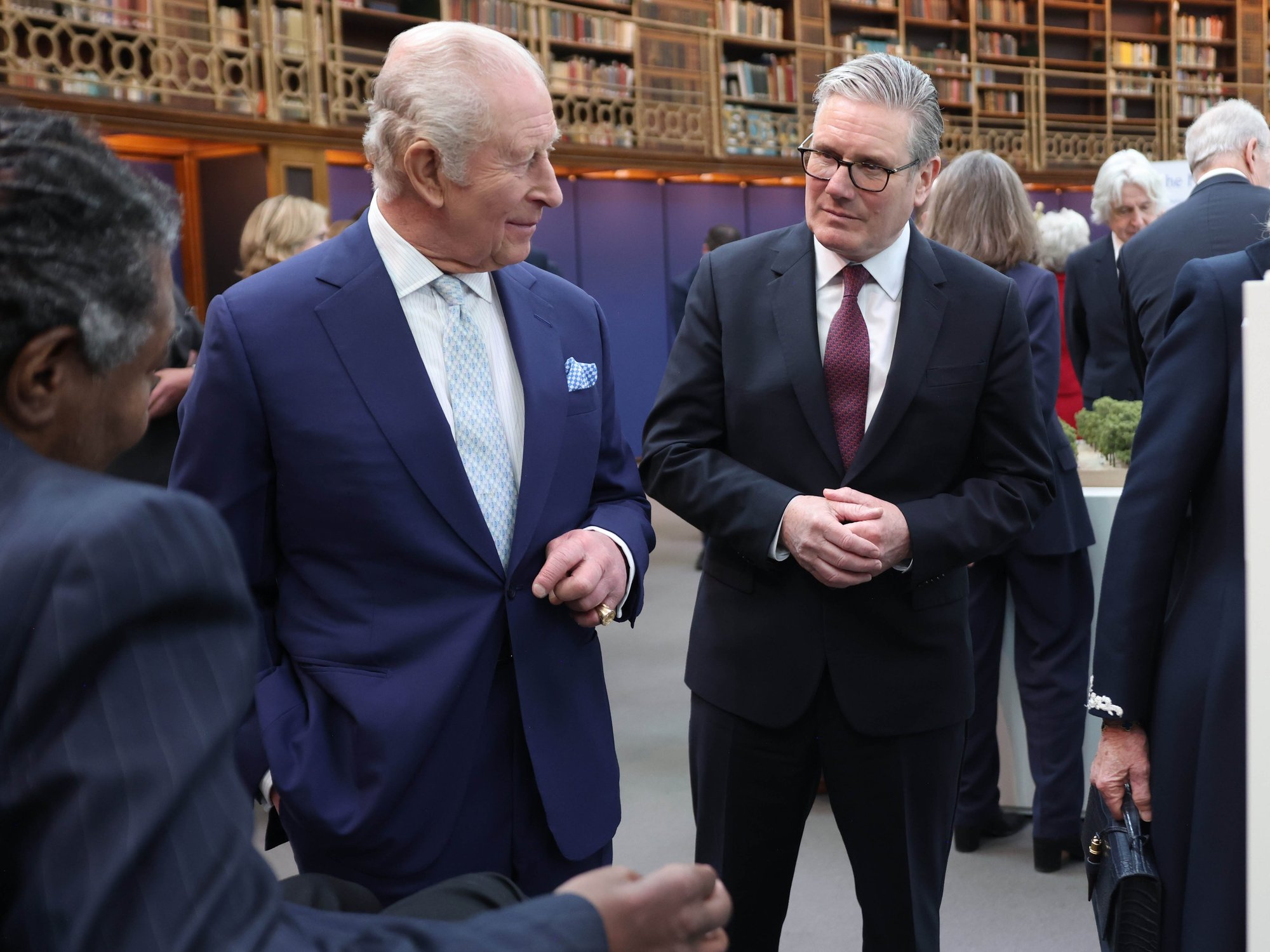
It was a flying visit in every sense.
The Prime Minister, having endured a grilling at the Liaison Committee, flew to Berlin last night to join other European leaders in the German capital. Because of the committee, he arrived late, missing the “family photo” of Zelensky, Macron, Merz and others.
And he flew back late last night to the UK, which might make some wonder: what was the point?
The Prime Minister has been criticised for his extensive foreign travels, which total six laps of the globe in air miles since he took office just a year and a half ago. “Never here, Keir” is just one of the nicknames critics use.
But he was in Berlin because he needed to be there, however briefly.
To show European unity.
Firstly, critically, to Russia. To show Putin that Europe is determined to support Ukraine and is also rearming at a pace to deter further Russian aggression.
Also, very importantly, to the United States. Donald Trump is changeable and impatient for the war to end, and has threatened to pull US support completely very recently.
It’s essential that he sees European leaders stepping up to take the responsibility for their own continent, which he feels they have subcontracted to America for too long.
Though the PM missed the photo, he was present at the one-and-a-half-hour dinner (smoked salmon starter, then white fish and semolina dumplings) with European leaders, where progress was discussed. Donald Trump dialled in from Washington.
The noises are now positive.
Two days of intensive talks in Berlin between the US delegation, led by Trump’s “peace envoy” Steve Witkoff and Jared Kushner, Trump’s son-in-law, and Ukraine’s President Zelensky, have, we are told, led to “significant progress”.
It’s only been weeks since the US put forward a 28-point plan to end the war in Ukraine, a plan which to many seemed to have the heavy hand of the Kremlin all over it.
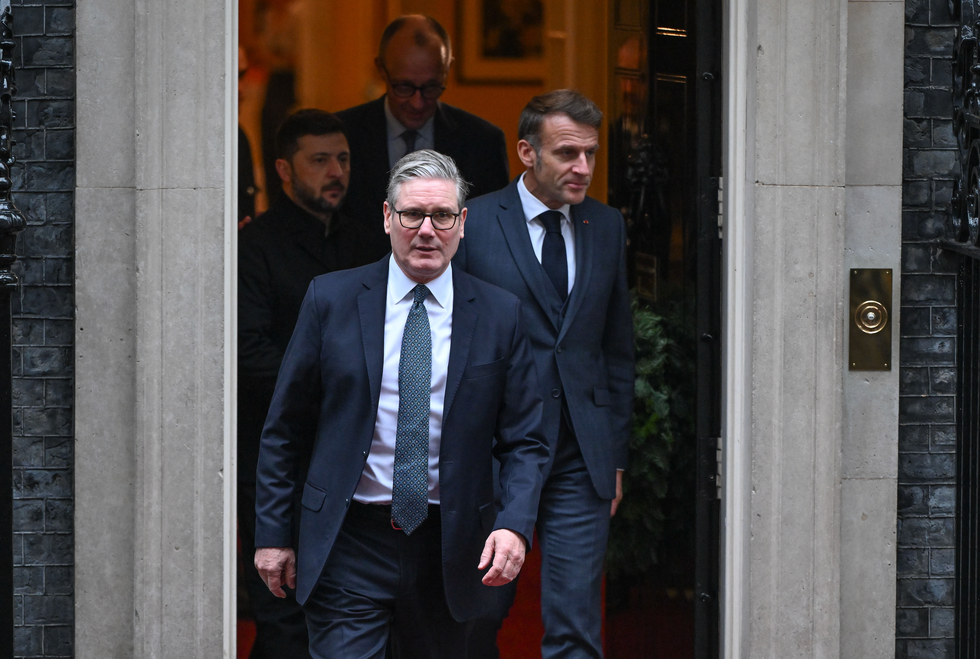
Clearly unacceptable to Ukraine, and indeed to Europe, European leaders, led by Sir Keir Starmer, French President Emmanuel Macron and German Chancellor Friedrich Merz, scrambled to work with Ukraine to come up with a more balanced proposal, with 20 points.
Donald Trump, who just last week was calling Europe’s leaders “weak”, now says “they’ve been amazing”, and that we are “closer now than we have been ever” to an end to the fighting.
Chancellor Merz says “a ceasefire now seems possible”.
There’s clearly still much to be worked out, and of course, it’s not clear at all if Russia really wants an end to the war.
But, though NATO membership is off the table for Ukraine, the US is at last offering “robust security guarantees” alongside European commitments and similar from Canada, that Zelensky say “should work”. They are said to be Article 5 style.
And the work that began with a hasty meeting in Paris back in February between Starmer and Macron, just after the Munich Security Conference, to form a “Coalition of the Willing” is now advanced with many nations involved.
Defence ministers are meeting today, including UK Defence Secretary John Healey.
“A multinational force” is talked of, though what that means in practice for British armed forces is still unclear.
The thorniest issue, territory, remains unresolved, and we hear may be put to the Ukrainian people following a ceasefire. Elections in Ukraine are on the table, as is Ukraine joining the European Union.
For all the PM’s huge unpopularity at home and failure to deliver the “change” Labour promised, he has played an integral part in getting to this point.
And he is clear that this is not just about Ukraine, but about the whole of Europe and our own safety.
NATO Secretary General Mark Rutte warned last week that Europe is Russia’s “next target” and we may know what our grandparents experienced.
Yesterday, the new head of MI6 warned “the front line is everywhere”, given the continuing hybrid attacks by Russia, whether that be cyber, drone or interference with undersea cables and the lasers targeted at British pilots from a Russian spy ship in the North Sea recently.
At the recent European Political Community meeting in Copenhagen, I was struck by Polish PM Donald Tusk declaring “it’s war” that’s already being waged by Russia on Europe, albeit not the conventional type.
Yet.
For all the PM’s failures, his work on the international stage stands out.
He needed to be in Berlin last night.
This isn't just about Ukraine. It's about all our safety.
More From GB News