

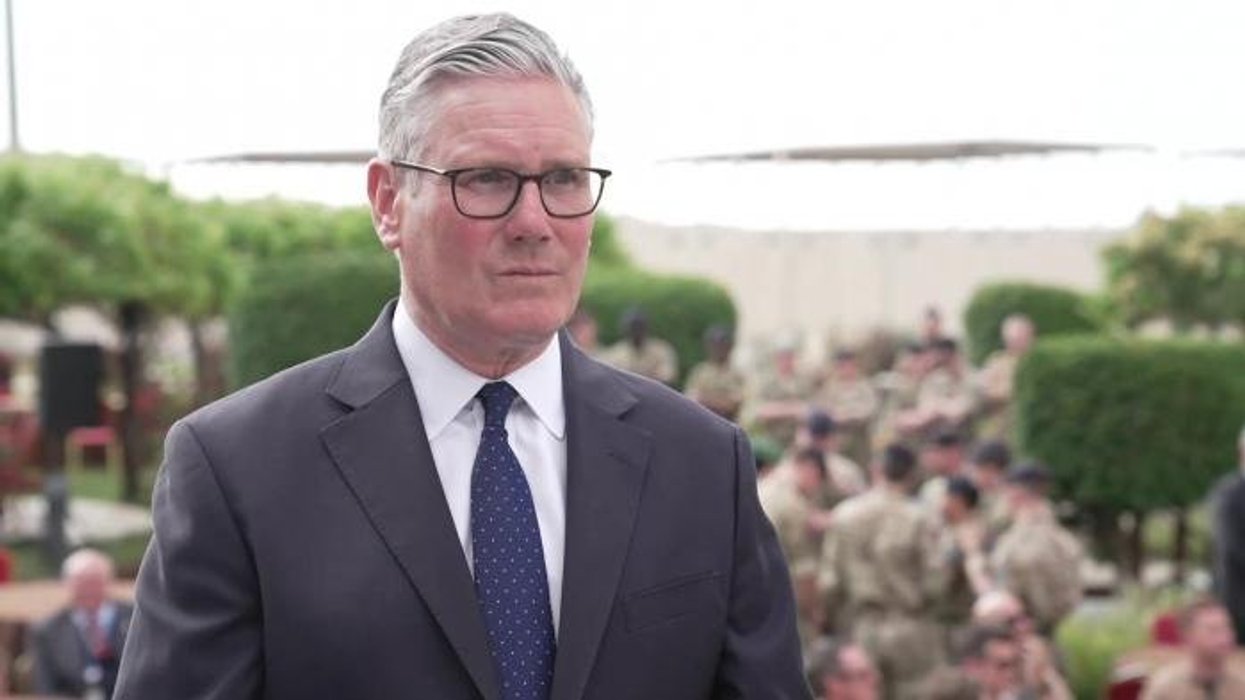






Every Prime Minister needs luck, and this week, Sir Keir Starmer got some. The Prime Minister found himself en route to the Gulf for a Middle East tour just as US President Donald Trump declared a ceasefire in his five-week war against Iran.
Number 10 did not try to hide this, making clear that the PM's arrival in Riyadh at the start of the tour, just as the ceasefire began, was a pure coincidence.
Setting aside the fact that it shows again the poor relationship between Donald Trump and Sir Keir, the PM has tried to make the most of being in the right place at the right time.
And for now, the tentative ceasefire has broadly started to take hold in the Middle East, although at the time of writing it feels dreadfully fragile.
The PM has done his best, setting himself two goals: helping to support a lasting ceasefire between the US and Iran, and amassing a team of allies to help get the oil tankers moving through the Strait of Hormuz.
That's why he has been convening a Middle Eastern version of the "Coalition of the Willing", which has been used to corral support for a Europe-led peacekeeping force in Ukraine if a ceasefire is declared there.
Last week, 30 foreign ministers discussed the idea at a meeting chaired by Foreign Secretary Yvette Cooper, and this week military chiefs from 40 countries gathered in Army HQ in north London to work out who can bring what to support a ceasefire.
In terms of getting the tankers moving through the Strait of Hormuz, the PM chaired a gathering of Gulf countries dubbed the "Dragon group" - including the UAE, Saudi Arabia, Bahrain, and others in Abu Dhabi on Wednesday.
So far, so good. But the worry is that all this diplomatic activity simply draws attention to how limited the UK's military support can be.
Most of the blame for this should be aimed at the Tories, who hollowed out the defence budget over 14 years. Successive governments have cut real-term defence spending by 22 per cent between 2009 and 2017, which frankly tells its own story.
No wonder the PM momentarily lost his temper when being challenged by Tory MP Sir Bernard Jenkin over the Government's defence plans in Parliament a fortnight ago.
And this impotence was demonstrated in his words when the PM said he was "fed up with the fact that families across the country see their bills go up and down on energy" because of the "actions of Putin or Trump across the world".
So, after a slow start when the PM failed to move defence assets to the region as the US forces built up, Sir Keir Starmer has done what he could from a diplomatic front in the Middle East.
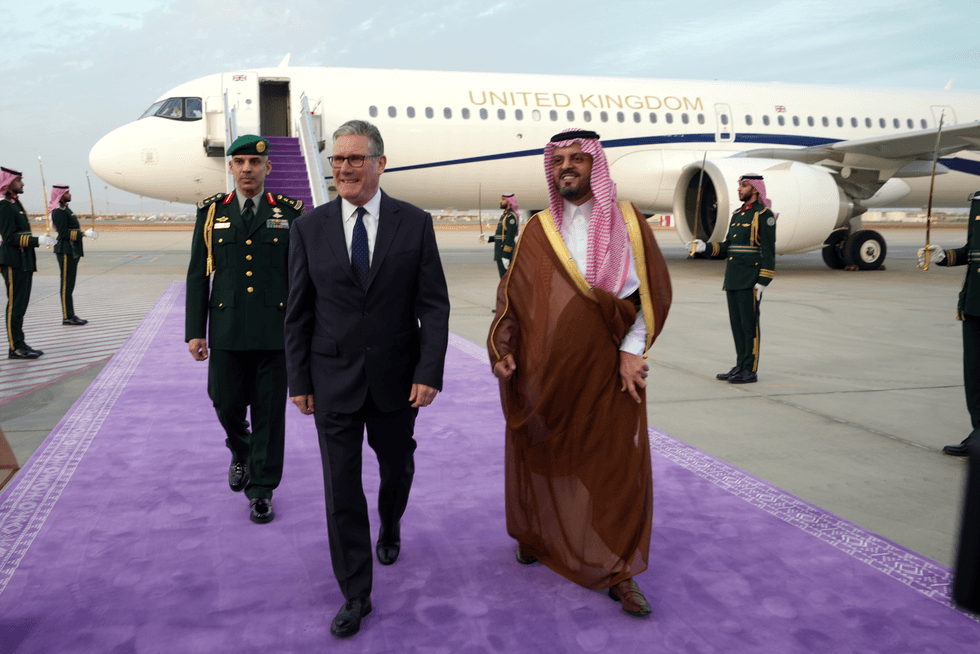
Keir Starmer finally gets some luck in the Middle East - but it may not help at the ballot box - Christopher Hope
|Getty Images
But MPs returning to Parliament on Monday will be pondering what effect all this might have on Labour's woeful standing among voters.
The answer is not much. History shows us that leadership on the world stage does not automatically translate into political success at home.
Tory PM Theresa May received plaudits for her leadership after the Salisbury poisoning in March 2018, when dozens of Russian diplomats were expelled around the world, but she struggled to win over voters. Just over a year later, she was out of No 10.
The same is true for Prime Minister Gordon Brown, who convened and led the global response to the financial crisis in September 2008 and lost the general election 18 months later.
And - of course - Sir Winston Churchill was turfed out of office two months after the Nazis surrendered at the end of the Second World War.
And the same risk presents itself for Sir Keir. His fate will be decided by whether he can get the economy growing, tackle the cost of living crisis, bring down NHS waiting lists and stop the boats.
On all these measures - perhaps apart from the NHS - the Prime Minister is failing. And this is how he will be judged.