

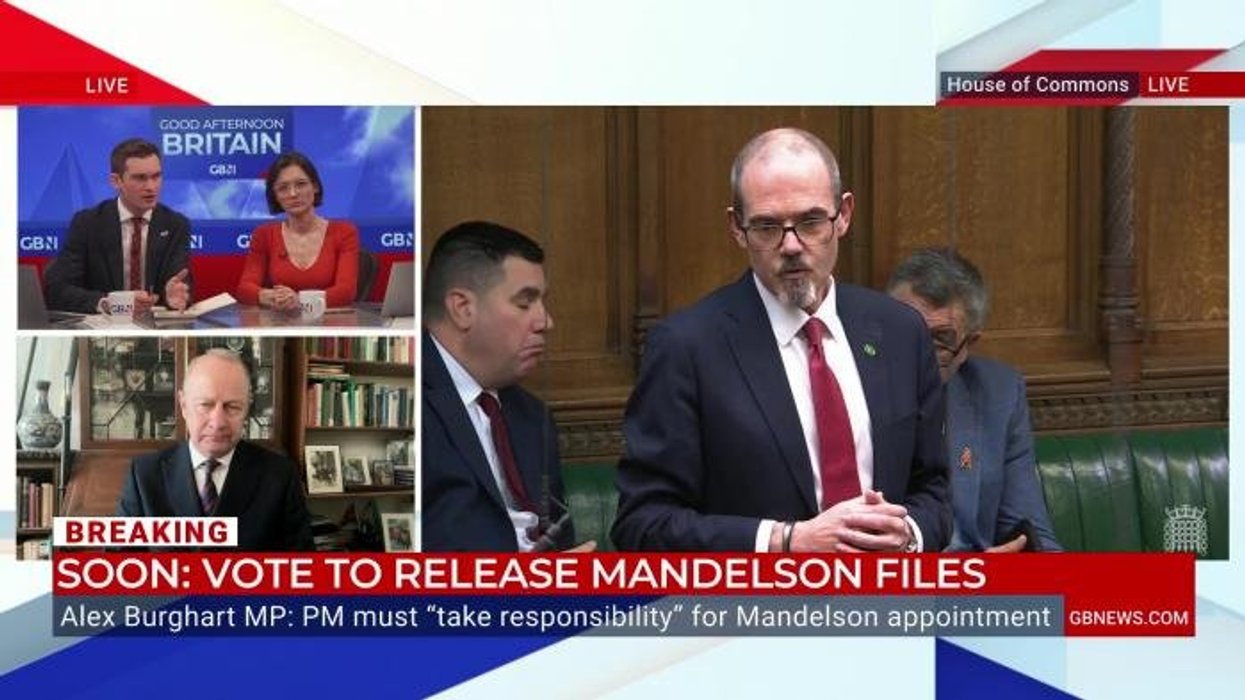









Five party mechanisms could end Keir Starmer's premiership as the scandal surrounding Peter Mandelson deepens.
It comes after a fiery exchange in PMQs where it emerged the PM knew about Mandelson's longer-term relationship with disgraced paedophile Jeffrey Epstein before appointing him as US ambassador.
The PM insisted that the scale and extent of the relationship was not disclosed during Mandelson's vetting process and that the now-disgraced politician had "lied throughout" the questioning.
Starmer also told Parliament he will release all material relating to the appointment, barring national security and "international relations" exemptions.
This did not stop a barrage of questions about the PM's judgement, which came less than 24 hours after the Metropolitan police formally launched a criminal investigation into Mandelson amid allegations he passed market-sensitive information to Epstein.
Plaid Cymru's Westminster leader Liz Saville told the Commons: "This man's association with Epstein was known when the prime minister personally appointed him as the UK's ambassador to the USA," adding: "How can we trust the prime minister's judgement? And in questioning that, how can we trust him to remain as prime minister?"
With Starmer's premiership looking increasingly precarious, here are five mechanisms which could, in theory, make his position untenable.

Five mechanisms threaten Keir Starmer's premiership as the scandal surrounding Peter Mandelson deepens
|Getty Images
Leadership challenge
Labour’s internal rules allow MPs (and sometimes party members) to trigger a leadership contest.
If enough Labour MPs submit letters of no confidence to the party’s governing body, it can trigger a leadership election.
Under recent Labour rules, a leadership ballot can be opened if a threshold of MPs nominate alternative candidates — typically a percentage of the parliamentary party (often around 20 per cent).
However, this requires a large and organised rebellion from Labour MPs who generally do not oust a leader unless they believe they can win a replacement election.
Starmer also seems acutely aware of the sharks circling, banning potential leadership challenger Andy Burnham from standing for Parliament in a by-election (the PM strenuously denies this was the motivation behind the blocking).
Backbench revolt
Even without a formal leadership challenge, MPs can make a leader’s position untenable.
Backbench rebellions can embarrass a leader and erode authority — e.g., defying the whip on key votes.
Pressure from influential party figures can make it harder for a leader to govern.
There are already reports of internal dissatisfaction over the handling of both Mandelson and a slew of other policy issues, including the decision to block Burnham's by-election bid.
Vote of no confidence
A vote of no confidence can bring down a Prime Minister, but in practice, it only works after their own party has already turned on them.
The closest Starmer got to this outcome came in the summer when proposed cuts to the benefits bill in the summer sparked a major rebellion, with 120 Labour MPs opposing the welfare reforms.
Former work and pensions secretary Lord Blunkett warned it could trigger a vote of no confidence or chaos within the party if the benefits bill was rejected by Parliament.
It didn't reach this threshold in the end as backbench revolt forced the PM to climb down.
Starmer's working majority makes a vote of no confidence unlikely as Labour MPs would have to vote against their own Government.
That’s a huge step because it risks:
- Losing power immediately, and/or
- Triggering an election that could cost MPs their seats.
Cabinet mutiny
Mass resignations have proven to be one of the most powerful and fast-acting weapons against a sitting prime minister after they toppled Boris Johnson in July 2022.
The now-infamous 'Partygate' and a slew of other scandals led to ministers concluding the former Conservative Prime Minister was dishonest and incapable of leading his party into the next general election.
Starmer could face such an eventuality if ministers conclude he has crossed a line.
Bloody nose at the ballot box
The spectre of a crushing defeat at the ballot box could also force Starmer's hand.
The upcoming May elections are already being seen as a litmus test of Starmer's leadership, with Labour on course for a bruising set of results across the country.
The Mandelson scandal could add substantially to the fire of calls for Starmer to quit as party leader and Prime Minister.
When the rubber meets the road
Significant pressure on a prime minister does not necessarily seal their fate.
Yes, scandals on the periphery can weaken a leader politically, but they don’t automatically trigger removal.
For Starmer to be forced out, you would typically need:
- A significant drop in confidence among his own MPs,
- Major electoral setbacks
- Or evidence he lied or acted improperly himself — which hasn’t emerged.
The Mandleson controversy adds pressure, strains relationships in Parliament, and gives opponents ammunition — but Labour would need to reach a broad agreement that replacing Starmer is better than keeping him before internal mechanisms would activate.
More From GB News