






Nigel Farage has started to “worry slightly” about President Donald Trump’s judgement on Iran, confessing he “struggles to understand” his thought process.
Reform UK’s leader said: “I do, as a friend, worry slightly about his judgement on this, yes. I do.
“It will be a terribly sad end to an amazing political career if the man that was always anti-war in the end gets (brought) down by this... I struggle to understand it.”
Mr Farage has historically praised Mr Trump for his domestic economic and immigration policies, but his support for his “friend” has clearly begun to wane over his offensive actions in the Middle East.
TRENDING
Stories
Videos
Your Say
The Clacton MP previously suggested the Republican had been poorly advised ahead of the military action and confirmed he had not spoken to the US President since earlier this year.
Relations between Washington and Westminster have grown increasingly strained after Sir Keir Starmer said Britain would not be "dragged into" the Iran conflict.
The Prime Minister has repeatedly said the conflict in the Middle East is "not our war", refusing alongside other Nato allies to send vessels to protect the Strait of Hormuz whilst the conflict continues.
However, Sir Keir and France's President Emmanuel Macron confirmed they would lead a "multinational mission" to protect the strategic waterway, in which 20 per cent of the world's oil usually passes through, after the conflict has concluded.
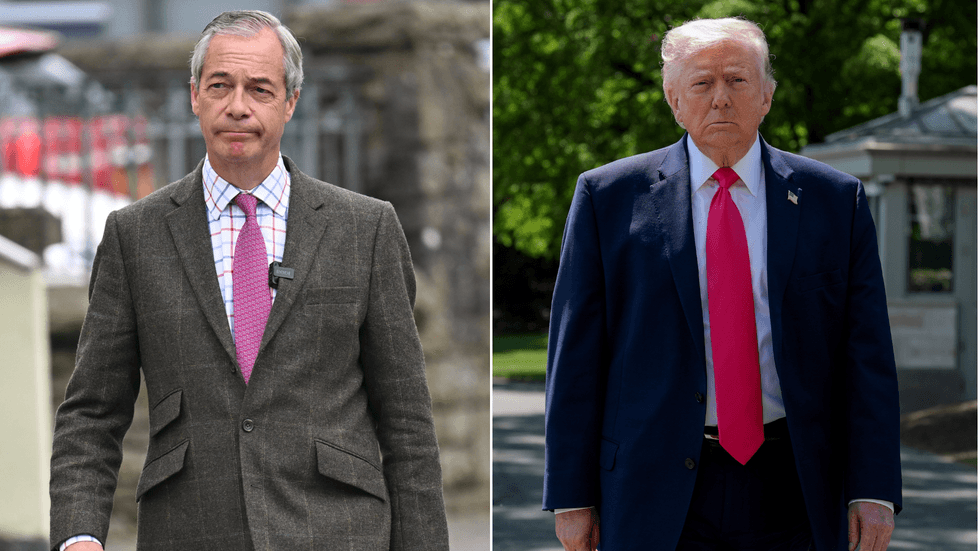
Nigel Farage has confessed he "struggles to understand" Donald Trump's actions in the Middle East
|GETTY
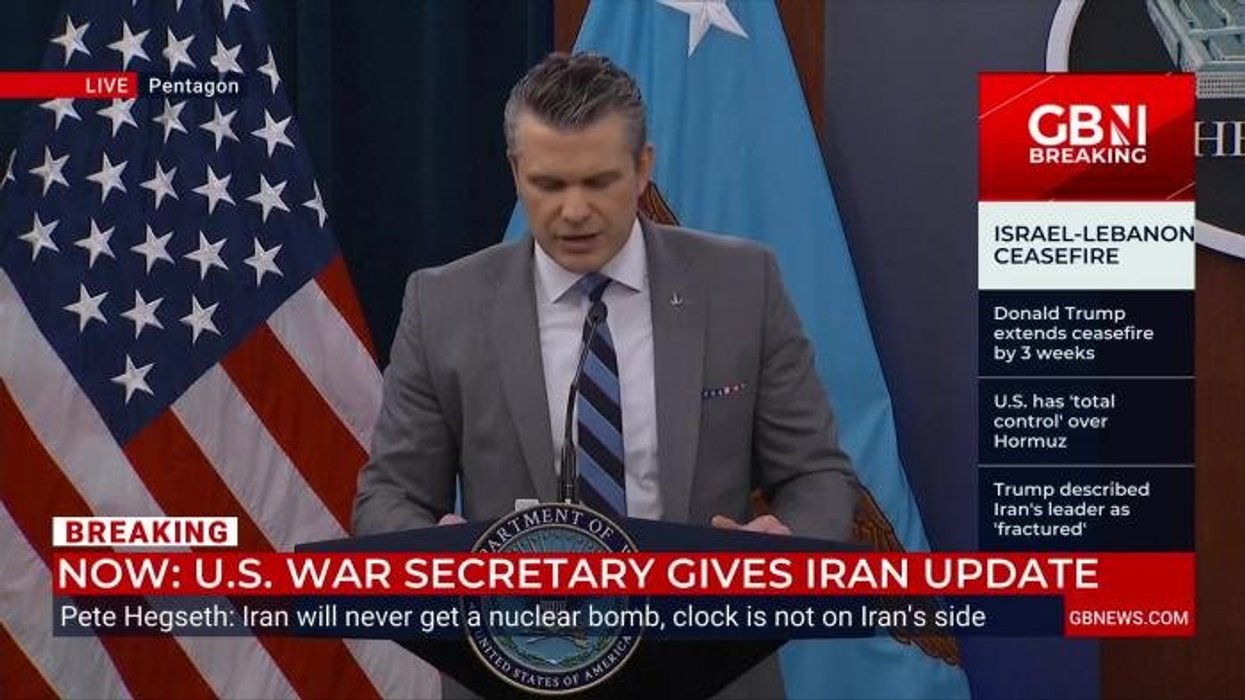
Today, a memo circulated the Pentagon is rumoured to have suggested the US could change its position on the Falkland Islands, in retaliation to the UK’s reluctance to involve itself in America’s offensive operation against Iran.
This has sparked No10 to emphasise its sovereignty over the archipelago, with the Prime Minister’s spokesman saying: "We could not be clearer about the UK’s position on the Falkland Islands. It’s long standing. It’s unchanged."
The shift in tone from Mr Farage comes amid new polling suggesting his close association with Mr Trump could prove damaging electorally.
Only 13 per cent of British voters express support for the US President, while 70 per cent of Britons perceive Reform UK as pro-Trump, YouGov polling suggests.
LATEST DEVELOPMENTS
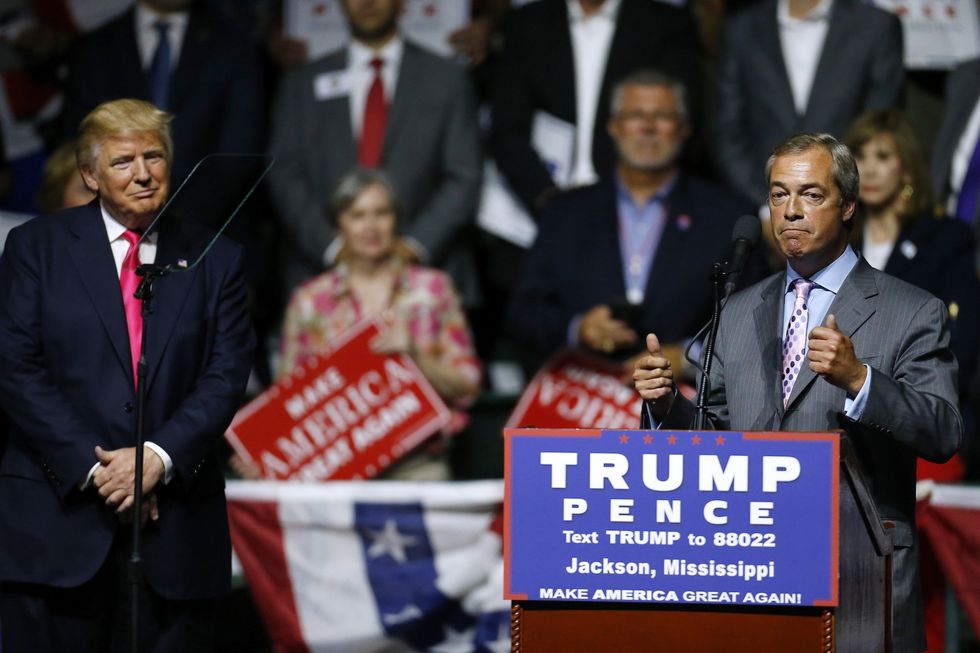
Donald Trump and Nigel Farage's friendship peaked when the Reform UK leader spoke at a election rally in 2016
|GETTY
This begs the question of whether Mr Farage’s special relationship with the Mr Trump does more harm than good to Reform's chances in 2029.
It is possible this – albeit gentle – criticism is a strategic manoeuvre by Mr Farage to distance himself from the controversial Mr Trump.
Turning to domestic policy, Mr Farage signalled a Reform UK government would tear up Sir Keir's post-Brexit reset with the European Union, arguing a closer economic relationship with the United States would be far more beneficial for Britain.
He told the Daily Mail: "The starkness of the approach towards money, risk appetite, capital in America and Europe is incredible.
"And here's Starmer taking us ever closer back to the European Union."
Reform UK’s leader also weighed in on a former civil servant behind the Brexit department, Sir Philip Rycroft, after he said Brexit was not serving Britain and called for a reconsideration of EU membership.
He wrote on X: “Philip Rycroft helped to vandalise Brexit and is not a neutral civil servant.
"He is an enemy of democracy who seeks to choke the funding of political opponents he disagrees with."
Mr Farage also addressed the welfare budget, arguing "attitudes" must "harden" and calling the debate ahead a "war".
He said: "There's a massive, massive change of thought needed on benefits – that's going to be the biggest war of them all.
"And there'll be riots, and there'll be strikes, and there'll be protests, and we know all of that, but that's what we're going to have to do – it has to be done.
"We just can't afford it now."
Our Standards: The GB News Editorial Charter