







The Scottish Greens are pledging to scrap homework for primary school children as part of a sweeping education overhaul outlined in their manifesto for the forthcoming Holyrood election.
Alongside abolishing homework for younger pupils, the party is also calling for significant changes to how secondary school students are assessed, with reduced emphasis on traditional examinations.
The Greens describe their proposals as a "bold" reimagining of Scotland's education system, arguing that homework at primary level provides "little, if any, proven benefit" to children's learning.
The Scottish Government has indicated partial agreement with reducing reliance on high-stakes final exams, though it has ruled out removing examinations altogether.
TRENDING
Stories
Videos
Your Say
Ross Greer, co-leader of the Scottish Greens, contends that evidence suggests primary homework may actually cause more harm than benefit.
"It can dampen rather than encourage curiosity, turning education into something to dread rather than love," he said.
The party argues that young children require time after school for play, exploration and socialising with peers - activities that homework disrupts.
Early learning in the UK has seen radical change in recent years, with vastly varying approaches to teaching younger children at nursery and primary school level.
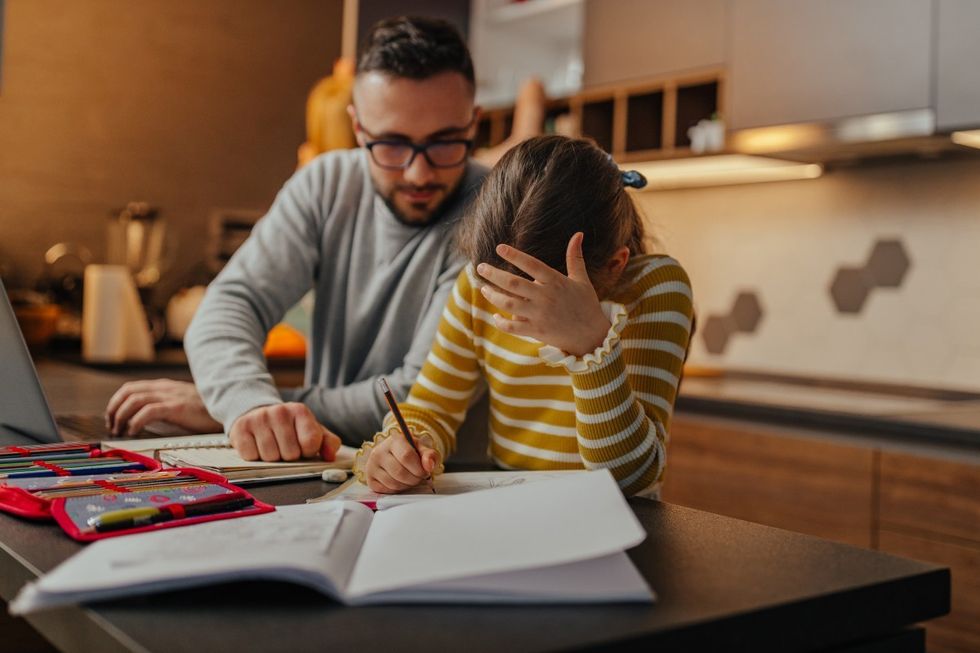 Greens talk scrapping primary school homework as part of controversial education overhaul proposal | GETTY
One of which being the Reggio Emilia approach - a student-centered, constructivist early childhood philosophy originating in Italy, treating children as capable, curious individuals who direct their own learning.
Nurseries adopting this approach often value play, exploration and adventure as equally important to core early learning.
"Children need time to play, to explore and to socialise with each other after school," Mr Greer added, "homework gets in the way of these learning opportunities".
The co-leader maintains that these informal activities represent valuable learning experiences in their own right.
LATEST DEVELOPMENTS
Mr Greer acknowledged widespread recognition that the primary curriculum has become excessively crowded, creating pressure on teaching staff to assign additional homework simply to cover all required material.
"This puts pressure on teachers to issue more homework just to get through it all. That isn't the solution though, fixing the curriculum is," he said.
The Scottish Greens co-leader rejected the notion of maintaining homework purely because it represents established practice.
"We can't just stick with homework because it's what we've always done.
"We need to think big, be bold and embrace this chance to fix the system," he added, urging fundamental reform rather than incremental adjustments.
A Scottish Government spokesman confirmed agreement with the Hayward Review's recommendation to shift the balance of assessment methods in the senior phase, reducing dependence on high-stakes final examinations.
"This means that, in the future, internal and continuous assessment will contribute to a greater percentage of a final grade," the spokesman said.
Written examinations have already been eliminated from practical subjects such as metalwork and woodwork, where coursework better reflects the nature of the disciplines.
However, the Government emphasised that rebalancing assessment does not equate to abolishing exams entirely.
On homework, the spokesman noted that headteachers and primary school teachers should be empowered to make such decisions for their pupils.
More From GB News