









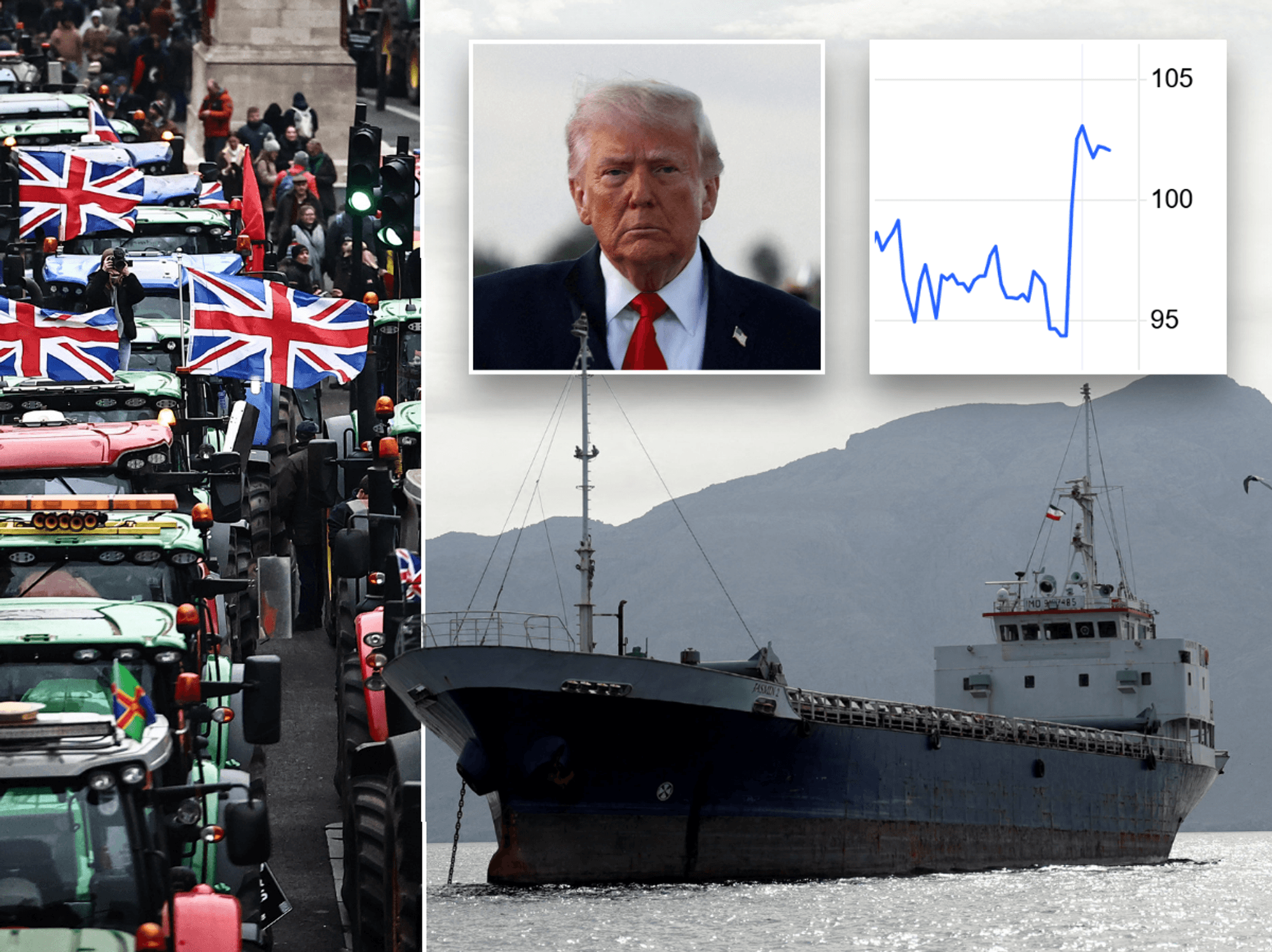

The USA and Iran have failed to reach an agreement on ending the Iran war. Meeting in Islamabad under the Pakistan government’s auspices, 21 hours of talks resulted in the two sides seemingly as far apart as ever.
At the end of the marathon session, US Vice President JD Vance said the US delegation would be returning to home without a deal.
He said his team had been unable to get Iran to confirm that they wouldn't seek a nuclear weapon or the tools that would enable them to quickly achieve one.
Nor did he mention in his public comments the Strait of Hormuz - the key oil route which Iran has blocked and the US wants it to reopen.
Although there has been no formal response from the Iranian delegation yet, Tehran has always said that it does not plan to develop a nuclear weapon.
The country's state media has suggested that the talks broke down because of unreasonable US demands. Iran and the USA seem to have had fundamentally different aspirations for the negotiations; Iran looks to an all-encompassing agreement that will end the threat of war with the USA, while the United States seeks a much narrower agreement centred on the current war.
According to the Washington DC-based Institute for the Study of War (ISW), the unusually large size of the Iranian delegation – some 70 strong - likely also reflects internal divisions and deep mutual distrust among the Tehran regime power centres, rather than a unified negotiating strategy.
There was reportedly infighting between the regime factions before the negotiations. The presence of overlapping political, security, and economic actors suggests a need for constant internal monitoring. So what might happen now?
There has been no announcement on whether attacks on Iran will resume, but there’s no doubt that the possibilities have increased.
As for the Strait of Hormuz, a reopening through negotiations seems off the table. The arrival of two US warships in the Gulf suggests that the US sees another route.
The US Navy destroyers USS Frank E. Peterson and USS Michael Murphy transited the Strait of Hormuz on Saturday as part of a what was described as a freedom-of-navigation mission.
Forces under US Central Command (CENTCOM) also announced that they had begun setting conditions to clear mines in the Strait of Hormuz previously laid by Iran’s Islamic Revolutionary Guard Corps.
 Donald Trump's nuclear bomb dilemma just went from bad to worse |
 Getty Images
Trump now faces the same dilemma as he did before the Islamabad talks. Does he simply declare victory and withdraw US military assets, leaving Israel and the Gulf States to clear up the mess left behind?
Or does he use force to deliver his previous agenda of Iran giving up its nuclear programmes, stop supporting its proxy groups and militias, and opening the Strait?
If he chooses the latter course of action, then we’re in it for the long haul. Removing Iran’s enriched uranium and forcibly opening and securing the Strait will involve the deployment of ground troops, as will the seizure of Kharg Island if he adds that to his plan.
All this will be in direct contradiction of his pre-election pledge of “no more foreign wars”. Will the US electorate support him?
It may be that Trump’s bluff is being called. How he might react is still a matter of some conjecture, but we’ll find out soon enough.