











A former civil servant has revealed four simple ways to fix the "broken British state" after warning the UK will not be able to tackle the small boats crisis unless Whitehall undergoes major reform.
Ameer Kotecha, an ex-Foreign Office mandarin who headed up the British Consulate in Russia between 2023 and 2025, resigned from the civil service this month following Sir Keir Starmer's "craven surrender" of the Chagos Islands.
However, the former diplomat also shed some light on the inner workings of Whitehall, arguing: "There is a system that exists that doesn't harness talent."
In an interview with GB News, Mr Kotecha identified some of the "low-hanging fruit" changes that would help transform Whitehall.
TRENDING
Stories
Videos
Your Say
The 34-year-old lamented a lack of focus on performance and a "jobs for life" culture as the first major issue in Whitehall.
"I do think there's a big problem there," Mr Kotecha told GB News.
"And the solutions, I think, are being far tougher on underperformance… almost no one loses their job in the civil service for underperformance.
“That's not to say I get any pleasure out of seeing people get the sack. But as anyone in the private sector notices, if you don't get rid of the underperforming, it drags the whole organisation down."
Damning new data by Tory MP Neil O'Brien showed Whitehall mandarins are 12 times more likely to die in service than be sacked for poor performance.
The data found that just two civil servants in the Department for Transport were dismissed in 2024/25, despite 822 performance reviews leading to unsatisfactory performance ratings and 58 being subject to "poor performance" cases.
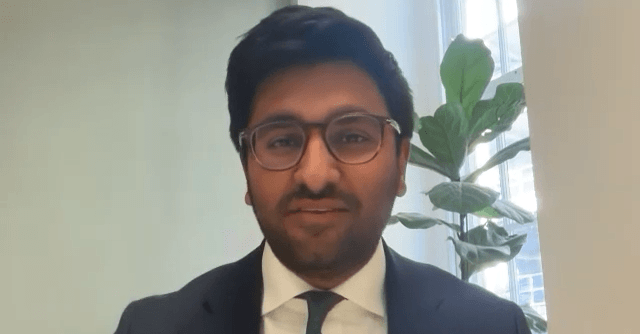
Ameer Kotecha, an ex-Foreign Office mandarin who headed up the British Consulate in Russia between 2023 and 2025
|GB NEWS
However, Mr Kotecha also pointed out that a number of highly qualified civil servants move to more lucrative careers in the private sector.
He said: "There are actually lots of very capable people in the civil service.
"But there is a system that exists that I think doesn't harness that talent. And where there are people, frankly, shirking and coasting, it doesn't get tough on those people either.
"So, you've got a situation where the genuinely talented and driven are frustrated because they feel the system is bureaucratic and doesn't make the most of their talents."
More than half of all Whitehall leavers left the civil service by resignation in the year 2023/24, with one-in-four leaving as a result of retirement.
Fewer than one-in-10 departed the civil service either due to it being the end of their appointment or following a dismissal.
LATEST DEVELOPMENTS:
More than half of all Whitehall leavers left the civil service by resignation in the year 2023/24, with one-in-four leaving as a result of retirement
| GETTYThere is also a high number of civil servants who switch departments following periods of secondment in other corners of Whitehall.
"One of the things that Dominic Cummings has mentioned, and he was tearing his hair out over, is the fact that there is this mad system in the civil service where everyone moves jobs every two or three years," Mr Kotecha explained.
"Suddenly, as Cummings said, he's in No10 chatting to the person in charge of Chinese cyber operations, and that person disappears and is replaced by someone new. And that person, the new person, had spent the last two years working on special educational needs.
"I mean, there is an absurd system that seems to exist solely for the benefit of civil servants.
"I'm sure the person who was working on special educational needs found it absolutely fascinating to have a couple of years working on Chinese cyber operations, but it doesn't mean that he should be doing that.
"And it doesn't mean that it's serving the taxpayer well for him to do that."
Mr Kotecha described the secondments as a "mad system of job rotation and job churn", with official data suggesting around 24,000 civil servants being transferred between Whitehall departments every year.
There has been a steady rise in internal turnover since 2010, with the proportion of Whitehall department shifters quadrupling in 2022.

Civil servants working from home was also identified as a core problem in Whitehall
| GETTYCivil servants working from home was also identified as a core problem in Whitehall, with Mr Kotecha claiming requirements for 60 per cent attendance remain regularly unmet.
He told GB News: "There's an endemic work from home culture which seems to be stuck.
"Civil servants are only required to come in 60 per cent of the time, right? That's three days a week.
"And even that, in many cases, they're not doing… That there is a problem."
A bombshell report into average occupancy rates across Whitehall in September 2025 showed a drop from 75 per cent in March of that year to just 72 per cent in June.
Occupancy at the Department of Transport fell from 74 per cent to just 61 per cent, while the Department for Culture's drop went from 71 per cent to 62 per cent.
However, Whitehall surveys regularly show civil servants want to spend more time working from home, with 78 per cent of respondents describing the 60 per cent mandate as a failure and 75 per cent believing remote working has had a positive impact.
Despite a drop in office attendance, Whitehall's biggest trade union is now calling for more opportunities to work from home.
The Public and Commercial Services claimed mandarins needed more time away from Whitehall amid financial concerns following the outbreak of the war in the Middle East.
Mr Kotecha's final quick fix for the civil service centred around an aversion by Whitehall mandarins to boost productivity.
He suggested modern technology could prove particularly beneficial in increasing output, especially if Whitehall was more receptive to artificial intelligence.
"The productivity in the civil service has absolutely flatlined," Mr Kotecha said.
"And all of the things that it should be doing to try and boost that productivity, for example, getting people back into the office or seizing the advantages of AI, it doesn't really seem to be doing anything meaningful to do those things.
"My fear is that if things continue, as it were, we're just going to continue to see a bloated civil service that, as everyone in the country can see, is failing to tackle the big problems that the country faces."
Data released by the Office for National Statistics found public service productivity was 3.4 per cent lower in 2024 than in 2019.
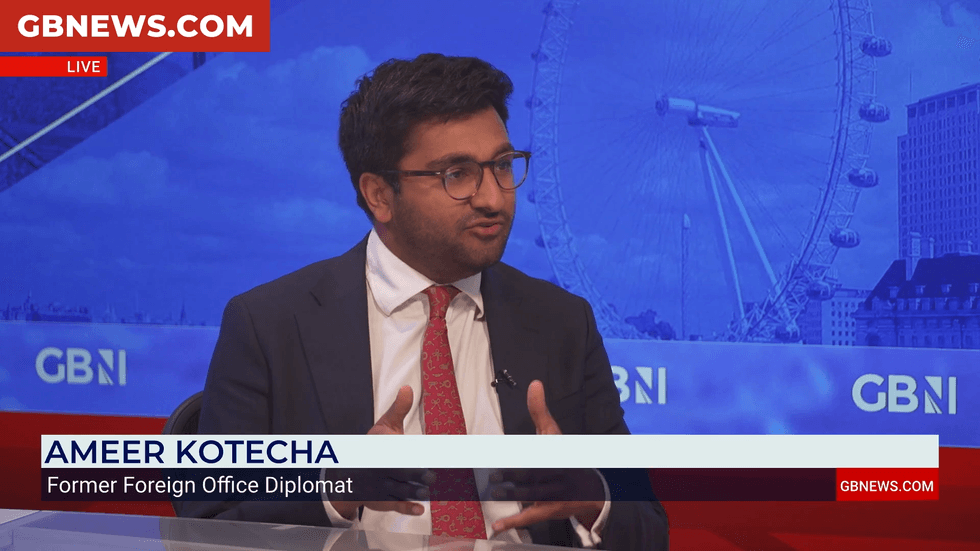
Mr Kotecha suggested modern technology could prove particularly beneficial in increasing output
|GB NEWS
However, the ex-diplomat also revealed the reason he thinks Sir Keir is not willing to take on the civil service.
Mr Kotecha said: "I think the problem is, to be honest, politicians, particularly Labour ministers, have struggled to get tough on this.
"They think that to do so would be unkind. They're very beholden to this sort of lanyard class in terms of a core component of their voter base.
"And as a result, all of these problems that have existed for a long time just continue, and in many cases, they're getting worse."
He added: "You need political direction from the very top in order for ministers to really make the changes necessary.
"And I've so far seen absolutely nothing to suggest they're willing to do that."
Earlier this year, the Prime Minister's Chief Secretary Darren Jones directly addressed concerns about the need to rewire the civil service and build the new digital age.
He said: "Everyone agrees that the status quo is not working. The public, politicians and civil servants are all frustrated by the pace of change.
"The public sector has fallen unacceptably behind the private sector. Decades of stagnant productivity. Unsustainable increasing costs. Poor outcomes and unacceptable customer experience.
"The public rightly ask, if you can bank and shop online, in a quick and convenient way, then why can’t it be done for public services too?
"The Prime Minister and I expect Whitehall to focus solely on delivering for you, instead of talking to itself.
"To move from interdepartmental arguments, internal policy papers, processes and discussions, to a new digital state that delivers public services directly to you: the customer."
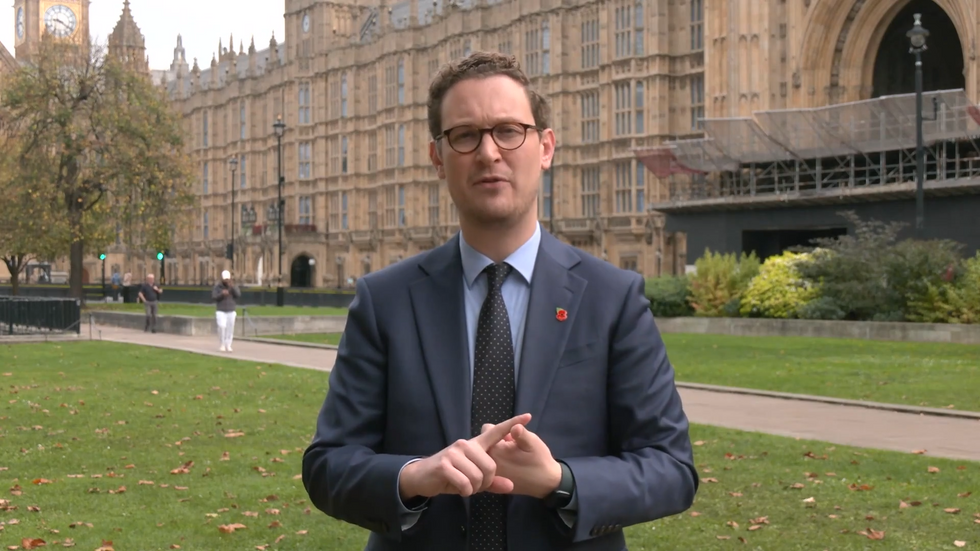
Earlier this year, Darren Jones directly addressed concerns about the need to rewire the civil service and build the new digital age
| GB NEWSFollowing warnings about the civil service from Dominic Cummings, Mr Kotecha warned the inner workings of Whitehall exposed the extent to which Britain is broken.
He said: "I spent 11 years in the diplomatic service and therefore in and around Whitehall, and I just don't see how one could come up with any other conclusion.
"The state is broken. Things are not working. I do think that it's possible to fix it."
Mr Kotecha added: "We have to fix the machine. We have to fix Whitehall.
"And none of the really big problems the country faces – stopping the boats, reducing migration properly, getting tough on law and order, growing the economy – can be fixed without fixing the state and fixing Whitehall."