

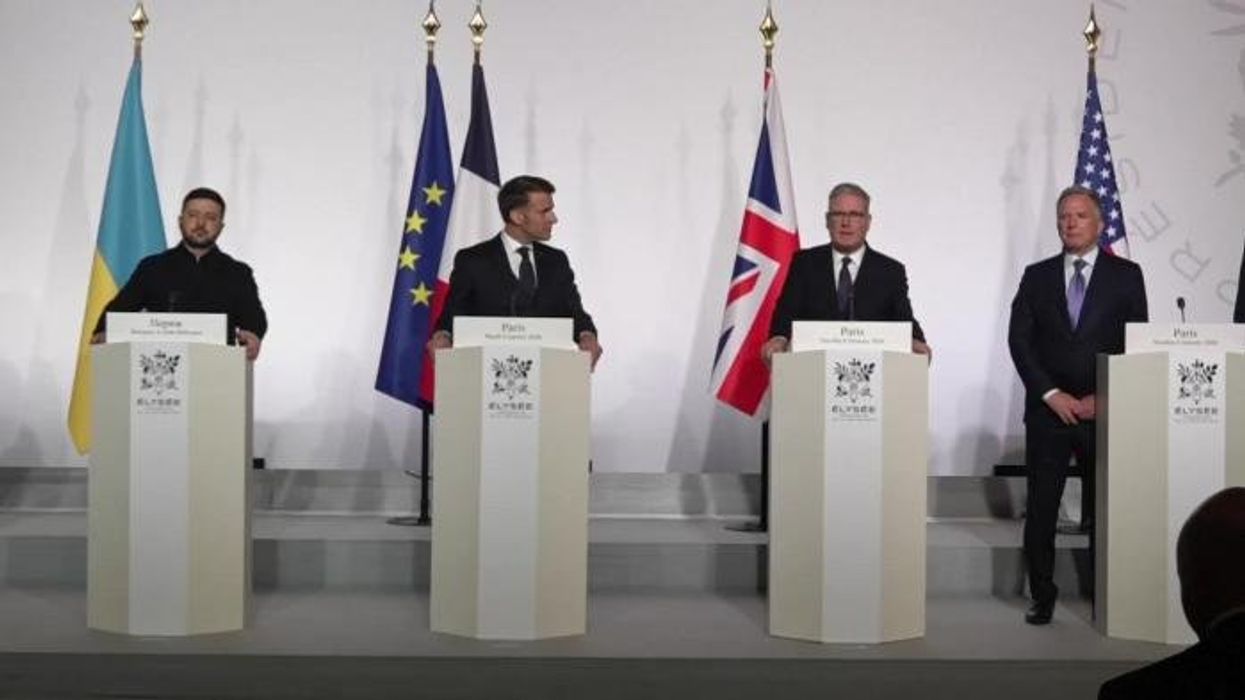




The chatter regarding British and French troops deploying to Ukraine is growing louder. For many, the very idea summons cold sweats about escalation and World War III. But stripped of the hysteria, does the proposal make military sense?
Let’s be clear: in many ways, we are already there. The UK is heavily committed. We provide world-class training, critical logistics, and specialist support in intelligence and air systems.
It is an open secret that Special Forces advisors are likely already helping in the shadows. Formalising this presence isn't an invasion; it is a logical evolution of our support.
This proposal offers a golden opportunity to bring these scattered activities under one unified, joint command inside Ukraine. By establishing specific "hubs" for logistics and training, we can streamline our delivery of lethal aid. Naturally, these hubs would require protection—enhanced by troops and air defence systems.
This requires a nation with the experience to pull it off. As a permanent member of the UN Security Council and a NATO leader, Britain has a global responsibility. It is in our backyard.
The logic of leadership
We have a history of leading from the front — unlocking political deadlocks on main battle tanks when others dithered. We also have the Balkans precedent, proving we can operate effectively alongside the French.
If we didn't stand up first, the sad reality is that no one else in Europe would.
The intelligence dividend
This is not a one-way street. A deployment would offer British troops a front-row seat to the future of warfare. We have immense lessons to learn from the Ukrainians, who are currently the masters of innovation.
Our intelligence services need to study, up close, operations like Operation Spider’s Web—the audacious drone strikes launched from trucks deep behind enemy lines — and the use of sea drones to sink naval vessels. This is combat experience money cannot buy, and we need to absorb these lessons now.
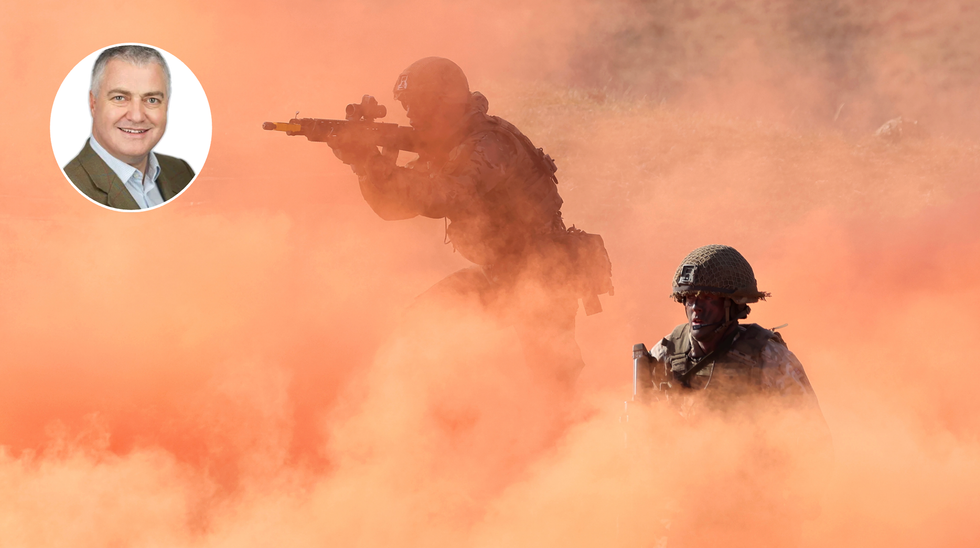
Putting British boots on the ground in Ukraine will finally unmask the Putin paradox - Philip Ingram
|Getty Images
However, we cannot be blind to the pitfalls. The elephant in the room is sustainability. Initial talks suggest a 15-year commitment. This would be indefinite.
The question we must ask is whether the UK, after years of hollowed-out defence budgets, has the equipment for the "worst-case scenario"—holding off a Russian surge until the US security guarantee triggers. Between the UK and France, we could manage this at a limited scale.
But the danger is trying to do too much with too little. The biggest military risk is always mission creep. Without clear "left and right of arc", a support mission can quickly morph into direct combat, dragging us into a quagmire we aren't resourced to fight.
The Putin paradox
Finally, what of the fear of World War III? It is unlikely. Vladimir Putin knows that triggering a wider coalition — and bringing the full weight of the US security backstop down on his head — is a suicide pill.
He cannot survive that fight. Keir Starmer and Emmanuel Macron are shrewd operators. They have signed agreements knowing full well they are unlikely to be implemented immediately. This is geopolitical poker. It signals resolve to NATO while forcing Putin to look at a hand he cannot beat.
Ideally, this is a logical step for a nation with our heritage. But without rapid, real investment to back it up, it remains a high-stakes gamble.
Our Standards: The GB News Editorial Charter
More From GB News