






One way of spotting where the Overton Window is heading is language. The Window - the sociological term given to what polite society deems “acceptable” discourse - is currently in rapid motion. And it’s moving to the Right.
Words which, even five years ago, would’ve been seen as beyond the pale, taboo or just slightly unseemly are now part of the Right’s lingua franca.
“Remigration” is one such word. A reworking of “repatriation”, but essentially meaning the same thing - without the BNP baggage.
Another word you will commonly now hear bandied around as shorthand for what Margaret Thatcher meant when she called an ideological fellow traveller “one of us” is “patriot”.
It has an American twang to it, but - increasingly - it is awarded as a British badge of semantic honour to those on the Right who unapologetically love their country and, like me, fear for its future.
What does it take to qualify as a patriot? Is it simply a deep affection for the land, its history and customs? Are there gradations of patriotism? How performative need it be? Is someone who flies a flag in their garden more patriotic than someone who doesn’t?
I think, for many of us, the most important test of patriotism is whether we feel it sufficiently strongly to risk oblivion. To lay down one’s life for one’s country in a foreign field.
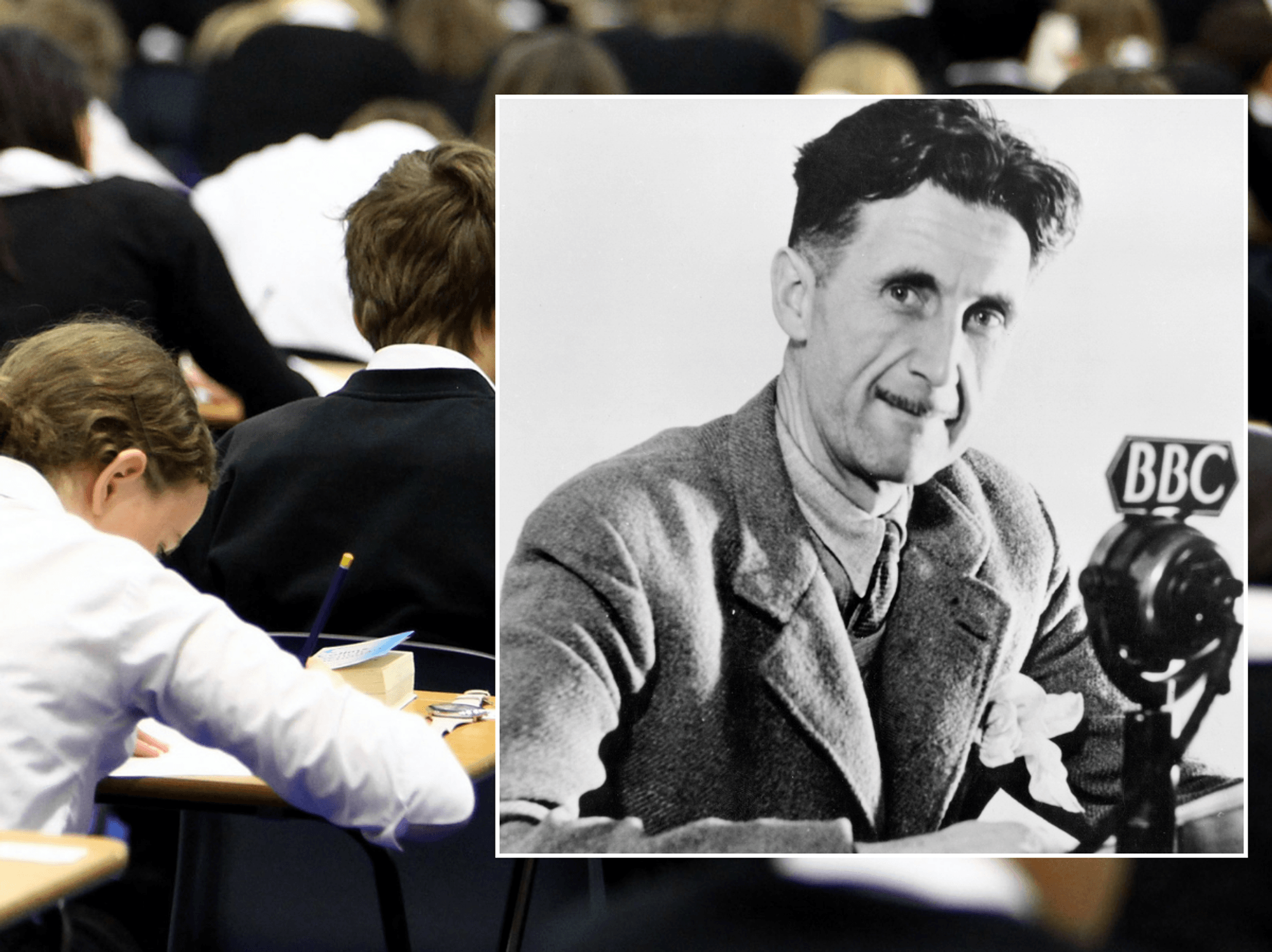
This kind of patriotism has been on the run for half a century at least. The popularity among the progressive teaching profession of Wilfred Owen’s World War One poem ‘Dulce et Decorum Est’ turns on the poet’s depiction of martial patriotism as “the old lie” (the Latin title of the poem comes from the Roman poet Horace who wrote “Dulce et decorum est pro patria mori” - "It is sweet and fitting to die for one’s country”).
He attempted to escape by climbing a fence, leaving a trail of blood. Officers heard him state that he had been stabbed, with his last words reported as "I can't breathe".
They handcuffed him based on Digwa's accusation. Restraints were removed and first aid attempted only after he collapsed. He died at the scene. Digwa carried a 21 cm ceremonial blade as part of his Sikh faith.
His mother was convicted of assisting an offender by removing the blade from the scene.
The jury's verdict establishes that the racism and self-defence narrative did not withstand evidence. Prosecutors presented Digwa's account as fabricated in key respects.
Nowak had filmed Digwa moments earlier saying "I am a bad man"; prosecutors used this recording to dismantle the self-defence narrative. On the night itself, however, that allegation received immediate weight.
Police arrived to a clear emergency: one young man collapsing from multiple stab wounds, the other levelling a complaint. Their response prioritised the complaint over immediate assessment of visible, life-threatening injury.

Patriotism's true test is no longer who dies - but who creates life - for Britain - Colin Brazier
|Getty Images
This has been the view of patriotism pushed on children for decades. And, it is not without a certain logic. Where, after all, does patriotism stop and suicidal jingoism start?
But it presupposes that no cause - no country - is worth risking life and limb for. Subscribers to this worldview prefer to imagine that, if there has to be a feeling of loyalty like patriotism at all, then it should be felt for some nebulous globalised community or ‘Europe’.
Or, better still, an institution like the NHS, which seems to represent a “kind” version of the British character.
This dominant philosophy reached its apotheosis in the 2012 London Olympics opening ceremony, which seemed to suggest that - for all Britain’s history of military conquest and colonisation - the only uniform that should be celebrated is that worn by a paramedic or nurse.
And so we end up where we are. With survey after survey showing a younger generation that finds the idea of dying for Britain utterly ridiculous. And yet to suffer for one’s country does not necessarily mean taking a bullet on its behalf.
Which is why I think the Right needs to radically re-evaluate what patriotism looks like.
I say this in the context of figures released this week, which show how quickly the ethnic make-up of Britain is evolving.
For some people on the Left, even addressing this data is divisive and inflammatory. When the Office for National Statistics releases graphs showing which people living in these islands are reproducing, mainstream politicians and media outlets prefer to peddle vague phrases like “foreign-born mothers”.
So praise to the GB News website this week for getting straight to the point with its headline: “White British births fall to record low as more than 33 per cent of new mothers were born overseas”.
The article added that: “The proportion of babies born to White British parents [is] falling to its lowest levels since records began.”
Very few media outlets do this. They prefer not to mention ethnicity. They are content to note that the birth rate in England and Wales has fallen to 1.39, without examining the ethnicity of those who have stopped having offspring in significant numbers (white Britons) and those who still are (some, but not all, ethnicities of non-white people).
Why should journalists who ought to drill down into specifics feel happier skating over the surface? Because, I suspect, it’s easier not to ask what birth rates tell us about the future. To do that is to find yourself ‘adjacent’ to the likes of Matt Goodwin, whose plausible demographic predictions that Britain will become a white-minority nation by 2063 have become statistical kryptonite for the Left.
In this context, what is patriotism? In an era when, mercifully for now at least, we are not required to submit to conscription and die for our country, what is the most patriotic thing a man or woman of fighting age can achieve?
As a father of six myself, I think you can probably guess by now where this is going.
And although a coward in so many respects, I am prepared to blow my own trumpet when it comes to pondering on the quiet kind of heroism that is required to bring a family into the world. Or, to be fairer still, I should say I want to thank my late wife, Jo, for the dogged and daily sacrifices required of a modern mother.
Because becoming a parent, as anyone born into a ‘western’ family can testify, is now a lifestyle choice. And one which a growing number of younger men and women are turning away from.
The reasons given vary. Climate catastrophism. The contraceptive cost of housing and childcare. A sense that being a parent requires a degree of selflessness and maturity that is out of reach.
Of all the reasons given, the most absurd is that we are living in uniquely dangerous times. Even though our ancestors bred through famine, war and pestilence. And did so even though the perils of childbirth were terrifyingly real.
To which some will say: we’ve evolved as a species. Women tolerated sky-high rates of natal mortality because they had no other choice. Had mothers had access to birth control when the Plague was in town, they would’ve used it and lived to old age without a body broken by repeated pregnancies from a young age.
But true as that may have been once, it no longer is. The ‘choice’ argument has turned on its head. Women now fail to have anything like the number of children they want to have. No matter how many times The Handmaid’s Tale is turned into a lecture against the patriarchy, in developed nations the choice to have children is one that is routinely stymied and left unfulfilled.
Not least because of feckless men, who can’t commit and prefer the uncomplicated pleasures of online porn more than the messy reality of relationship management.
For me, patriotism and paternity are now entangled, and men who choose to turn away from that choice - the better to enjoy life’s pleasures - are failing to love their country as they ought.
This is obviously not a criticism of gay men or men who can’t, for medical reasons, have children of their own. But it is a legitimate question about how we define an individual’s willingness - in a world where physical danger is in retreat - to embrace discomfort (having children is rarely easy, no matter what some people say). It is also a question about duty and sacrifice in a society where convenience and self-realisation is everything.
How we encourage this change of mindset is a column for another time. But I do think that it might not be possible to keep smiling on - as we do now - at those who rely on others to provide the atavistic continuity Britain has always had (and now needs more than ever). I do not want to completely anathematize the childless-by-choice, be they men or women, but I am reminded of an observation a Jewish friend of mine makes about Israel.
If you turn up at the beach or a dinner party or the school gates, even in liberal free-wheeling Tel Aviv, there is - he says - an expectation that you will have at least three children. Those who do not, are seen as not pulling their weight. These are not Orthodox Jews we’re talking about, but ordinary Israelis.
Israelis, he says, have not lost the tragic sense of life. Whether it was the Holocaust, or the Hamas slaughter of October 7th, they know there is no breaking the link between empty cradles and the survival of a people.
As a Christian, as an Englishman and as a patriot, I accept the logic of what he says and wish more of my countrymen did too.
Our Standards: The GB News Editorial Charter