

Today marks a moment in British history we can ALL be proud of... but it is a stark reminder of the peril we currently face - Stuart Fawcett
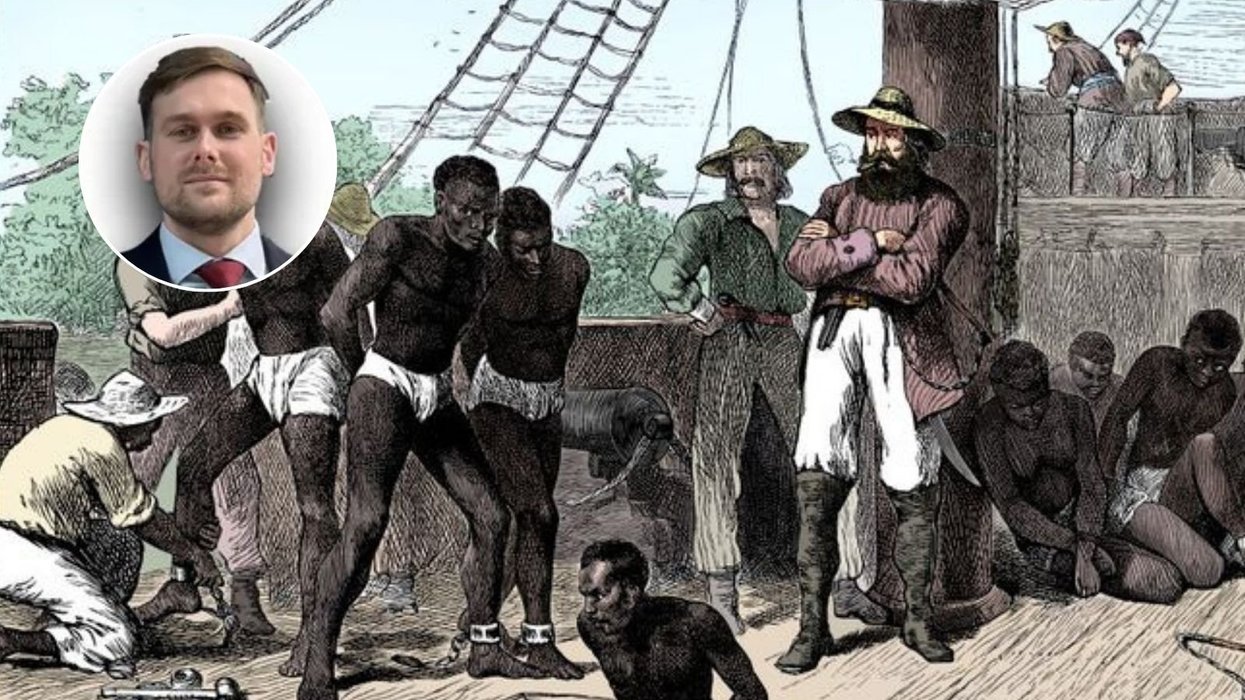
Britain’s abolition of the slave trade in 1807 reminds us of what our great navy is capable of says Stuart Fawcett
|WIKICOMMONS



Labour councillor Stuart Fawcett says ending the slave trade was perhaps the first defining moment of pursuing social justice through the British Parliament
Don't Miss



Most Read



Today marks the anniversary of one of the most significant moral victories in human history: Britain’s abolition of the slave trade in 1807.
It is a moment that should be claimed with equal pride by both the Left and the Right. It proves that a functioning democracy, influenced by the tireless conscience of ordinary citizens and backed by the hard power of a global Navy, can fundamentally shift the moral compass of the world.
We often hear the darker chapters of Empire discussed in isolation, but we must not forget that the British Empire’s greatest legacy is the Commonwealth-a voluntary alliance of independent nations bound by shared values, law, and history.
If we want to secure a prosperous post-Brexit future, we must look to this alliance. But values are only as strong as our ability to defend them.
TRENDING
Stories
Videos
Your Say
The road to abolition in 1807 began not with a decree from on high, but with a grassroots surge.
It started when Thomas Clarkson, a man of indefatigable resolve, began gathering harrowing evidence and casework from the ports of Liverpool and Bristol. He lobbied Parliament with the physical tools of the trade—shackles and brandings—before gaining the attention of William Wilberforce. Wilberforce’s perseverance through years of parliamentary defeat eventually secured democratic assent.
Yet, the law alone was not enough. To truly end the trade, Britain deployed the Royal Navy. Because we possessed the largest naval presence on the world’s oceans—from the Atlantic to the Mediterranean—we could turn a domestic law into a global reality. We did not just talk about human rights; we enforced them.
Today, I fear we have forgotten that our security and prosperity depend upon the Navy- one which we can deploy at sea in number.
Much is now lauded about international law, but law without enforcement is merely a suggestion. There is a direct correlation between the defence cuts seen across the UK and Europe and the gradual breakdown of the rules-based order.
We saw it in the austerity cuts that preceded the 2014 annexation of Crimea and the withdrawal of the British Army from Germany. When the "policeman" leaves the beat, the neighbourhood suffers.
We now face new, clandestine threats today: shadow tanker fleets bypassing sanctions and drone attacks on sovereign territory. These are the modern equivalents of the 19th-century slave runners. Without a persistent naval presence on the world’s oceans, we leave our economic arteries exposed and security in jeopardy.
When it comes to Iran and the straights of Hornuz, my conviction on this isn't just academic. It comes from my personal service as a Warfare Officer in the Royal Navy.
I have been deployed to the Northern Arabian Gulf, practising maritime security operations to ensure the free flow of trade against aggression from Iran’s Revolutionary Guard Corps Navy (IRGCN).
For 50 years, we invested in the skills and assets required to escort shipping and stabilise global energy markets. We prepared for the moment it was needed most. Yet, I found myself departing from my Party leadership’s assessment regarding military intervention because I saw the gap between our political rhetoric of international law and the reality of its economic threat. You cannot project soft power if your hard power is spread too thin to be credible.
Ending the slave trade was perhaps the first defining moment of pursuing social justice through the British Parliament. It happened because we had a convincing naval presence to enact it, funded by the strong economic bonds of the Empire.
Today, we have the opportunity to rekindle those bonds through the Commonwealth. By working closer with these independent governments, we can deliver a post-Brexit prosperity that reflects British values. But to do so, we must reinvest in our naval projection.
If we want to be a force for international law and social justice in the 21st century, we must once again be prepared to protect the trade that sustains us.