







I was talking to a group of sixth formers last week who surprised me by being strongly, indeed passionately, in favour of the social media ban for under-16s.
They felt that anyone under that age did not have the maturity to cope with what online platforms throw at them.
That opens up the wider question of votes at 16, which is bound now to be chewed over.
Before taking this as the majority view of all young people, I should add some context here.
These were students in a state boarding school, which already has stringent restrictions on mobile phones, so they are already used to strict rules.
And, of course, they were all 17 or 18, so the ban won't affect them.
This morning, Keir Starmer announced new laws by Christmas, with the ban coming into effect by next spring.
The Prime Minister declared: "It will make children safer and happier."
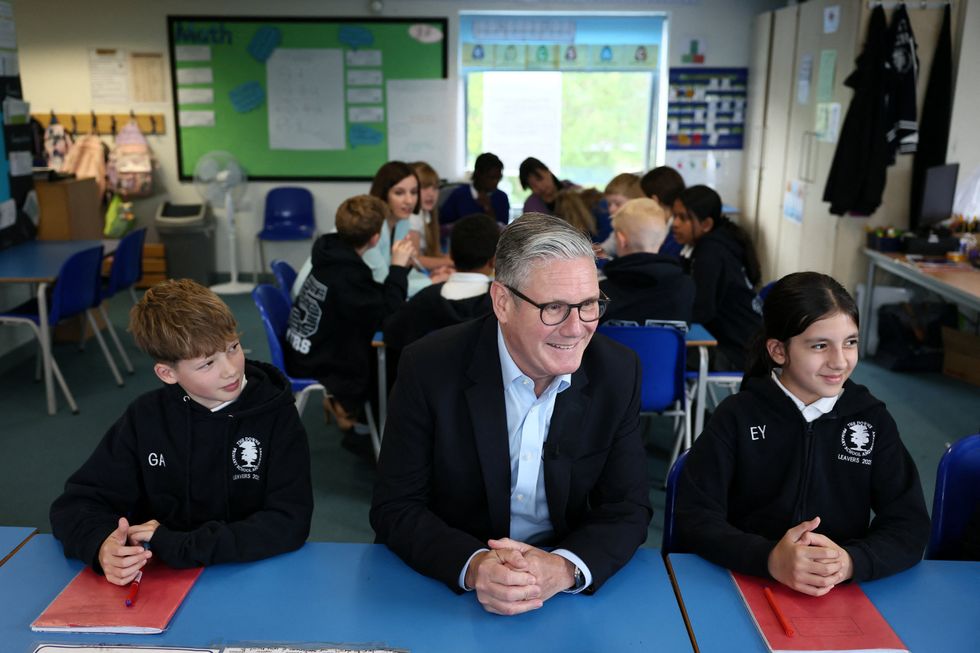
The Prime Minister confirmed his crackdown today
|GETTY
The case for such a move has been growing for some time.
A Government consultation found nine in 10 parents want Australian-style age limits introduced.
Canada and eight European countries are already drawing up their own restrictions, although many of them want to set 15 as the age when they apply.
Children as young as 14 are being treated for social media addiction, according to rehab boss Jan Gerber of Paracelsus Recovery.
LATEST DEVELOPMENTS
She told The Sunday Mirror: “This is a massive epidemic. The algorithms are being designed to hijack the reward system [in the brain].
"Scrolling is one thing, but collecting likes or comments, that’s levelled up. That’s all designed to get people hooked.
"And when the brain is being formed it’s much more vulnerable at a younger age and at that young age they’re not equipped to resist that. It’s like digital crack cocaine.”
Polling by the Molly Rose Foundation shows that nearly half of all girls are still seeing dangerous posts on suicide, self-harm and eating disorders despite the Online Safety Act.
And that was just in a single week. The foundation was set up by Ian Russell following the death of his 14 year old daughter, Molly, who killed herself in 2017 after viewing suicide websites.
Yet, Ian is against a blanket under-16 ban because he thinks it could do more harm than good.
He favours a more targeted approach towards the media companies themselves.
He said: “What will be left behind is the same dangerous digital landscape. Children will still find a way around a ban as they always do. Nothing has been done to tackle the problem at source.”
He points to the mixed results coming out of Australia, which imposed an under-16 ban in December last year.
Platforms are legally responsible for age checks in a way they were not before, and some 4.7 million accounts have been closed.
Yet, that does not translate into the number of youngsters, as many had multiple accounts, and three in five 12 - 15 year olds still have access to some social media, having got around verification.
There are also reports of teenagers turning towards dodgier, unregulated sites.
Six in 10 parents say they have noticed positive behavioural changes in their children since the measure was introduced. But a quarter worry their kids are missing out on online support from friends.
The Prime Minister recognised that some British children will similarly dodge the ban, as they are more tech-savvy than the adults introducing it.
"We didn't have to deal with anything like this," he admitted.
Hasty legislation often makes for bad law because not enough time is given to weighing up unintended consequences, which is where we are today.
So, the question now is whether we should be rushing into a ban when we have a real-world experiment going on in Australia, which we can study as more evidence emerges of how it is working.
If that sounds like fence-sitting, then you are right. I am neither in favour of this ban nor against it.
Just concerned that a well-meaning intention to keep our children safe may end up putting them in more danger.
And the politicians who have pushed for this would never forgive themselves if that turned out to be the case.