

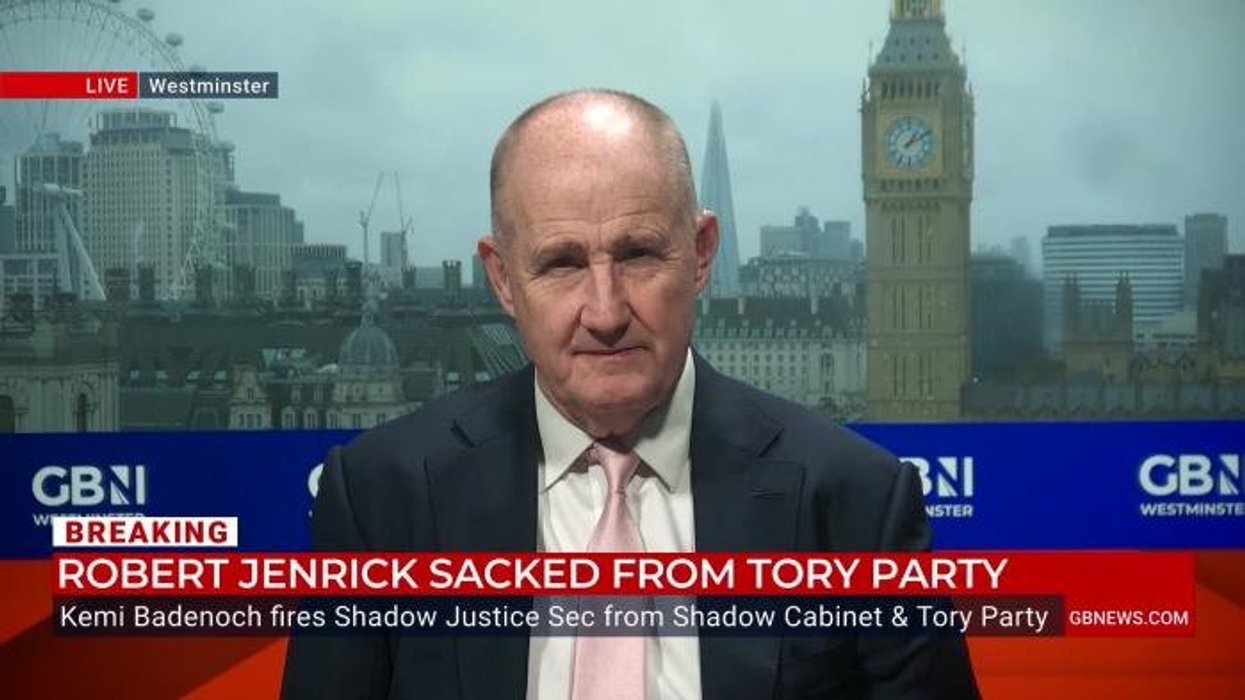








In what is a spectacular development in British conservative politics, Tory leader Kemi Badenoch has sacked Robert Jenrick, accusing him of “plotting in secret to defect in a way designed to be as damaging as possible”.
Badenoch has said that she was presented with “clear, irrefutable evidence” that the shadow justice secretary had been planning to quit her top team ahead of defecting to Nigel Farage’s Reform UK.
As well as being sacked as shadow justice secretary and having the whip removed, Jenrick’s Tory party membership has been suspended with immediate effect.
The Badenoch-Jenrick political psychodrama stretches back to the Autumn 2024 Conservative leadership, with the former beating the latter in the final count by thirteen percentage points.
With Badenoch starting her party leadership in underwhelming fashion, Jenrick – who may have been left disappointed that he was not appointed in a more significant role within the shadow cabinet – has been lurking in the background, with rumours of mounting a leadership challenge at some point.
Jenrick has invested a great deal in heightening his own public profile, being especially active on social media platforms such as X and delivering punchy performances in interviews with channels such as GB News.
However, Badenoch has grown in confidence over time, providing a string of impressive performances at PMQs – shoring up her leadership position, with the Conservatives experiencing a recovery of sorts in the polls.
 Robert Jenrick's sacking is a high-risk, high-reward roll of the dice for Reform - Rakib Ehsan |
 Getty Images
Considering Jenrick’s political journey, it is remarkable that we are discussing the possibility of him defecting to an insurgent challenger party of the Right led by arch-Brexiteer Nigel Farage.
He was first elected to the Commons in a by-election back in 2014, very much belonging to a liberal conservative mainstream which was supportive of the UK’s membership of the European Union (EU).
The Wolverhampton-born Jenrick voted to remain in the June 2016 referendum on EU membership, signing a letter which declared that leaving the bloc would “lead us into dystopia”.
Jenrick, who was historically viewed as a Tory centrist, appears to have undertaken a Damascene conversion after his troubles as an immigration minister – left frustrated by the level of obstructionism among civil servants at the Home Office who could be considered as radical progressives.
The impact of Jenrick’s departure from the Tories and possibly joining Reform UK has wide-reaching implications. Badenoch may feel more comfortable in her own leadership, having got rid of a potential threat in the shape of Jenrick, but another poor round of English local election results this May will once again place her position in doubt.
Jenrick may well be an asset for Reform UK – he seems to have adopted bold positions on matters of immigration, integration, and identity, and there is no doubt that he is a capable media performer.
But considering that Farage and Jenrick have traded blows in the past and are two wildly ambitious individuals, would their relationship strengthen Reform UK or put a spanner in the works?
There is also the risk that the wave of Tory-connected defections to Reform UK could undermine its anti-establishment appeal – that it is fast becoming a home for former Tories who seek the political limelight by riding the Reform UK wave, thereby making it an extension of the so-called ‘uniparty’ as opposed to representing a genuine break from conventional mainstream politics.
It is too early to tell what the effect of Badenoch’s sacking of Jenrick will have on the electoral fortunes of the Tories and Reform UK - but it is a significant moment which shows that British conservative politics is in a state of disruption and uncertainty.
Perhaps the true benefactors of all this are Britain’s progressive parties, who are eager to widen divisions on the Right at any opportunity.
More From GB News