




Clearly, the EU is nervous about a Nigel Farage victory at the next election. In its reset talks with Keir Starmer, it is demanding a “Farage clause” whereby if Britain withdraws from or alters any part of the deal, then it must pay compensation.
In itself, the aim is not unreasonable: stability and reliability in the longer term. Unfortunately, the reset itself is a betrayal of democracy as it violates the clearly expressed will of the British people.
If the aim is to provide a deterrent, then it will fail with any Reform government, as maximising the benefits of Brexit will be a manifesto promise. It might have more success with a Conservative government as the commitment to a proper Brexit has always been weak, with rhetoric outstripping action by an appreciable margin, but the prospect of a Tory government is currently not remotely realistic.
Starmer believes, as do many Remainers, that the public is wrong and cannot be trusted but that Nanny knows best. Therefore, he is prepared to ignore the referendum result and take us back towards that which he believes we should never have left.
By contrast, Reform, which is likely to be in power in three years’ time, recognises that we have never had a proper Brexit, that our ability to become competitive has never been properly exploited, and opportunity after opportunity lost.
Ironically, we may thank the much-criticised Liz Truss for the trade deals she so successfully negotiated before she became Prime Minister and which are now preventing Starmer from taking us back into the Single Market, where he has made no secret of the fact that he would like to be, even in the teeth of his own manifesto commitment.
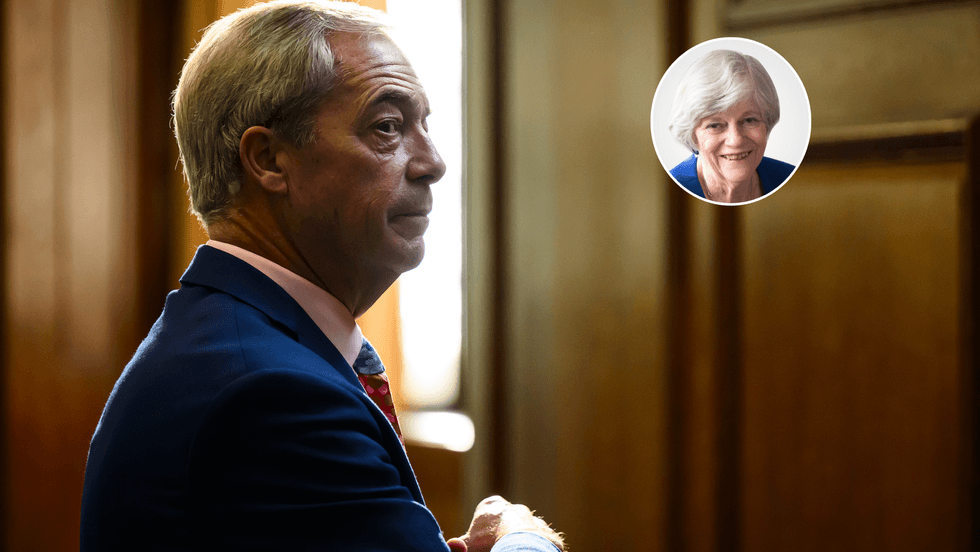
The two main parties are small fry compared to Nigel Farage's main enemy - Ann Widdecombe
|Getty Images
Regulatory control, monetary contributions, and loosening of border controls: all are acceptable to the Prime Minister.
The prospect of a perpetual hokey-cokey of in-out, in-out, is hardly an attractive one to business, and that is almost certainly what Starmer is relying upon in this reset.
He probably thinks that a promise to undo it all again will provoke one big collective groan, despite his doing exactly that. The question for the EU will be whether it believes that it is worth risking a new agreement, which may be undone by 2029, compensation or no compensation.
If Farage makes it clear that he will not play ball, then it may decide to try a different game altogether, even a waiting game to see what does eventuate at the next election and even while continuing to negotiate Starmer’s latest surrender deal, which will be worth the hassle to the EU only if it is permanent.
Therefore, Farage should re-emphasise that he will scrap whatever Starmer agrees and put the onus on the PM to avoid the in-out, in-out scenario.
Whatever the final shape of Starmer’s reset, the spectre of Farage hangs over all the talks. As he once pointed out in the EU parliament, the reaction to his years of persistence was to laugh, but they were not laughing by the end. He won Brexit, and he will win the next election. If there is any wisdom over the channel, they might even try to work with him.
Our Standards: The GB News Editorial Charter
More From GB News