








As an American who deeply admires Britain and the institution of monarchy that has been a central part of its tapestry for over a millennium, I am increasingly uneasy about the reputational damage now gathering around the Royal Family.
With respect and in the spirit of profound concern, I urge you to consider the consequences of abandoning the monarchy, not just in becoming just another European republic, but the alarming reality that you could end up with President Starmer or Worse.
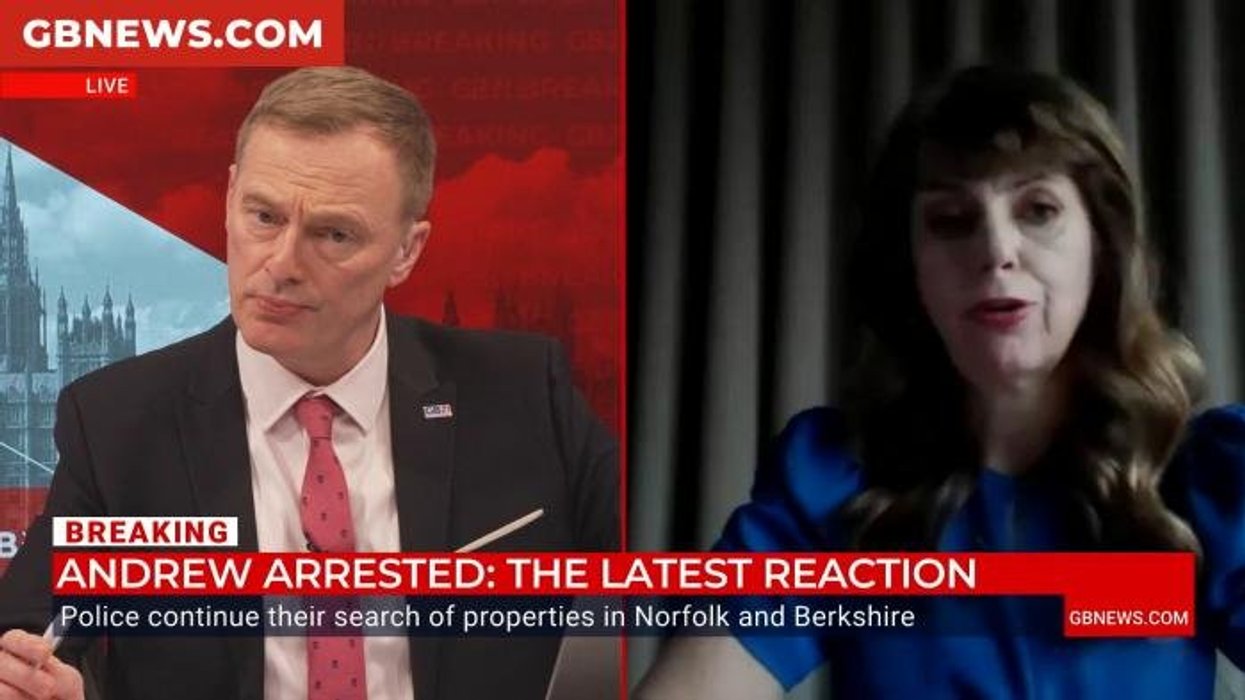
The arrest of Andrew Mountbatten-Windsor does not exist in isolation. It lands at a moment when public confidence is already raw, when anti-monarchy voices are more organised and more confident than at any point in recent decades, and when subtle but unmistakable shifts in the trajectory of the British state under a misguided Labour government.
We have already seen changes that would once have provoked uproar. The quiet replacement of “HM Government” with “UK Government” across official communications may appear administrative, even trivial. It is not.
Remove the monarch’s name from the visible machinery of state, and sovereignty becomes abstract—located in bureaucratic process rather than inherited continuity.
Andrew’s arrest now adds fuel to those who argue the monarchy itself is compromised and expendable. Polling from Ipsos suggests support for retaining the monarchy has softened.
The personal ratings of King Charles III remain well below the extraordinary heights reached by his late mother. Doubt, once marginal, has entered mainstream conversation.
The legal process must take its course. Allegations are serious. Equality before the law is not a threat to monarchy; it is one of the principles the British state has long claimed to defend.
But while courts deal with individuals, the nation must decide what it thinks about the institution itself. And those are not the same question.
The Royal Family is an extraordinary family. It belongs to the nation in a way no other family does. Its weddings become national celebrations.
Its funerals become collective mourning. Its members are born not only into privilege — though that privilege is undeniable — but into duty, scrutiny and lifelong expectation.
And like every family, they contain strengths and weaknesses, loyalty and rivalry, wisdom and misjudgement. The difference is that their private drama unfolds under relentless global attention. Their failings become constitutional debates. Their tensions become front-page crises.
That pressure would test any household on earth.
 This newly awakened bloodlust for the monarchy's head will give you President Starmer or worse - Lee Cohen |
 Getty Images
If individuals fall short, they must answer for it. That is happening now. But to leap from alleged misconduct by one man to dismantling a constitutional framework centuries in the making is not accountability. It is folly.
Before anyone embraces abolition, it is worth asking what would actually replace the Crown.
Britain does not operate under a rigid written constitution. It does not have entrenched federal states counterbalancing the centre. Its system rests heavily on evolved convention.
Ministers govern in the name of the sovereign, not in their own right. That subtle phrasing acts as restraint. It reminds those in office that authority is exercised temporarily, under something that endures.
Remove the monarchy, and you create a presidency.
Perhaps initially ceremonial. Perhaps described as modernisation. But it would be chosen by politicians and shaped by party arithmetic. Over time, pressures would mount to expand its relevance. Conventions erode; powers drift.
Alternatively, more symbolic authority would merge into the office of the prime minister, collapsing the separation between partisan leadership and national representation.
For those already uneasy about centralised power, that should terrify.
Beyond constitutional mechanics, there is the practical good the monarchy performs. Royal patronage is not ornamental. When a working royal visits a hospice, a veterans’ association, a youth mentoring project or a medical research charity, the impact is measurable. Donations rise. Media exposure multiplies. Sponsors engage.
The financial value of that visibility often exceeds what even high-profile celebrities can generate. Celebrities bring momentary attention. The monarchy brings legitimacy and continuity.
Working members of the Royal Family undertake hundreds of engagements every year. Much of it lacks glamour. It is repetitive, disciplined service. For the charities involved, that recognition matters enormously. It affirms that their work forms part of the national story.
And that is the deeper role of the Crown: it keeps that story alive.
Through the monarchy, Britain maintains a living connection to its constitutional development—common law, parliamentary government, and the gradual extension of liberty. Governments rise and fall. Policies reverse. The monarchy endures, absorbing turbulence while remaining outside electoral combat.
None of this means the institution is beyond criticism. Standards must be high. Discipline must be real. Clarity about Britain’s historic Christian settlement must be confident, not apologetic. Reform is necessary for trust.
To dismantle the monarchy because a family member stands accused of wrongdoing would be to confuse human frailty with institutional design. The family will endure its trials. The law will establish facts. That is as it should be.
The institution deserves to be judged not only by its scandals, but by its service; not only by its privilege, but by its restraint; not only by its human weaknesses, but by the stability it has provided.
Reform it where necessary. Demand higher standards. Hold individuals accountable.
But do not abandon one of the few remaining structures that bind Britain’s past to its future.
You may not like what replaces it.
More From GB News