




One of the features of modern politics is the disdain felt by the elites for anything resembling sovereignty or democratic accountability.
We see it in the transfer of powers over a long time from elected representatives to faceless officials running institutions such as the European Commission, Bank of England, or any number of arms-length quangos.
We observe it, too, in the words of the current Prime Minister, who says openly that he prefers Davos to Westminster. In the minds of liberal universalists, distant, top-down bureaucracy and technocracy are always a better bet than local, bottom-up democracy.
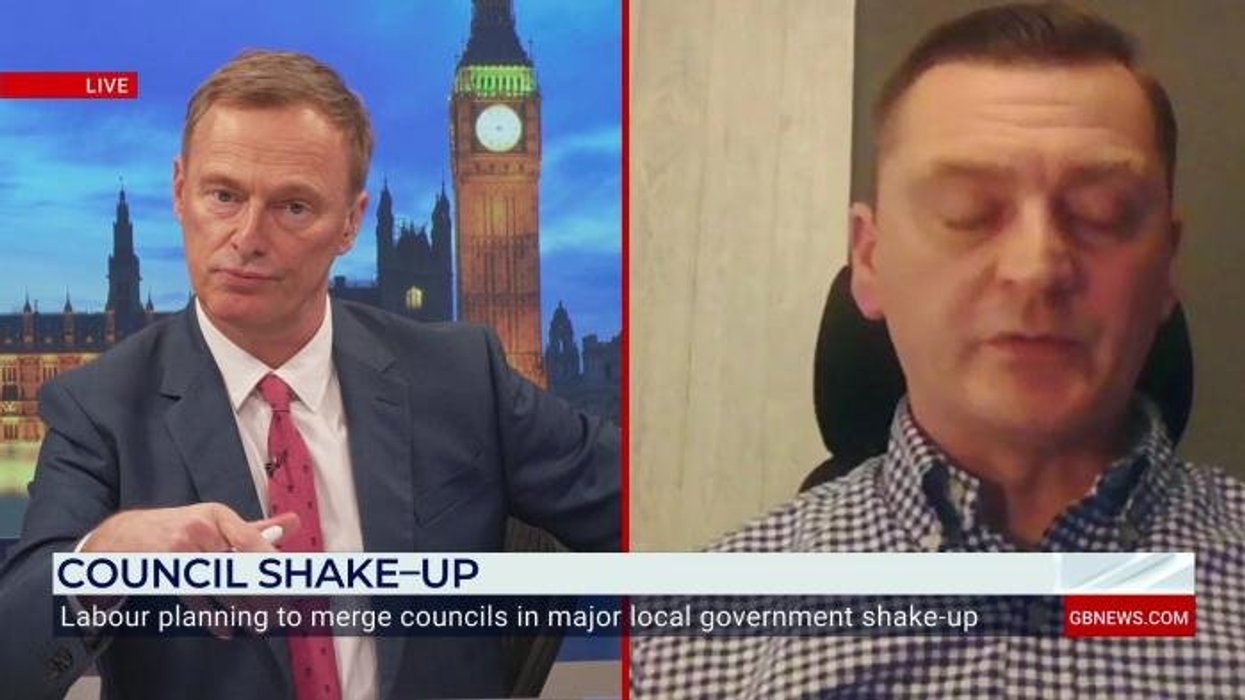
It is in that vein that the Labour Government is proposing a drastic reorganisation of local government in England. Yes, I know that the intricacies of municipal governance do not exactly float the boats of many voters. But these proposals really are quite radical and deserve scrutiny. For if they see the light of day, they will gut local democracy.
The Government wants to abolish existing district and county councils and merge them into single, sprawling unitary authorities.
These bodies would then be responsible for the delivery of all council services in their designated area. Individuals will still be elected to them, of course, but councillors will be fewer in number and far more remote and anonymous than is currently the case.
The new authorities are set to be up and running by 2028. To facilitate the reorganisation, the government has cancelled a number of elections to existing local councils that had been scheduled for later this year – a controversial move that has already sparked widespread anger among voters.
The Government is proposing the reform in the name of rationalisation and efficiency. In reality, it will be an exercise in democratic butchery.
The county of Norfolk, for example, stands to see a reduction in the number of councils from eight (seven district councils and one county council) to potentially just one.
And large and distinct settlements such as Colchester, Brighton and Hove, Southampton and Cambridge will see their dedicated councils dismantled and gobbled up by the new “super councils”.
 Labour's latest exercise in democratic butchery is sparking a grassroots revolution across England - Paul Embery |
 Tendring District Council
Given the general anti-politics sentiment that exists throughout much of the country, some voters may welcome the idea. “The fewer politicians, the better,” they might argue.
But they should be careful what they wish for. Local democracy matters. District councillors, especially, fulfil a crucial role.
They are usually rooted in the community, know personally many of their electors, understand the problems afflicting the area, and provide a direct, tangible and human link to the decision-making process. Little wonder that polling shows voters are more likely to trust local politicians than national ones.
If district councils are subsumed into single unitary authorities, the number of local councillors may be slashed by around 90%.
And, of course, those who remain will be representing geographical areas – and, by extension, numbers of electors – far vaster than is currently the case.
This can only mean a system of governance which is deeply bureaucratic, impersonal and less responsive to local demands.
The Government asserts that the changes will enable future local authorities to drive economic growth and accelerate housebuilding. But these arguments seem weak.
Our lack of growth is ultimately attributable to problems far more deep-seated than anything to do with the structure of local government. And the Labour government of 1945-51 built a million council homes when there were far more local authorities in place than exist today. “Where there’s a will…” and all that.
The consultation process on the proposals has just concluded, and the government is set to make its final decisions in the Spring. But there are already signs that it may have bitten off more than it can chew.
For a small, grassroots revolt may be brewing. According to The Economist, the National Association of Local Councils (NALC) reports that an “unusual number” of town and parish councils are being created, many in the south-east of England, where the planned reorganisation is most extensive.
Town and parish councils (which are essentially the same thing, but named differently according to whether the council covers a town or village) are the first tier of local government.
Around 30 per cent of England’s communities are served by them, with significant tracts of the country currently “unparished”.
According to NALC, town and parish councils “possess significant, and often under-utilised, powers”, including in the areas of planning and development, delivery of local services, and the ability more generally to take action that enhances the quality of life in the areas they serve. They can even raise revenue through their own precept.
The surge in applications to create town and parish councils – a right enshrined in legislation for those living in unparished areas – may well be linked to voter concern over the Government’s planned local government reorganisation and the belief that it will disembowel local democracy. It is hard to think of another explanation for it.
In Margate in Kent, for instance, a large coastal resort which is currently unparished, local electors have rallied behind a proposal to establish a new town council. The wheels are now in motion, and the new council is likely to come into existence next year.
Given the choice of seeing their town subsumed entirely into a hulking new unitary authority covering anything up to two million electors or having an additional local tier of government dedicated to their particular needs, local voters plumped for the latter.
What this shows is that local democracy – that vital link between elector and community representative – still matters to people.
What it also demonstrates is that the government’s proposal to force lumbering new bureaucracies on them may seriously backfire.
The whiff of local revolution is in the air. The Government may discover that its attempts to create “super councils” are destined meet with, well, super resistance.
Our Standards: The GB News Editorial Charter
More From GB News