





Americans, led by President Trump, are in shock at Britain's precipitous fall under Keir Starmer.
It is impossible to digest for our America First president that his British counterpart is anything but Britain First.
Perhaps that is due to Starmer’s leadership being defined by misguided ideological policies and a worldview deferential to the wrong forces: Britain’s migrant population, the Labour Party courts for votes and favour, the EU's impotent caution and global elite orthodoxies, rather than aligning with a bold, national-interest-driven America under Donald Trump.
This approach causes Britain to underuse its own strategic assets—energy resources in the North Sea, military capability in critical theatres, and leverage within alliances — leaving the country weaker, more exposed economically and security-wise, and less reliable to partners, especially when contrasted with Trump's decisiveness.
The divide has sharpened in the past weeks amid escalating tensions in the Middle East. President Trump has repeatedly voiced frustration with Britain's response to the Iran conflict.
In early March statements, he declared himself "not happy" with the UK and described it as "very, very uncooperative" in providing support, including base access and military contributions.
He contrasted Starmer's hesitation with the decisive action needed to counter Iranian threats, noting that the UK should be "involved enthusiastically" in reopening the Strait of Hormuz.
Trump has dismissed Starmer's approach as far from Winston Churchill-like resolve, highlighting delays in commitments and over-reliance on advisers before acting.
These criticisms are not abstract; they target specific refusals. Trump has pressed allies for warships, minesweepers, or escorts to secure the strait — through which about one-fifth of global oil flows — after Iranian disruptions, including mine-laying attempts and attacks on commercial vessels, have choked shipping and sent Brent crude prices surging.
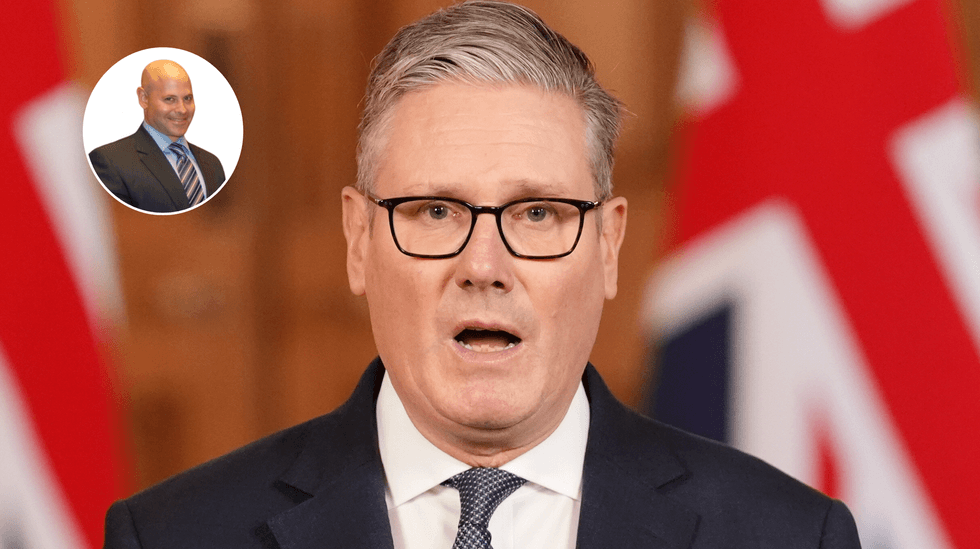
In nine words, the PM has let slip who is really in charge. This is a national security emergency - Lee Cohen
|Getty Images
Starmer's position remains one of calculated restraint. In his March 16 Downing Street press conference, he affirmed that Britain "will not be drawn into the wider war". Just whom is he seeking to placate?
He emphasised working with allies on a "viable plan" to reopen the strait, while announcing domestic measures to ease cost-of-living pressures from soaring energy bills, such as support for households reliant on heating oil.
Britain has offered limited contributions — mine-hunting drones already in the region — but stopped short of deploying warships or committing to major escalation. Starmer has warned that forceful action risks worsening domestic bills and broader instability.
Trump calls for bold, collective hard power to protect trade routes, stabilise global markets, and demonstrate alliance strength.
Starmer prioritises de-escalation rhetoric, coordination without full commitment, and protecting UK consumers from immediate fallout.
This mirrors the multilateral caution characteristic of Brussels-era thinking: endless consultation, risk aversion, and deference to long-term consensus over immediate national resolve, even as post-Brexit sovereignty should enable sharper choices.
The same deference cripples Britain's energy independence at home. The North Sea harbours substantial untapped oil and gas reserves that could enhance security, generate revenue, and mitigate reliance on volatile imports amid Hormuz disruptions.
Yet Labour's policies impose heavy constraints: the Energy Profits Levy windfall tax extends to 2030 at high rates, discouraging investment; new licensing is restricted; and the focus remains on accelerating the renewables transition.
Pressure for change has intensified. A cross-party group of eight former energy ministers wrote to Starmer in late February and early March, urging the reversal of restrictions and taxes, arguing they undermine energy security with minimal global emissions benefit.
Industry leaders, unions like Unite and GMB, and even the Tony Blair Institute have warned that current approaches risk outsourcing security to imports — potentially rising to 80 per cent by 2030 — while domestic production declines.
Amid oil price spikes from Middle East escalations, Starmer has doubled down, pledging to accelerate decarbonisation and dismissing claims that more North Sea output would meaningfully lower UK prices, as resources sell onto global markets.
In a time of supply threats, Britain pays premium import costs while locking away its own wealth.
Trump's America pursues energy dominance and allied burden-sharing. Starmer's Britain adheres to global green orthodoxies, accepting the exposure that decisive leadership would address head-on.
Military capability reveals parallel underuse. Britain maintains capable naval forces — frigates, drones, Gulf experience — poised for decisive roles.
Yet deployment remains limited to gestures like drones, avoiding the warships Trump urges for Hormuz escorts.
Alliance leverage weakens when partners perceive hesitation on shared threats; economic exposure deepens as prolonged high energy costs strain households, industry, and fiscal room; strategic weight erodes as Britain appears sidelined in crises requiring clarity.
These are interconnected failures rooted in a framework that reflexively bows to EU-style caution and elite consensus instead of the stark demands of power and self-interest.
Trump acts boldly, names shortcomings directly, and expects allies to reciprocate with strength.
Starmer offers measured words, partial measures, and ideological consistency — resulting in a Britain that is diminished, vulnerable abroad, strained at home, and less trusted among partners who prize resolve.
In an era defined by hard choices and rapid shifts, such leadership exacts a steep, ongoing toll. Britain must realign with decisiveness, not deference to outdated lodestars.
More From GB News