








Britain used to be the most respected of global players. Winston Churchill stood alone against the Nazis. At the Congress of Vienna, British statesmen forged the balance of power that kept Europe stable for a century.
In the 1980s, London coordinated naval patrols that kept the Strait of Hormuz open for world shipping. Under Keir Starmer, it has become the joke of the world. Does he realise it, or even care? The facts are blunt.
On 7 April 2026, President Trump announced a two-week ceasefire with Iran. Pakistan brokered the deal. Islamabad’s prime minister and army chief shuttled proposals between Washington and Tehran until both sides accepted a pause in hostilities and the reopening of the Strait of Hormuz. China lent quiet weight to the talks. The United States delivered the result. Britain watched it happen.
From an American vantage, the spectacle is both head-spinning and dismaying. The United States respects capable allies who pull their weight and speak with authority. Britain was once such an ally. Starmer’s government prefers the optics of relevance to the substance. He may believe the trip demonstrates engagement.
To those who remember a Britain that commanded respect, it demonstrates the opposite: a once-serious power reduced to reactive diplomacy and pre-planned optics.
The ceasefire holds, or it does not, because of decisions taken in Washington, Tehran, and Islamabad. London’s schedule had nothing to do with it.
Starmer’s response exposed the depth of the decline. For months, he had insisted, almost to the point of exhaustion, that Britain was not involved.
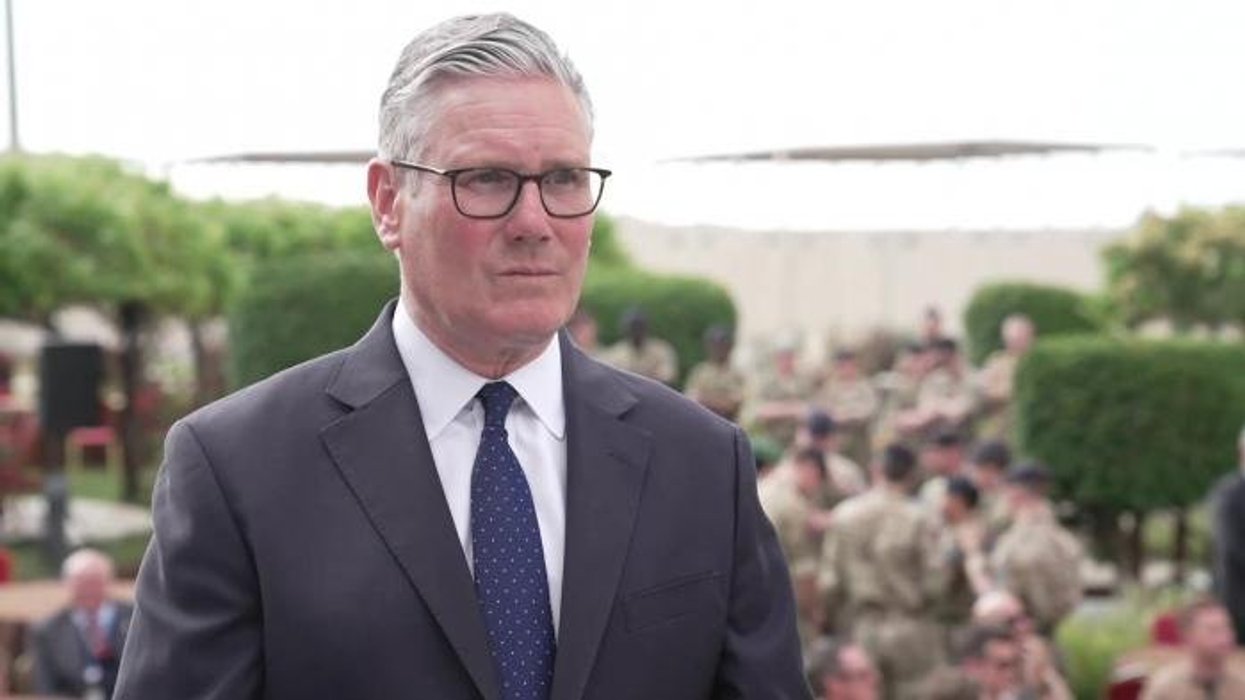
Then, at the eleventh hour, he cringingly inserted himself anyway. He welcomed the agreement with the usual scripted phrases about “relief” and immediately boarded a plane for Saudi Arabia.
The shooting had already stopped. The strait was already reopening. The real players had left the room. Starmer arrived to tidy the chairs.
His sudden appearance in the Gulf, ostensibly to “support” a US-Iran ceasefire, is particularly revealing. Having declined any meaningful role when it mattered, he now arrives for the denouement, as if proximity to events can substitute for participation in them.
The contradiction is glaring. Far from projecting authority, it underscores a profound lack of credibility. Britain, under his leadership, has been reduced to the margins of serious international decision-making.
What remains is the spectacle of a prime minister chasing relevance, embarking on yet another taxpayer-funded trip designed less to achieve outcomes than to manufacture the illusion of importance. It invites the obvious question: what exactly does he bring to the table after so pointedly excluding himself?
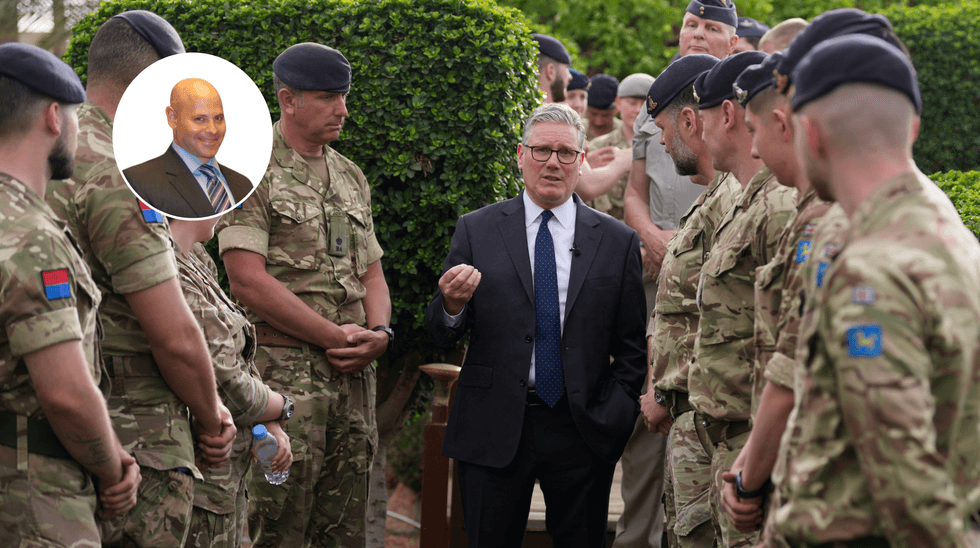
Keir Starmer's middle management of the Middle East would be funny if it weren't so frightening - Lee Cohen
|Getty Images
Contrast that with the Britain that once dictated terms rather than begged for mentions. For generations, London was the capital that allies consulted when the Gulf boiled over.
British diplomats drew borders, brokered truces, and maintained the balance of power from Basra to Bahrain. Even after the empire, British forces and British counsel carried weight.
In 1991, Britain sent armour and aircraft to expel Saddam from Kuwait; Margaret Thatcher’s government helped hold the coalition together.
In the 1980s, London coordinated with Washington on tanker protection in the same strait now at issue. Allies expected seriousness. They received it.
Gulf leaders know who delivered the ceasefire. Global capitals note that London’s voice is now one among many, diluted by a government more comfortable with multilateral declarations than hard bilateral leverage.
Washington simply moves on. This is the pattern Starmer has established. Britain once maintained an independent foreign policy rooted in national interest and naval reach.
Under him, that policy has narrowed to reflexive alignment with progressive consensus and institutional process. The overall impression is not merely one of weakness, but of a leader determined to posture after the fact, inflating minor appearances into acts of statesmanship.
To detractors, it is deeply embarrassing: a government that avoids responsibility when decisions carry risk, only to reappear when the cameras are rolling, hoping to claim a share of credit it has done nothing to earn.
Critics note that while he seeks visibility abroad, he has struggled to demonstrate even basic effectiveness at home, whether in safeguarding national interests or maintaining control over the country’s borders.
The Strait of Hormuz carries twenty per cent of global oil trade. Its closure threatened energy markets, shipping lanes, and the prosperity of nations far beyond the Gulf.
The ceasefire reopens it because one side possessed the will and the means to force the issue. Britain’s role was supportive. Support is honourable. Pretending it equals authorship is not.
Starmer’s visit projects the image of a middle manager turning up once the deal is signed, clipboard in hand, ready to take credit for decisions made elsewhere.
The Conservative opposition has already noted the opportunity Iran now faces. The rest of the world notes Britain’s diminished capacity to shape that opportunity.
The uncomfortable truth is that influence is not claimed through statements or visits. It is earned through action, credibility, and a willingness to lead when it counts. Britain still has the tools to do that. What it lacks, at present, is a government prepared to use them
Our Standards: The GB News Editorial Charter