

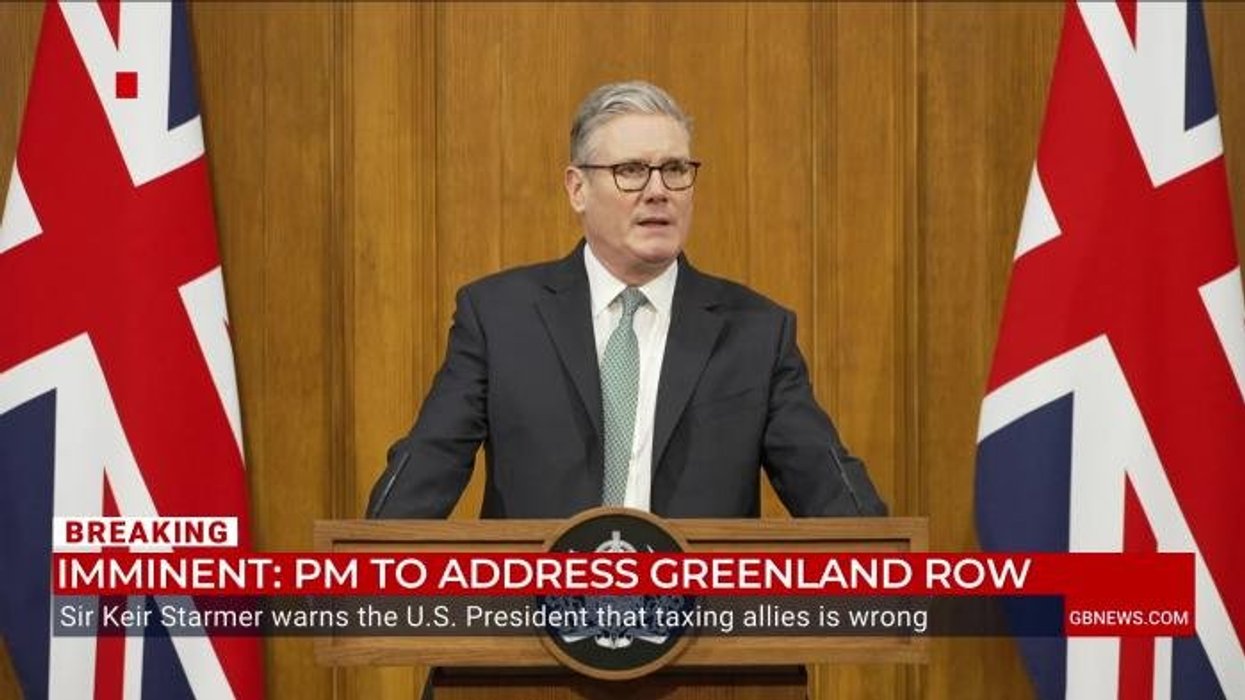








Keir Starmer’s feeble reply to President Trump’s Greenland tariffs lays bare Labour’s fundamental incapacity: a government whose priorities and motivations are so wildly misplaced that it cannot defend British interests when an ally demands real action on collective security.
If only Trump could direct sanctions squarely at the Labour Party itself—its weak leadership, its complacency toward China, its dismal record on free speech — rather than imposing costs on the British people as a whole.
The tariffs — 10 per cent from 1 February, escalating to 25 per cent by 1 June on Britain, Denmark, and six other NATO partners—have ignited predictable fury.
As an American who has always championed a strong, independent Britain, I grasp the frustration. Yet these duties are not designed as permanent punishment but as deliberate leverage: calculated pressure to expose vulnerabilities, compel concessions, and hasten meaningful negotiation, not to entrench long-term economic harm.
This remains Trump’s established playbook — sharp, uncompromising, and frequently successful. The intent is partnership against authentic threats in the Arctic, where Russia’s fleet of nuclear icebreakers already controls emerging sea lanes and China steadily constructs the infrastructure to dominate rare earth minerals essential for advanced technologies and military strength.
Trump’s stance on Greenland derives from pure strategic realism. The island commands the North Atlantic, crucial for missile defence architectures, secure maritime corridors, and blocking adversaries from its immense mineral reserves.
The United States has shouldered the primary defence obligation for decades via Pituffik Space Base, the indispensable facility for surveillance and early warning under the 1951 bilateral pact.
 Keir Starmer's feeble reply to Donald Trump's tariffs is the death rattle of a dying premiership - Lee Cohen |
 Getty Images
Denmark has fulfilled its stewardship role adequately, but the Arctic’s accelerating demands surpass what one mid-sized power can fully meet. No one is pushing military invasion. If Denmark holds onto it, it must own the strategic challenges that come with it, which have consequences well beyond Denmark.
The emerging doubt about the British-American alliance is disappointing. From this side of the Atlantic, unease about Britain’s path under Labour runs deep.
The progressive clampdown on free expression—legal pursuits of citizens for online speech, expanding regulatory constraints on discourse— strikes conservatives here as profoundly troubling.
So does the wider spectacle of managed decline: sluggish growth, unsecured borders, and a marked reluctance to challenge Chinese influence. Targeted action against Labour’s specific failures—its approach to Beijing, its neglect of core liberties, its acceptance of national decline—would be far preferable to broad penalties on the nation, if only that were possible.
Starmer’s retort is emblematic of impotence. Like his EU cronies, he has deemed the tariffs aimed to bring allies onside are “completely wrong” and ignores the reality that major powers like Russia (with its dominant nuclear icebreaker fleet) and China (expanding polar ambitions) far exceed Denmark's modest military resources, limited manpower (around 20,000 active personnel overall), small-scale Arctic presence (primarily patrol vessels, surveillance aircraft, and symbolic dog-sled units), and geographical challenges.
Instead, he offers hollow platitudes, devoid of any strategic thrust. While Trump wields leverage to dismantle the pretences of globalist complacency — particularly among European capitals habituated to American security subsidies — Starmer reflexively turns to Brussels. He aligns with EU crisis sessions where Ursula von der Leyen laments transatlantic “deterioration”, exposing Labour’s ingrained preference for supranational consensus over sovereign assertion.
The record speaks plainly. Starmer has sanctioned China’s enormous embassy in London’s financial centre: over 200 underground chambers perilously adjacent to fibre-optic lines transmitting the City’s financial data and vast communications volumes — a blatant espionage gateway from a geopolitical adversary, timed impeccably before his Beijing pilgrimage.
The Chagos Islands cession adds to the tally: relinquishing strategic Indian Ocean holdings without reciprocal benefit. These are deliberate choices, born of a worldview that masquerades administrative restraint as prudence while systematically prioritising institutional accord, NGO concerns, and progressive norms over British advantage.
Post-Brexit Britain possesses the instruments for decisive independence: unfiltered alliances, direct commerce, and unflinching national pursuit.
The Arctic requires precisely this resolve — coordinated US-UK operations, joint resource ventures precisely, and bolstered deterrence that elevates Britain’s position without concession.
The Special Relationship achieves its greatest potency when engaged with purpose: fortified sea routes, enhanced energy security, reinforced barriers against authoritarian expansion. A Greenland more robustly embedded in Western defences would safeguard British interests outright.
Trump’s forthrightness may unsettle, but it enforces essential clarity on security: Western defence paramount, shared burdens without equivocation, action supplanting inertia.
Britain no longer has the luxury of drift. Leadership that cannot recognise leverage when it is applied, cannot distinguish pressure from punishment, and cannot prioritise national advantage over institutional comfort is not merely inadequate — it is dangerous.
Starmer’s response to Trump’s tariffs is not a misstep but a diagnostic: proof that Labour lacks the will and strategic vocabulary required for an era of hard power competition.
When security realities sharpen, Labour retreats into moral posturing and procedural grievance, leaving Britain exposed and reactive. It is agonising to witness the trajectory of America’s once robust ally and taxing not to be able to rely on our once unshakeable partnership.
More From GB News