





What could possibly be behind the Starmer government’s refusal to proscribe Iran’s Islamic Revolutionary Guard Corps as a terrorist organisation while the US, Canada, Australia, and the EU have all decisively cracked down on the IRGC with formal restrictions?
The United States boldly designated the entire IRGC — including its Qods Force — as a Foreign Terrorist Organisation back in 2019. Canada followed suit, listing it as a terrorist entity in 2024.
Australia took a firm stand by naming the IRGC a state sponsor of terrorism in late 2025. Even the European Union officially added the IRGC to its terrorist list in January 2026.
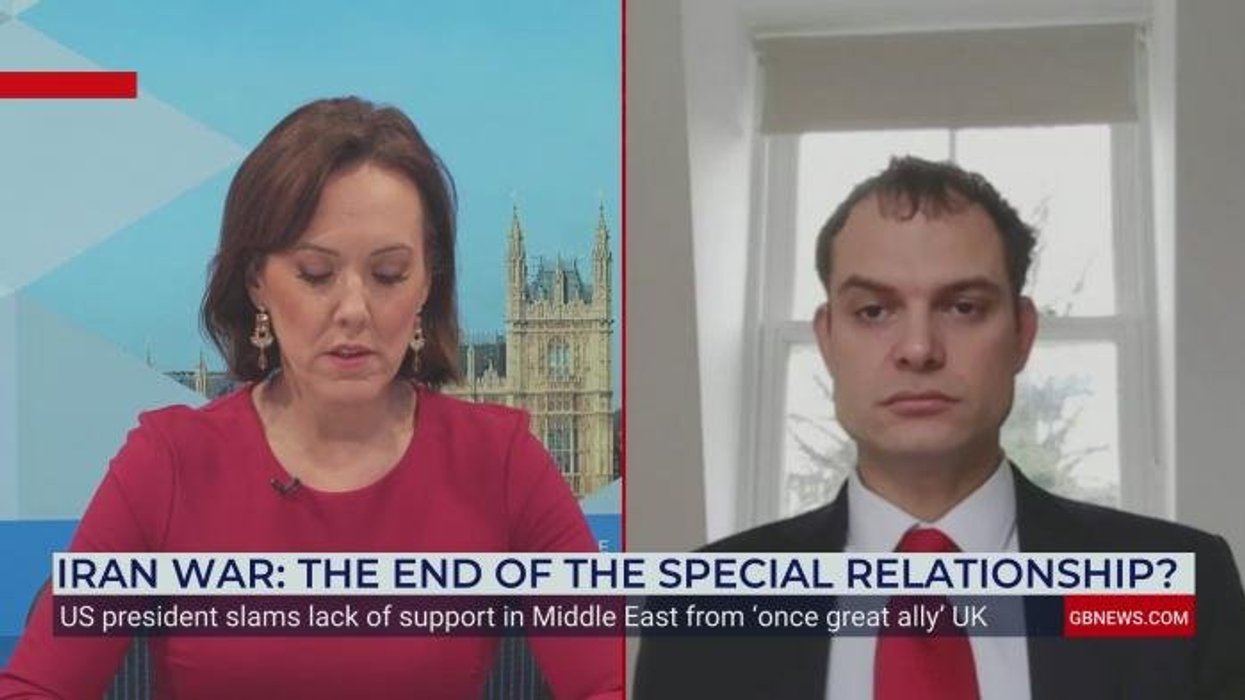
Britain stands alone as the shameful outlier—Keir Starmer’s gutless government choosing limp-wristed exposure over the iron resolve the threat demands.
The evidence of IRGC activity on UK soil is not abstract or theoretical. MI5 has disrupted more than twenty potentially lethal Iran-backed plots since 2022.
These include assassination attempts, kidnappings and surveillance operations aimed at dissidents, journalists, Jewish communities and Israeli-linked sites. Counter-terrorism police arrested four Iranian men recently for spying on Jewish locations in London on behalf of Tehran’s intelligence apparatus.
These are not isolated incidents. They form a pattern of state-directed aggression that the IRGC has pursued for years across Europe and North America.
Starmer’s ministers insist that existing proscription powers under the Terrorism Act 2000 are not designed for state organisations.
The same government, when in opposition, joined cross-party calls to treat the IRGC exactly as such. Proscription would deliver concrete tools: asset freezes, travel bans, criminal penalties for support or membership, and a public signal that Britain will no longer tolerate an organisation that functions as both Iran’s military wing and its global terror network.
 Britain is sitting ducks because the PM fails to confront an engine of terror and murder - Lee Cohen |
 Getty Images
The contrast with American policy is stark. Washington’s 2019 designation imposed real restrictions on anyone doing business with the IRGC and embedded the group’s terrorist character in law and international perception.
Britain, under Starmer, continues to treat the IRGC as a conventional military actor that can be managed through diplomacy and targeted financial measures.
The refusal forms part of a broader pattern. Labour’s instinct is to hedge, to soothe electoral constituencies and to avoid any measure that might complicate relations with regimes that export ideology and violence.
Within Labour itself, Baron Glasman has warned that without decisive action, London risks becoming the escape route for the mullahs and their enforcers. Iranian migrants have surged toward UK shores via small boats amid Tehran’s internal instability.
Among them are regime loyalists and potential IRGC assets exploiting the same routes used by economic migrants. A government serious about safety would treat this influx with the same rigour it applies to other national-security threats.
Starmer has not. Proscribing the IRGC would not solve every Iranian threat. It would mark the moment London stopped pretending the threat does not exist.
Until that happens, the IRGC operates with the confidence that Britain remains the softest target among its allies. That calculation must change.
Starmer’s position rests on a legalistic fiction that collapses under the weight of events. The IRGC is the engine of Tehran’s global campaign of intimidation and murder.
Its operatives have planned attacks in Britain while ministers in Whitehall recite the same talking points they once denounced from the opposition benches. Consider the timeline. In opposition, Labour demanded action. In government, it offers excuses.
Meanwhile, the United States has treated the IRGC as a terrorist entity for seven years. American sanctions have forced banks, companies and individuals worldwide to think twice before touching the organisation. Britain’s sanctions, by contrast, remain selective and porous.
Tehran notices the difference. Retired intelligence chiefs understand this reality. Their public intervention is rare. They have spent careers watching state actors test the limits of Western resolve. They see Starmer’s Government failing the test.
When even voices from within Labour echo the warning, the pretence that this is a partisan issue evaporates. The mullahs do not distinguish between Labour and Conservative voters when they dispatch their agents.
They see one target: a country whose capital has become a haven for their operations. Post-Brexit Britain was supposed to reclaim the capacity for independent strategic judgment.
Yet on this file, the Government behaves as though EU consensus still dictates the pace. The EU has moved. Britain has not.
That leaves British streets more vulnerable than those in Washington, Ottawa, Canberra or now Brussels. The small-boat arrivals add urgency.
Intelligence assessments have long flagged the risk that regime operatives embed themselves among genuine refugees. Starmer’s Home Office processes the surge without the accompanying proscription that would give counter-terrorism officers sharper tools to disrupt the networks.
Such conduct amounts to leadership malpractice. A government fit for purpose would have acted. Starmer’s Labour chooses the path of least resistance, hoping the threat remains someone else’s problem until the next election cycle. British security cannot wait for that.
The IRGC has already written its intentions in blood on foreign soil and in surveillance logs on British streets. The only remaining question is how many more plots MI5 must disrupt before Downing Street admits the obvious. America confronted the IRGC in 2019. Seven years later, Britain still refuses. Why?