








The Gorton and Denton by-election was an unpleasant affair in so many ways. But one redeeming feature of the contest was its sparking of a long-overdue national debate on the subject of non-British citizens holding the right to vote in British elections.
For many Britons, this appears to have come as something of a revelation. Could it really be true that people who are not citizens of our country are permitted to rock up to a polling booth and play a part in choosing the local MP? And is it also the case that these individuals have enjoyed that right from the moment they set foot on our shores?
Well, yes, these things are perfectly true. And not only for elections to the House of Commons, but also the Scottish Parliament, Welsh Senedd, Northern Ireland Assembly, and for elected mayors, local councillors, and Police and Crime Commissioners.
Not every type of non-British citizen is entitled to vote in every category of election – usually there are rules requiring them to be, for instance, a “qualifying” Commonwealth or EU citizen – but the fact remains that around two million people, possibly more, who do not hold a British passport are routinely helping to determine the composition of democratic chambers and offices throughout our land.
The issue reared its head in Gorton and Denton on account of the large number of people with Pakistani heritage living there.
With Pakistan being a member of the Commonwealth, anyone from that country who was in Britain legally and resident in the constituency was free to cast a ballot in the by-election.
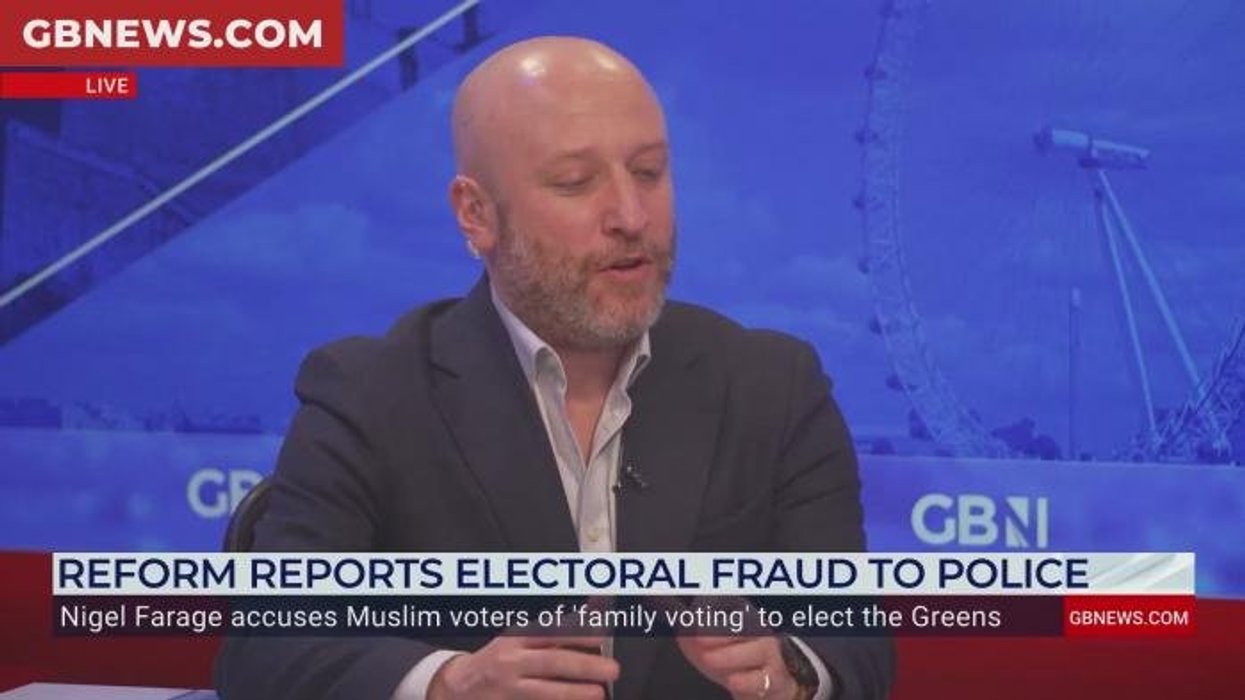
With concerns also having been expressed over the integrity of postal voting and reports of widespread “family voting” in the by-election, the entire arrangement is at last being subjected to some proper public scrutiny, and has unsurprisingly led to demands that the current system be overhauled.
Conferring on non-British citizens an entitlement to vote in British elections is plainly indefensible. Perverse, even. The right to elect candidates to public office – especially to positions in which they wield significant political influence – should be reserved solely to those who hold British citizenship. No ifs, no buts.
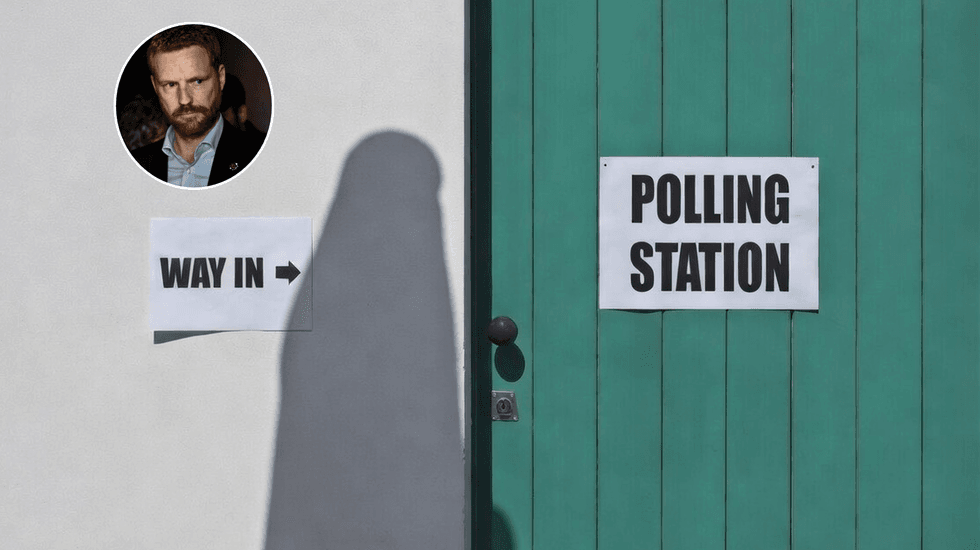
Around two million non-British citizens help determine the democratic chambers in Britain - Paul Embery
|Getty/X
I do not argue that non-British citizens should not otherwise be encouraged to play a full role in our civic life or that their views should be considered irrelevant. Many of them will have much to offer our country in all sorts of ways.
But extending voting rights to individuals who are not fully-fledged citizens – and may indeed not desire to become so – serves only to demean the franchise.
As with any club or association, only those who are properly accredited members should have the right to choose its officials and determine its rules.
For a nation state, such a principle is even more fundamental. When a nation extends such rights to foreign nationals, it undermines the unique nature of the bond that exists between its own citizens and the State.
Worse, it devalues the concept of nationality itself, as there can be no greater expression of national belonging and identity than having a democratic say in the affairs of the nation of which one is a citizen.
If I happened to find myself living as a British national in Pakistan, I would not for a moment expect to be placed on the electoral register and invited to help decide who should run that country. And if such an invitation was made to me, I think, out of principle, that I would decline.
Why does it always seem that Britain does incomprehensible things like this? While it may be true that the arrangement was partly a product of empire – when anyone born within His Majesty’s dominions was deemed to be a natural-born British subject – its continuation so many decades later, and to additional cohorts, makes no sense.
The situation should, of course, have been put right long ago. But when a country’s political and cultural institutions are dominated, as Britain’s have long been, by a metropolitan liberal elite which believes in open borders, regards everyone as a “citizen-of-the-world”, commands us relentlessly to be “inclusive” and “tolerant”, and sees the relationship between citizen and nation as a purely functional and not emotional one, who in authority was ever going to have the courage to protest about it?
These are “good people” doing a “good thing” in standing up for minorities, and anyone expressing an objection must have sinister motives.
Well, I do object. I do not see why I, a British citizen for over half a century, should have no greater say in my country’s democratic processes than someone who has been here for five minutes, does not intend to stay for any length of time, perhaps has little affinity for Britain or interest in its long-term future, and has no desire to ever seek citizenship.
To defend such an arrangement is surely to render the concept of citizenship worthless.
Reform UK has pledged to scrap foreign nationals’ voting rights if it wins power. But the change needs to happen well before then.
For the status quo is untenable. It has started to provoke the ire of many British citizens. And, ultimately, it is debauching our entire electoral system.
Our Standards: The GB News Editorial Charter
More From GB News