

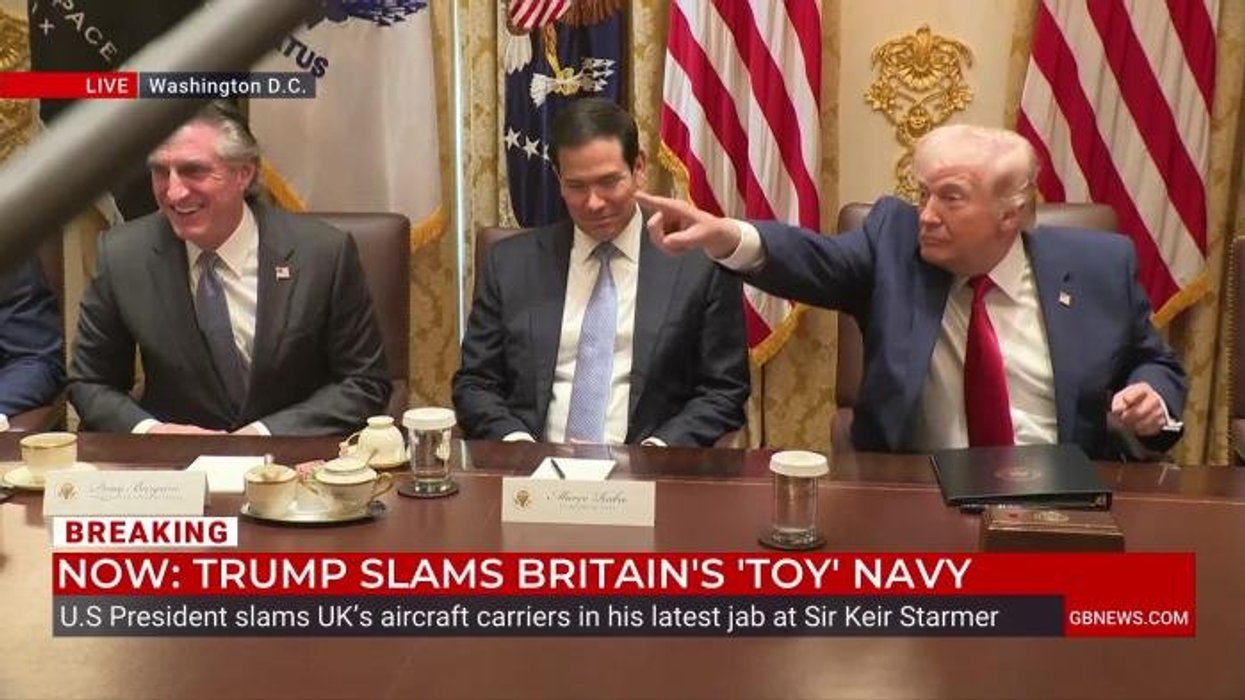



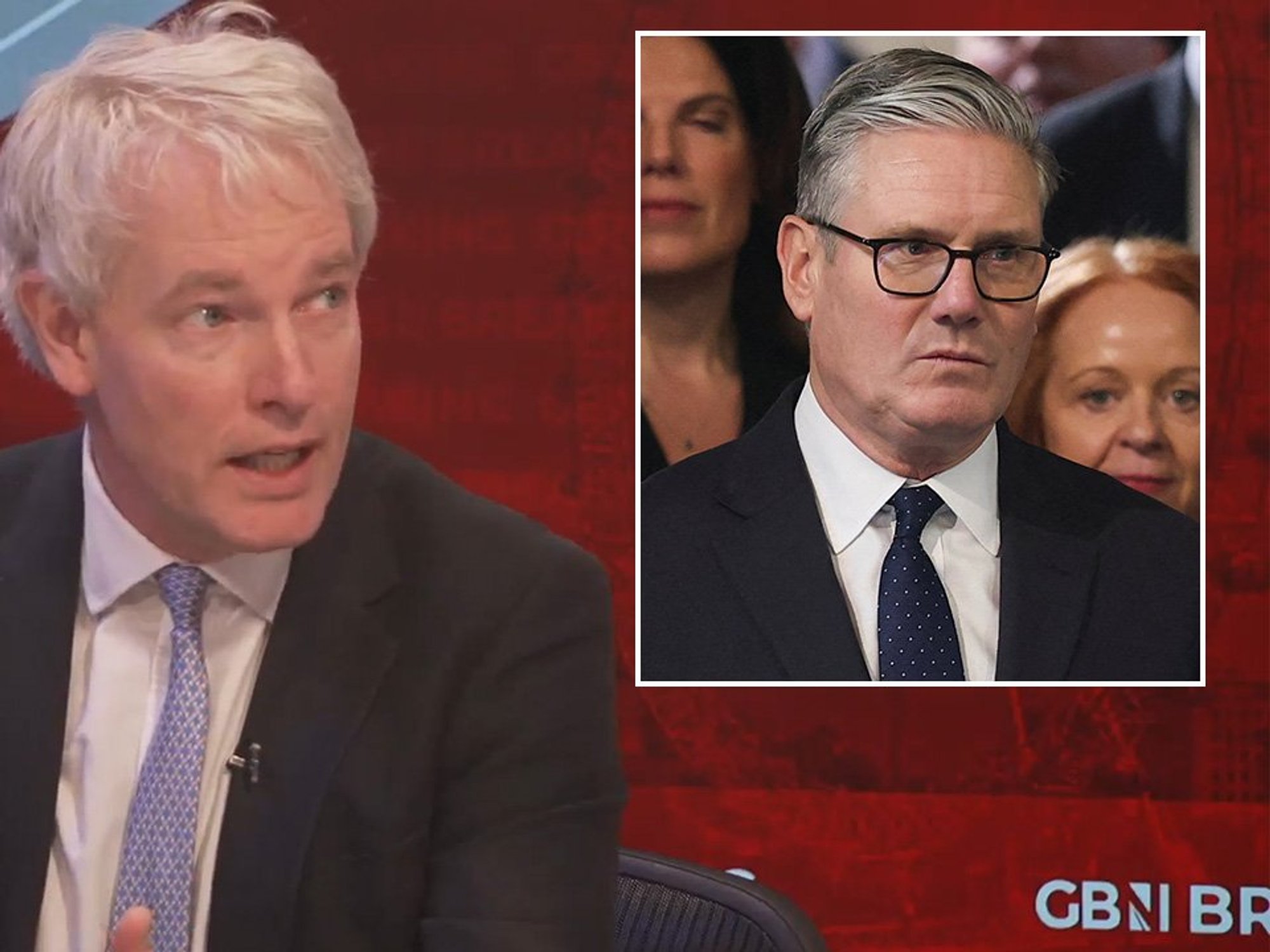



Donald Trump’s response to GB News’s Bev Turner’s insightful and probing questions during Thursday’s press conference, immediately after his cabinet meeting, reveals what amounts to a searing public audit of the Special Relationship under Sir Keir Starmer’s leadership.
The Prime Minister's Labour Government has, in the President’s telling, committed a “big mistake” on Iran, the Chagos decision and the broader drift toward EU alignment.
These choices, he suggested, risk weakening the presumption of reliable American support that Britain once took for granted.
Mr Trump’s criticism is directed squarely at Sir Keir and what he portrays as an institutional surrender of British sovereignty.
TRENDING
Stories
Videos
Your Say
It is not aimed at the British people, whom he has long said he admires, whose monarchy he has repeatedly praised, and whose Scottish roots he openly cherishes through his own family heritage.
This moment, as framed by Mr Trump, exposes the cost of trading post-Brexit independence for Brussels approval and activist applause.
Britain now risks becoming the ally Washington can afford to ignore.
The only remedy, in this view, is for Britain to reassert hard power, Anglosphere priority and sovereign seriousness — the very things Leave voters demanded and Labour has, critics argue, deprioritised.
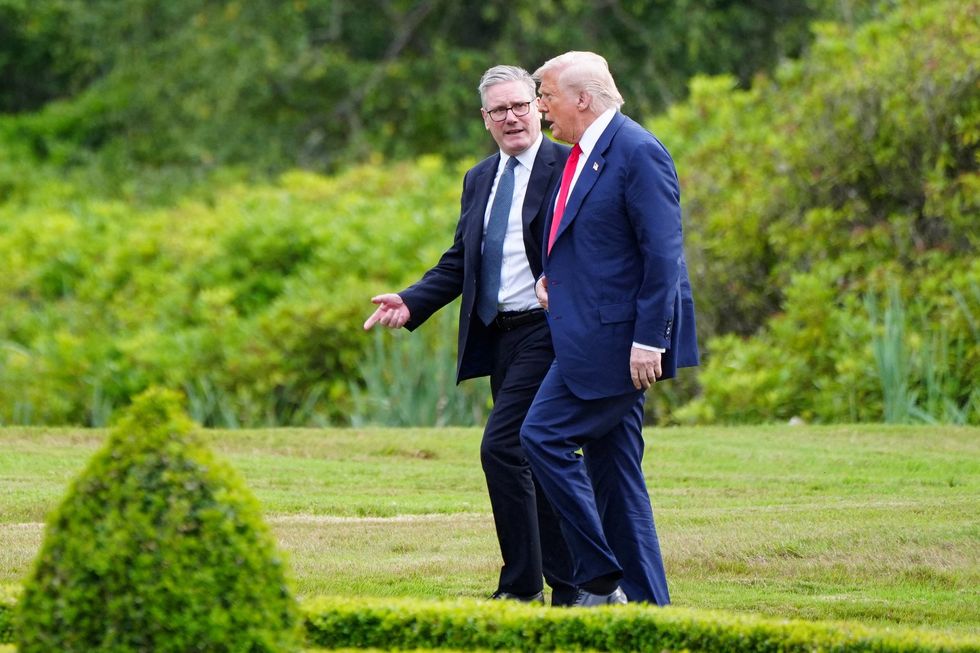
Donald Trump told Sir Keir he made a 'big mistake' on Iran
|REUTERS
The claims are now on the public record. In the Iran operation Trump referenced, he suggested that Britain was not central to the decisive phase.
When the fighting was over, Sir Keir offered British ships and carriers. Mr Trump’s response, as he described it, was blunt: the conflict had already been resolved and additional assets were no longer required.
He also pointed to earlier discussions of aircraft carriers arriving weeks later, arguing that timing — not just capability — is decisive in modern conflict.
The contrast he drew with American readiness was not merely rhetorical; it was intended to underscore what he sees as a widening gap in speed and deployment.
In Mr Trump’s account, Britain’s response came too late. The United States had already acted.
LATEST DEVELOPMENTS:
That pattern, Mr Trump argued, began earlier.
He traced his frustration back to the Chagos Islands decision, where Sir Keir's Government had pursued the transfer of the archipelago to Mauritius on what it describes as indigenous grounds — a rationale Mr Trump openly questioned.
The practical implications of that decision, he suggested, could introduce uncertainty around the long-term status of Diego Garcia, the vital US-UK base. While the full operational impact remains contested, Mr Trump indicated concern that future access and logistics may become more complicated.
A sovereign ally, in his view, should minimise — not introduce — such friction in a partnership that has underpinned Western security for decades.
These are not, in this framing, isolated errors. They reflect what critics see as a consistent Labour instinct: multilateral gestures over bilateral strength, EU optics over Anglosphere realism.
The Special Relationship was never purely sentimental; it rested on shared interests and demonstrated capability.
Mr Trump reiterated his long-standing view that the United States has borne a disproportionate share of Western security burdens, despite geographic distance.
Britain, historically, matched that commitment with both capability and political will. Under Sir Keir, critics argue, that will appear to have weakened.
Offers of support risk arriving after the decisive moment. Strategic assets face new uncertainty. The appearance of alignment can take precedence over operational effect.
None of this reflects on the British people. Mr Trump has made that distinction explicit across years of public statements.
He has spoken warmly of Britain as a foundational ally, invoked his mother’s Scottish birth, and expressed admiration for the monarchy and the continuity it represents.
His criticism of Sir Keir's conduct does not extend to the nation that produced Churchill, the Spitfire and the Brexit vote.
It is directed instead at a governing approach that, in his view, treats sovereignty as negotiable and alliance commitments as flexible.
Many British voters, particularly those who backed Brexit, would argue that this is precisely the mindset they sought to reject.
The downgrade Mr Trump signalled is therefore conditional.
“We’re always going to be there — or at least we were,” he said. “I don’t know about anymore.”
The remark stops short of rupture. Instead, it reads as a warning about reciprocity. Alliances endure when both sides demonstrate reliability.
Mr Trump’s argument is that Britain under Labour has raised new questions on that front. Washington, accordingly, is reassessing. The United States, particularly under Trump’s leadership, will act decisively in its own interest. It will be less inclined to extend unconditional support to partners it perceives as strategically inconsistent.
The path forward, in this view, is clear. Britain must restore credible hard power — a task that will likely depend on leadership change.
Sir Keir's Government has now spent months signalling a different direction. The result, as reflected in Mr Trump’s remarks, is a more openly transactional American assessment delivered on British television. Bev Turner asked the questions that brought these tensions into the open. Donald Trump answered in characteristically direct terms.
The exchange leaves limited room for diplomatic ambiguity. The Special Relationship under Keir Starmer is, at the very least, under visible strain.
The choice ultimately rests with British voters, not Washington. Mr Trump has outlined his terms with clarity. Sovereign seriousness brings alliance strength. Strategic ambiguity invites distance.
The direction Britain chooses next will determine how that relationship evolves.