







On this day, in 1974, the Conservative Prime Minister Ted Heath called a snap general election, which he expected to win, but promptly lost. It was a mirror image of the poll four years earlier, when Heath won, even though the underdog.
Many commentators put the surprising Conservative victory in 1970 down to one man. Not Heath, but the maverick he had sacked two years earlier: Enoch Powell.
The ‘Rivers of Blood’ speech, delivered to Tories in Birmingham in 1968, ended Powell’s Cabinet career. But, although it would be considered bad manners to say so in public today, Powell’s speech was hugely popular at the time.
Surveys in 1968 suggested three-quarters of voters agreed with Powell, when he argued that immigration was out of control and ran the risk of future racial conflict.
In particular, Powell’s message resonated with traditional white working-class voters in the West Midlands (Powell was MP for Wolverhampton South West).
In 1970, those voters turned their back on Labour in huge numbers and in a way not seen again until Boris Johnson demolished the ‘Red Wall’ almost half a century later.
Come the next general election, it will be 60 years since ‘Rivers of Blood’ (the quote is a prophecy from Virgil’s Aeneid, which Powell, a classical scholar, used thus: “I am filled with foreboding; like the Roman, I seem to see 'the River Tiber foaming with much blood”).
The enduring legacy of Powell’s speech is enormous. No other post-war oratory continues to be quoted by both sides of the political divide.
On the Right it is a commonplace to hear the refrain “Enoch was right!”. On the Left, the speech has become a byword for bigotry.
Looking back, ‘Rivers of Blood’ foreshadows many things. Not least, cancel culture. By the standards of today’s online debates about race, Powell’s utterances are relatively temperate. But back then, they were explosive.
A Labour MP demanded that they be investigated by the police. The Liberal leader, Jeremy Thorpe (a politician later prosecuted for trying to murder his boyfriend), said they were an incitement to racial hatred.
It begs a question: if Powell were around today, where would his views find an ideological home? Who would be his heir? Would he be to the right of Reform - his views aligned with those expressed by someone like Tommy Robinson?
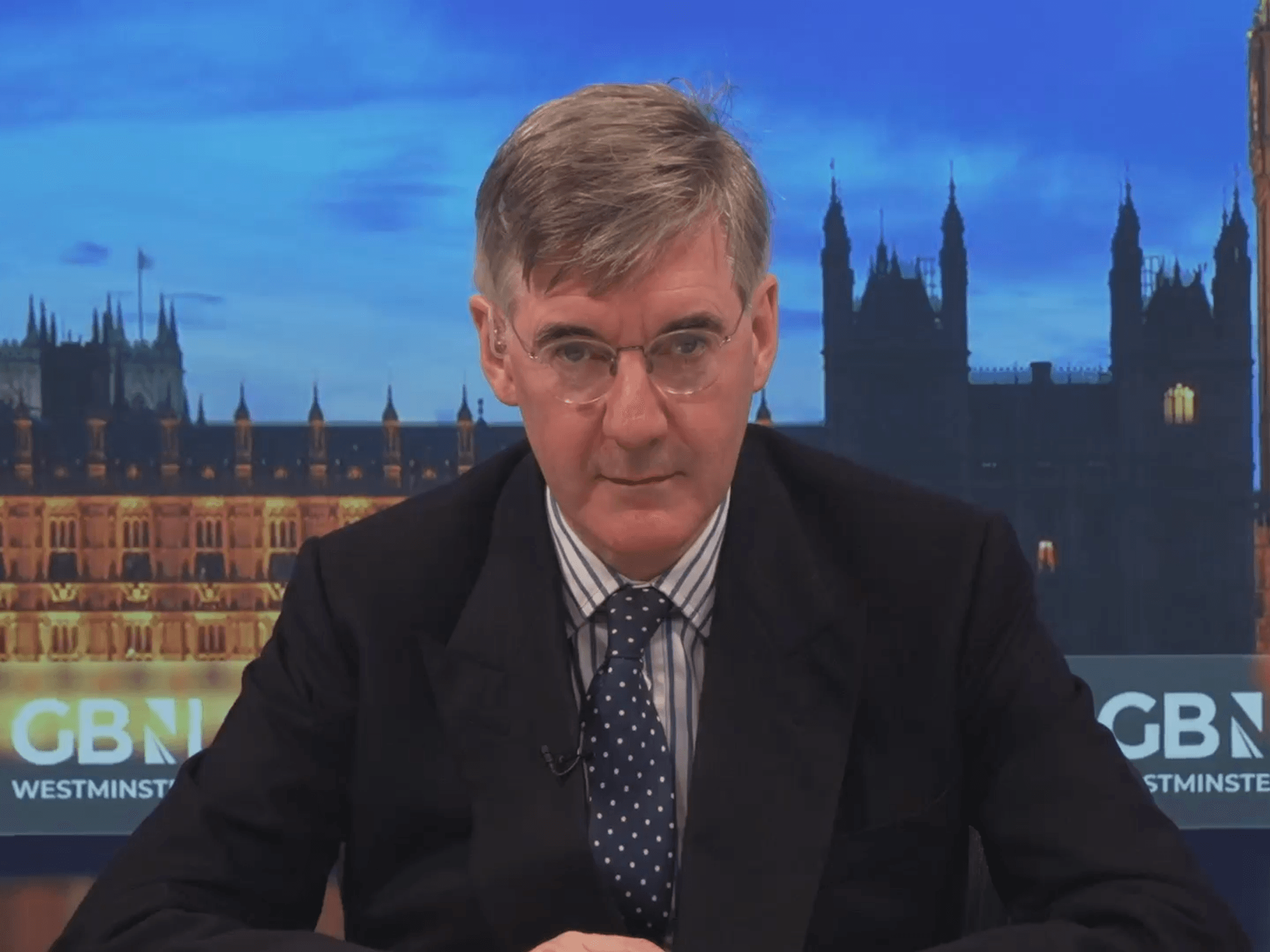
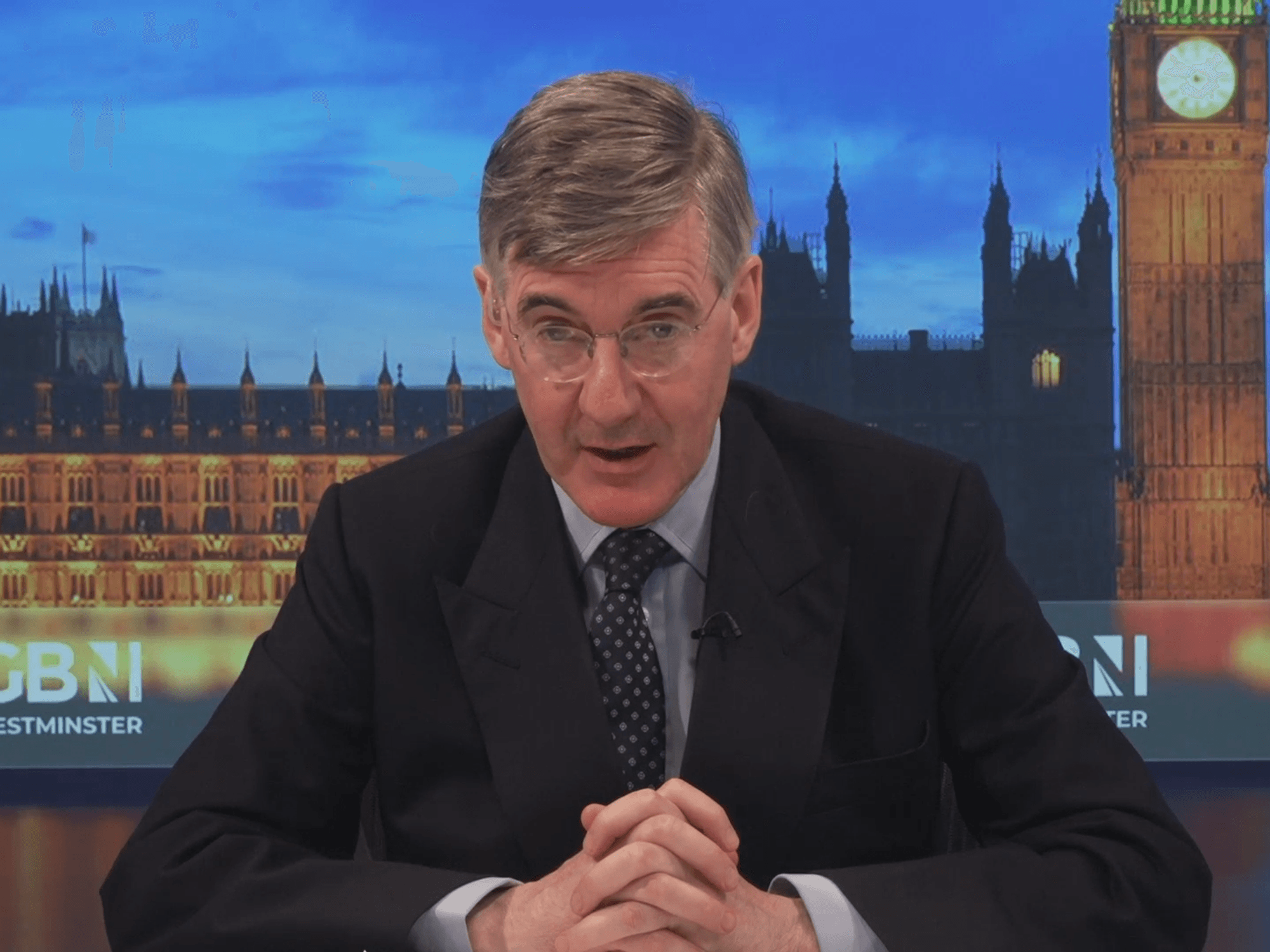
Or could an updated ‘Rivers of Blood’ speech, full of classical references and careful qualifications, conceivably fall from the mouth of an urbane, if Reform-adjacent Tory, such as Jacob Rees-Mogg?
What about the new Reform MP Robert Jenrick? He was born in Wolverhampton, the town represented by Powell all those years ago. Jenrick’s experience of multiculturalism in the Midlands has made him punchier than many on the subject.
 If Enoch Powell were alive today, which party would he serve? - Colin Brazier |
 Getty Images
Powell is no longer around to ask which party he’d support today. He died just a few months after Tony Blair swept to power in 1997, a Labour victory many of us on the Right see as a seminal moment for the failures of multiculturalism.
Whether or not it’s true that the Blair government had an unspoken plan to ‘rub the Right’s nose in diversity’, there’s no doubting that after 1997, immigration took off, and hasn’t really slowed since.
By contrast, post-war immigration was relatively puny. In ‘Rivers of Blood’ Powell infamously recounted a conversation with one of his constituents, who told him: "If I had the money to go, I wouldn't stay in this country... I have three children, all of whom have been through grammar school, and two of them are married now, with families. I shan't be satisfied till I have seen them all settled overseas…In this country in 15 or 20 years' time, the black man will have the whip hand over the white man.”
Powell added: “What [his constituent] is saying, thousands and hundreds of thousands are saying and thinking - not throughout Great Britain, perhaps - but in the areas that are already undergoing the total transformation, for which there is no parallel in a thousand years of English history.”
And then this: “Those whom the gods wish to destroy, they first make mad. We must be mad, literally mad, as a nation to be permitting the annual inflow of some 50,000 dependents, who are for the most part the material of the future growth of the immigrant-descended population. It is like watching a nation busily engaged in heaping up its own funeral pyre.”
To put it mildly, there is plenty here to consider.
First, the idea that a net inflow of 50,000 migrants should be the cause of so much angst seems oddly quaint when we have been compelled to resign ourselves to an annual influx, under the Boriswave, of 20 times that number.
Second, the notion that the country is no longer a place where parents no longer fancy their children’s chances is gathering strength. If not actual emigration to the likes of Dubai, then at least internal displacement.
White-flight from cities like my home-town of Bradford doesn’t see people move abroad necessarily, but to other parts of the UK, often to the rural hinterland (which is why the government-funded report this week ‘accusing’ the countryside of being “too white” was so richly offensive).
Third, Powell’s grasp that it is only those who have to face the consequences of mass immigration, areas he describes as undergoing “total transformation”, who understand what’s at stake. This chimes exactly with the experience of many. In other words, it is easy to pretend mass immigration has only upsides if you live in an affluent part of Britain unaffected by it.
Fourth, and most controversially, Powell asserted - or at least reported his constituent as saying - that, one day in the future, the “black man will have the whip hand over the white man”. This is inflammatory stuff. Evocative language designed to stir, perhaps even - as Thorpe contended - incite.
But I wonder how many voters who have been drawn rightwards in recent years recognise a truth of sorts in this. Britons who are sick of hearing that racism can only ever be a one-way street, something only white folk are capable of dishing out, never to receive.
It’s a dogma that runs hollow in parts of Britain where no-go zones - easily dismissed in fashionable parts of London - prove unsafe to navigate as, say, a young white man or woman.
So what, if anything, does today’s anniversary of Tory defeat in 1974 tell us about our future? Would a Conservative Party which, rather than sacking Powell, had acted on his warnings, have stayed in power?
More importantly, did the defeat of Powell’s pessimism (I would call it ‘justified scepticism’), condemn Britain to a multicultural future its people did not want and never got to vote on? It’s impossible to know. The past, as they say, is a foreign country: they do things differently there.
But I can say this. For many of us, Powell’s speech, which he gave - coincidentally, in the year of my birth - was always off-limits as a rhetorical resource.
It was beyond the pale in arguments about immigration. A mark of intellectual dishonour, or moral iniquity. But events have caught up with his words, made sense of his warnings. It doesn’t matter which party he would’ve supported.
It only matters that the next party which forms our government should not dismiss his posthumous advice as hate speech. Powell may be long gone, but his reasoning resonates more than ever.