





International law is getting a bad name, largely because world leaders choose to ignore it when it suits them, and there’s little enforcement when they do.
The European Court of Human Rights insisted in a bundle of rulings between 2005-15 that prisoners in British jails should have the right to vote, which PM David Cameron said made him “physically sick”.
After taking no notice of this judgement for years, the UK partially went along with it by allowing 100 electronically tagged wrong ‘uns on temporary release to toddle along to polling stations. But no one behind bars got the same rights.
Lord Cameron must have a very delicate stomach if this is the kind of thing which makes him rush to the bathroom to stick his head down the toilet. Prisons punish by taking away liberty, and judges don’t add disenfranchisement to sentences.
We are very keen on rehabilitating crooks and sending them back into society as upstanding citizens. That job would be made easier if they had a stake in the society to which they will return.
How many people now think it right that gay men and women in the armed forces were still being thrown into military prisons for same sex relationships 30 years after they were legalised for everyone else?
But it took a ruling against Britain by the ECHR in 2000 to lift the gay ban in the services. Now ranks are filled with openly gay soldiers, sailors and air crews who can march with pride, and the Government has apologised for their harsh treatment in the past.
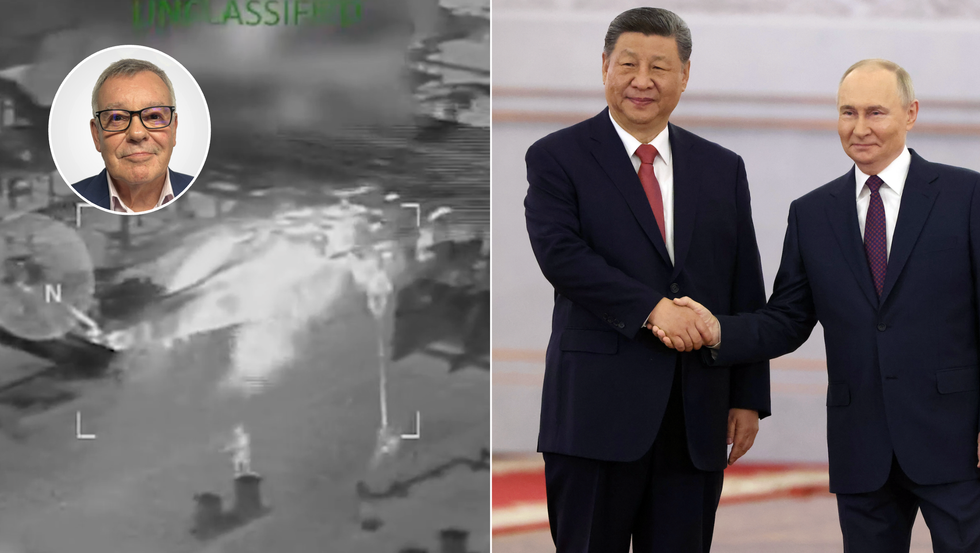
China and Russia are the real winners of Donald Trump's madcap conquests - Nigel Nelson
|@Southcom/@Sec_Noem/X/Getty Images
Freedom of speech is a hot potato today, but it was the ECHR which gave the Sunday Times the freedom to speak out about the disgraceful thalidomide scandal.
That is how international law is meant to work. To tap nations on the shoulder when they fail to honour the universal human rights they signed up for. China dearly wanted to get its hands on the Chagos Islands when they were a British Indian Ocean Territory, and it still does.
The International Court of Justice, the International Tribunal for the Law of the Sea and the UN General Assembly ordered Britain to hand the islands back to Mauritius, which allowed us to keep operating the strategically vital Diego Garcia military base.
Had we not gone along with those international legal rulings and others more binding coming down the track, China might have used force, arguing that we were an illegitimate occupying power. They may still, of course, but wouldn’t have the cover of international law as justification if they did.
We habitually refer to what Vladimir Putin called a “special military operation” as Russia’s “illegal war in Ukraine”. It is international law which makes it illegal.
Donald Trump’s attack on Venezuela and the kidnapping of its president certainly looks like a breach of international law. Although Keir Starmer is yet to return a definitive verdict on that one.
But at the very least, the US has lost the moral high ground in negotiating peace for Ukraine. President Putin may argue that there is little material difference between his attack on Ukraine and America’s attack on Venezuela.
China might also jump on that bandwagon as it threatens Taiwan. And that’s before we even get to Donald Trump’s madcap ambition to take Greenland. Mexico, Colombia and Cuba now also have good reason to look green around the gills. Who next? Canada?
The X account @icelandcricket decided their country, at least, was safe, tweeting: “Venezuela has oil. Greenland has rare Earth minerals. Luckily, Iceland has only volcanoes, glaciers and very average cricketers.”
International law sets boundaries, even if, in practice, they are sometimes porous ones. It lays down a globally agreed code of good behaviour.
But transgressors cannot be brought into line if there are no longer any lines to cross, and the unintended consequences of that could be catastrophic. Those who want to dispense with international law when it is inconvenient should be careful what they wish for.
More From GB News