

Being based in the US you see exactly what Britain has lost about its national identity
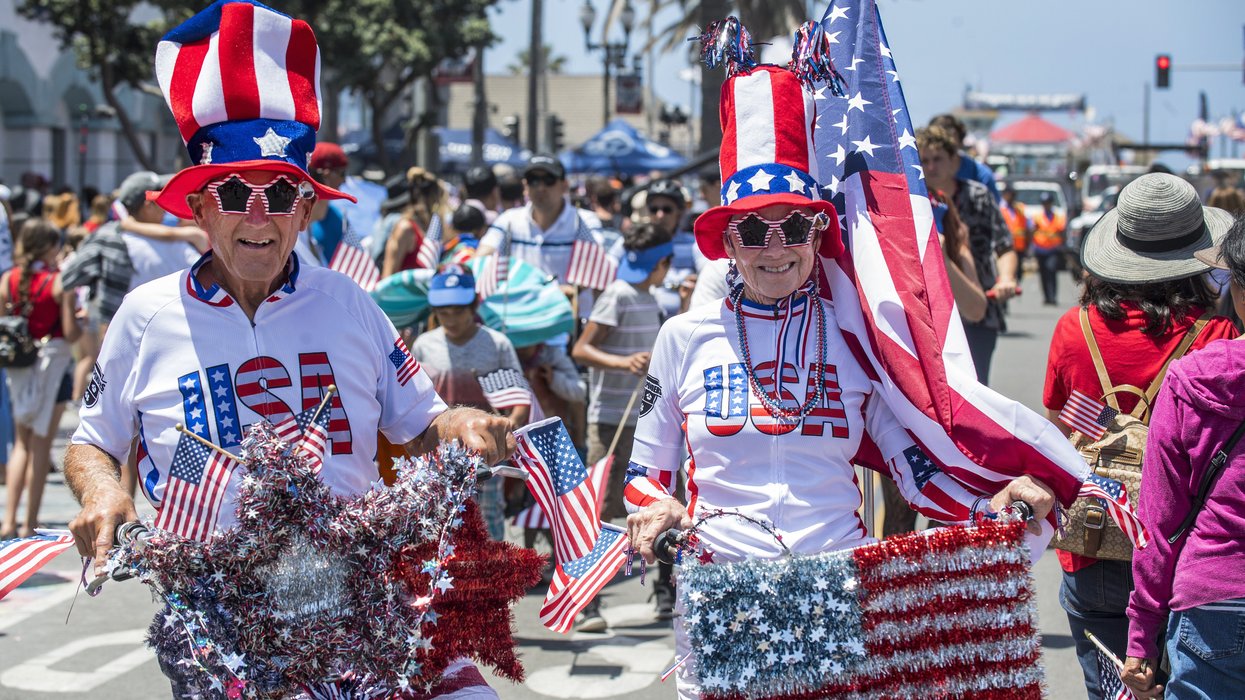
Bev Turner says in the United States there is no hesitation in expressing pride in their country
|GETTY



GB News' Bev Turner takes a look at patriotism in the US compared to in Britain
Don't Miss

Most Read



You won’t be surprised to hear that St George’s Day was not exactly big news here in Washington. Unlike St Patrick’s day of course which is massive here in America.
And to be honest, Paddy’s day is pretty big there in the UK also – not least in pub takings over 24 hours.
So why have we let St George’s Day go almost completely unnoticed for years? We shouldn’t suddenly all be waving flags for the sake of it, or draping ourselves in symbolism. That’s not the point. The point is what sits beneath it.
A national day like that should be a moment recognised as what we share; of what we have in common. But somewhere along the line, we’ve lost that.
TRENDING
Stories
Videos
Your Say
We’ve become super awkward about it all. As if expressing any kind of collective identity might upset someone. And let’s be honest – it does upset people. I recently heard about a British primary school telling a mum that they couldn’t put an England flag on a cream tea stand at the summer fair as it as “a bit problematic”. I despair.
Here in the United States there is absolutely no hesitation in expressing pride in their country. Flags on homes, outside schools, in small towns and big cities — not as a statement, not as a protest — just as a given.
And more than that, there’s a sense of shared understanding about what it represents: freedom of speech, freedom to ambition, the right to privacy, the right to defend yourself – all of it underpinned in their constitution of course.
It’s not about perfection. It’s not about saying everything is flawless. It’s about a belief — however idealistic — in a common set of values.
It made me reflect on us, because when we talk about patriotism in the UK, it too often gets reduced to symbols — the flag, the anthem, the ceremonies — and then we argue about those symbols instead of talking about what actually matters: What should unite us.
Because, patriotism, at its best, isn’t loud or aggressive or exclusionary. It’s actually very simple. It’s fairness, consideration, good manners — yes, even that, something so basic but so telling.
It’s the idea that you treat other people as you would want to be treated yourself.
That’s not political. That’s not controversial. That’s the foundation of a functioning society. It is also a fundamental tenet of Christianity – the belief system upon which the UK was built.
And yet, it can feel like those shared understandings have become fragmented. Like we’re quicker to focus on what divides us than what holds us together.
Which brings us to this debate about whether schools should display the Union Flag or a portrait of the King.
Now, you can argue the pros and cons of that policy, of course you can, but perhaps we’re missing the bigger picture. Because, a flag on a wall means very little if we don’t feel connected to what it represents. And equally, you don’t need a flag to live out those values — but you do need a sense of shared culture.
That’s what creates cohesion. That’s what builds trust. That’s what allows a country — any country — to feel like more than just a collection of individuals.
So maybe the real conversation we should be having isn’t about whether patriotism is uncomfortable. It’s about whether we still believe in the idea of a common culture rooted in decency, respect, and hard work.
If we do (and I think most people, quietly, still do) then that’s where unity comes from. Not imposed, not forced, but chosen. And perhaps it’s time we were a little more confident in saying that is what we want.