







A former British palace in Sudan is under threat from complete destruction as a brutal civil war rages on in Khartoum.
The ruins of the Old Republican Palace, which was built in the 1830s, are under threat as it lies in the centre of the conflict between the rebel Rapid Support Forces (RSF) and the Sudanese Armed Forces (SAF) loyal to the military government.
It became most famous as the location of the final clash between the besieged General George Gordon and jihadist warriors attempting to retake the city from the British in January 1885.
Now, officials in Sudan are planning to save the site which has been party destroyed in the civil war and are reaching out to Westminster to help.
TRENDING
Stories
Videos
Your Say
Sudanese minister for information Khalid Ali Aleisir told The Telegraph: "It is a priority.
"The Palace forms a very important part of Sudan’s history. It is symbolic of the close relationship between Sudan and the UK, and our shared history. It would be a perfect opportunity for British partners to help protect that."
Museum Director and the palace's custodian Abdelnaser Hassan is now assisting reconstruction efforts following the de facto government’s return to the much destroyed capital in January.
He added: "When we find bodies buried, we of course have to move them."
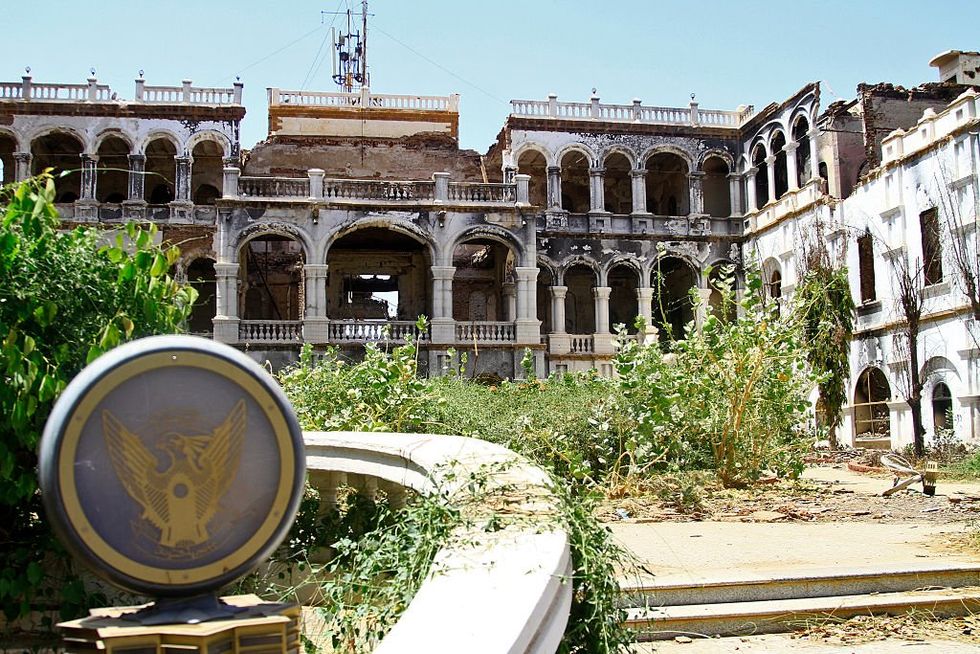
The damaged old Republican Palace in the Sudanese capital Khartoum
|GETTY
General George Gordon first made a name for himself commanding an imperial force against the 1850 Taiping Rebellion in China and campaigning against the slave trade in Sudan.
He was sent to Khartoum to help evacuate the city from an oncoming army led by Islamist Muhammad Ahmad, who launched a revolt against foreign rule, believing himself to be the Mahdi, an Islamic messiah.
When he arrived in February 1884, General Gordon found it impossible to reach the other garrisons which were already besieged and decided to stay in the palace and fight.
However, by December he had lost hope of relief from the British Army.
After declining all offers of peace if he converted to Islam, he wrote in one of his final diary entries: "I have done my best for the honour of our country."
On January 26, 1885, the Islamist forces stormed the city. While the exact circumstances of General Gordon's death has never been confirmed, most historians agree he was beheaded and his body thrown down a well.
LATEST DEVELOPMENTS
- Sudan civil war: Christians told: 'Renounce Jesus or STARVE' in brutal Islamist repression campaign
- Britain is turning a blind eye to Islamists committing genocide. Why? Jews are not involved - Stuart Fawcett
- 'No way I'm going back!' Calais migrant brazenly tells GB News of plan to enter the UK illegally: 'It's better than France'
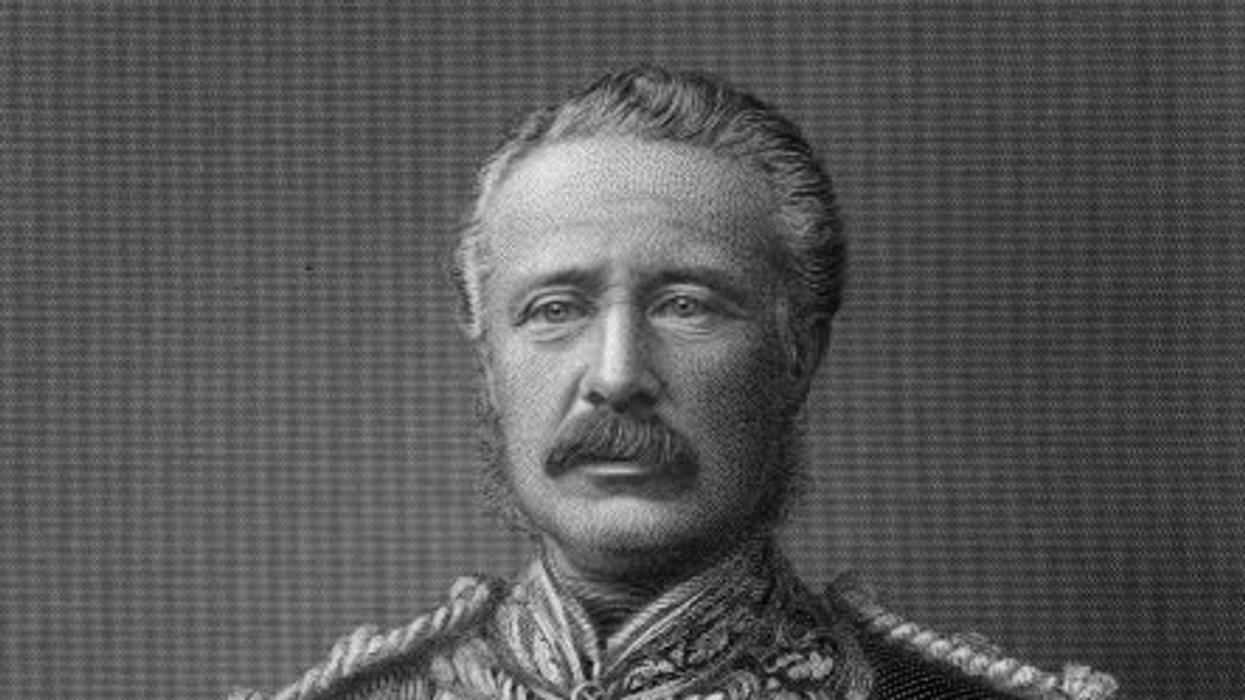
An engraving of General George Gordon
|GETTY
Now, the Palace is part of a key government complex in central Khartoum, alongside the new Chinese-built Republican Palace, where RSF rebels led by Muhammad Dagalo attempted to overthrow Sudan’s de facto leader, Abdel Fattah al-Burhan.
After the coup failed and al-Burhan fled to Port Sudan, RSF forces entrenched themselves in the capital, carrying out months of looting and vandalism that left cultural landmarks damaged and the city scarred by violence.
Restoring these sites has become symbolically important for al-Burhan’s government, which took power in a 2021 coup and now seeks to project legitimacy, unify Sudan’s diverse population, and contrast itself with the RSF, which it labels as a destructive militia.
A senior civilian official accused the RSF of carrying out "cultural genocide," alongside a broader campaign that the US has determined involved genocide and ethnic cleansing.
The RSF has also destroyed museums in Nyala and in El Fasher, where it was accused of massacring thousands of civilians in 2025 following a prolonged siege.
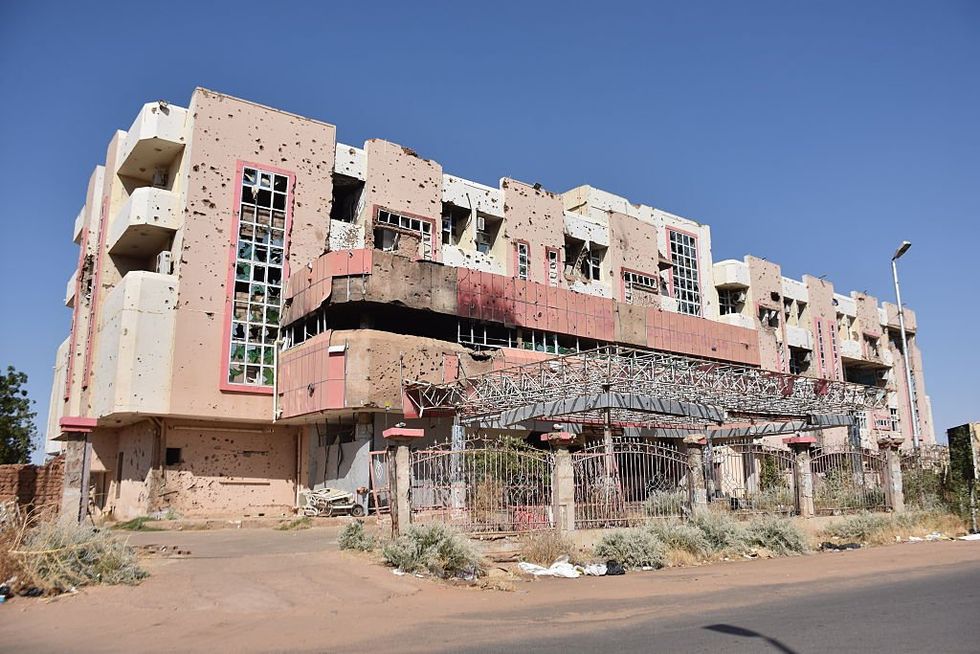
Destruction at Al-Muallim Hospital is seen near the headquarters of the Sudanese Armed Forces General Command
|GB NEWS
Museum director Mr Hassan said he would press for British funding for this site of colonial heritage, which could require a further £4million to restore.
It's not just the palace, as over 4,000 artefacts are believed to have been taken from the nearby Sudan National Museum, including statues and golden jewellery from the Kushite civilisation, a key part of thew country's national history.
Director of museums at Sudan’s National Corporation for Antiquities and Museums (NCAM) Ikhlas Abdel Latif Ahmed said: "We have a very important history.
"They wanted to destroy it, they attacked the heritage as well as the people."
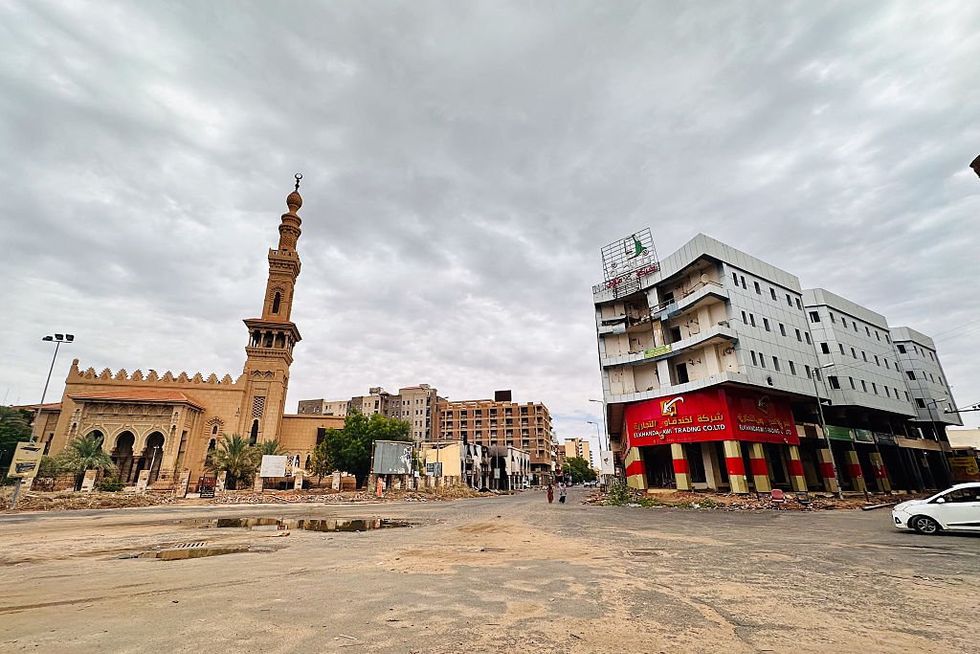
Much of Khartoum has been destroyed in the brutal civil war
|GETTY
The UK has imposed new sanctions against six people suspected of committing atrocities in the war in Sudan or fuelling the conflict through the supply of mercenaries and military equipment.
Foreign Secretary Yvette Cooper said there needs to be a "price to pay" for military commanders who have allowed the atrocities to happen, as well as the "callous profiteers" fuelling the violence.
Ms Cooper said the Government wants to "dismantle the war machine" with its sanctions, while calling for a ceasefire and unhindered access for aid agencies.
She also called it "a war waged on the bodies of women and girls", and was defined by famine, rape and suffering that "should mobilise the world’s resources and resolve."
She added: “Yet, too often, the response we’ve seen is to hold back and look away, catastrophically failing the people of Sudan and failing Sudan’s women and girls.
"I am determined that we do not look away, determined that we put the spotlight firmly on Sudan."
More From GB News