

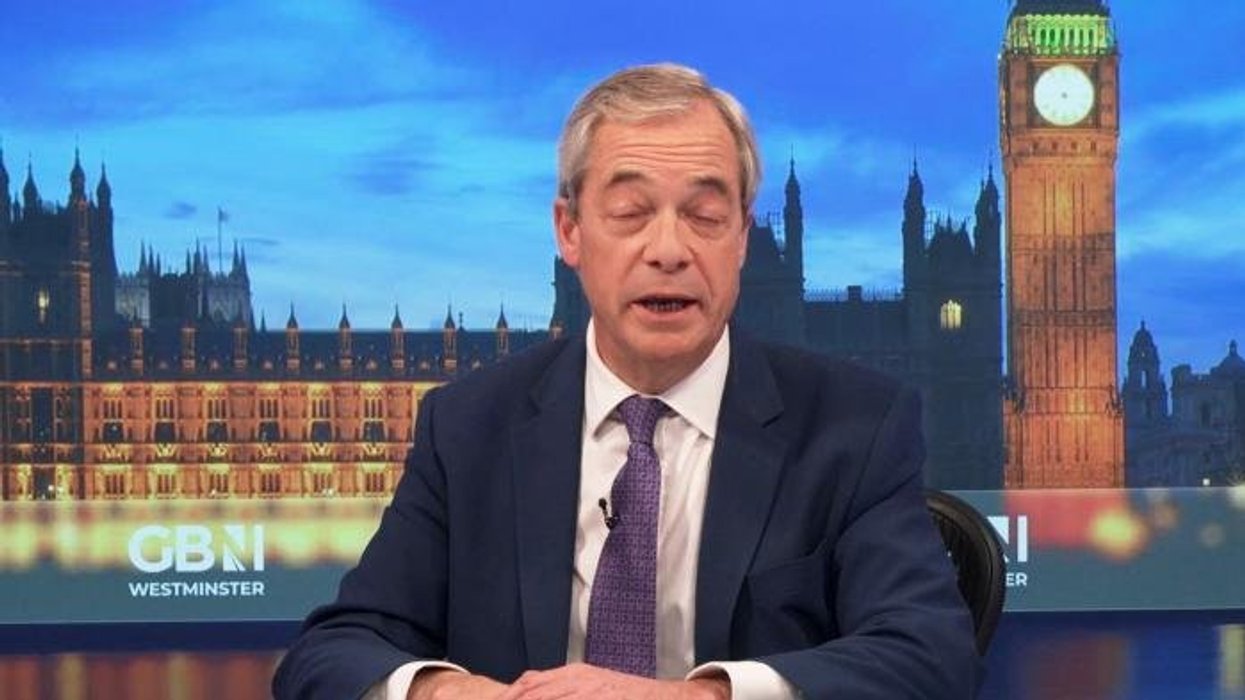






Nigel Farage has warned that tensions between the United States and its allies over Greenland represent the “biggest fracture” in the transatlantic relationship since the Suez crisis of 1956.
Speaking to GB News in a sit-down interview alongside US House Speaker Mike Johnson, the GB News host criticised suggestions that President Donald Trump could use economic or military pressure to secure control of the strategically vital Arctic territory.
Mr Trump has argued that the United States must take control of Greenland on national security grounds, refusing to rule out the use of military force.
The proposal has been firmly dismissed by Greenland’s leadership and by Denmark, a Nato ally, which retains sovereignty over the semi-autonomous territory.
TRENDING
Stories
Videos
Your Say
The standoff has since escalated into a diplomatic dispute, with the US President warning he could impose further trade tariffs on European allies who refuse to back the plan.
Speaking on GB News, Nigel said: "Friends can disagree in private, and that’s fine. That’s part of life, part of politics.
"But to have a US President threatening tariffs unless we agree that he can take over Greenland, by some means, without it seems even getting the consent of the people of Greenland… I mean, this is a very hostile act. There’s no other way I can put it."
Mr Johnson responded: "Yes, the President has a certain manner in which he goes about doing things.
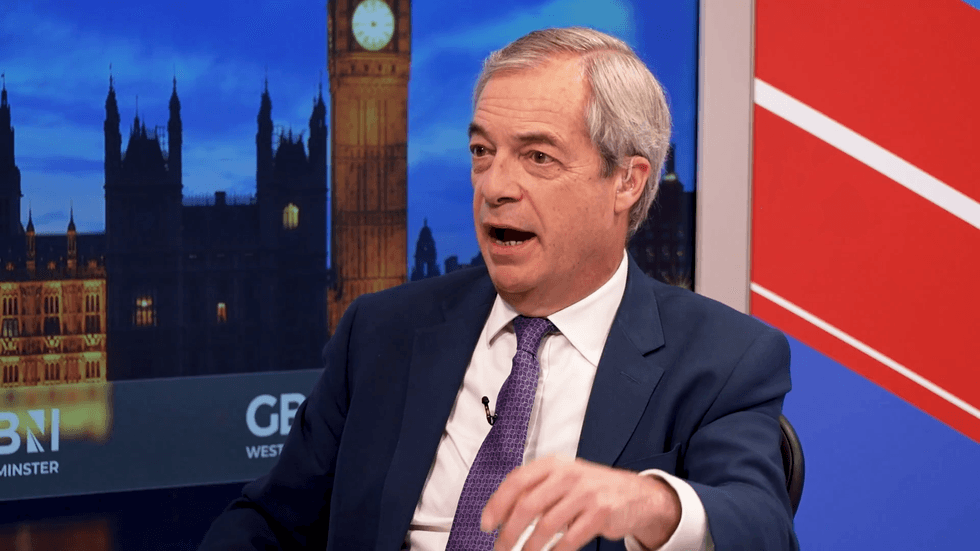
Nigel Farage said that this could cause a rupture in Nato
|GB NEWS
"Sometimes it’s for effect the shock and awe that is a means to an end. This 'take him seriously, not literally' phrase, we’ve heard that. We take him seriously, not always literally. I think he’s okay with that.
"Whereas in America, the far-left media take him always literally and not seriously, and I think that’s their mistake.
"I think what the President has in mind with Greenland is that he understands the strategic significance of it the increasing significance, as you said."
“This does threaten Nato,” Nigel latersaid. “Basically, Nato has been quite a good anchor.
LATEST DEVELOPMENTS
- Nigel Farage slams Donald Trump's tariffs as 'wrong' and vows to 'have words' with ally - 'Not the way you treat your best friend!'
- Keir Starmer stands firm against Donald Trump in address to the nation - READ IN FULL
- Donald Trump declares: 'I no longer feel obliged to think purely of peace' in unsettling letter to Europe
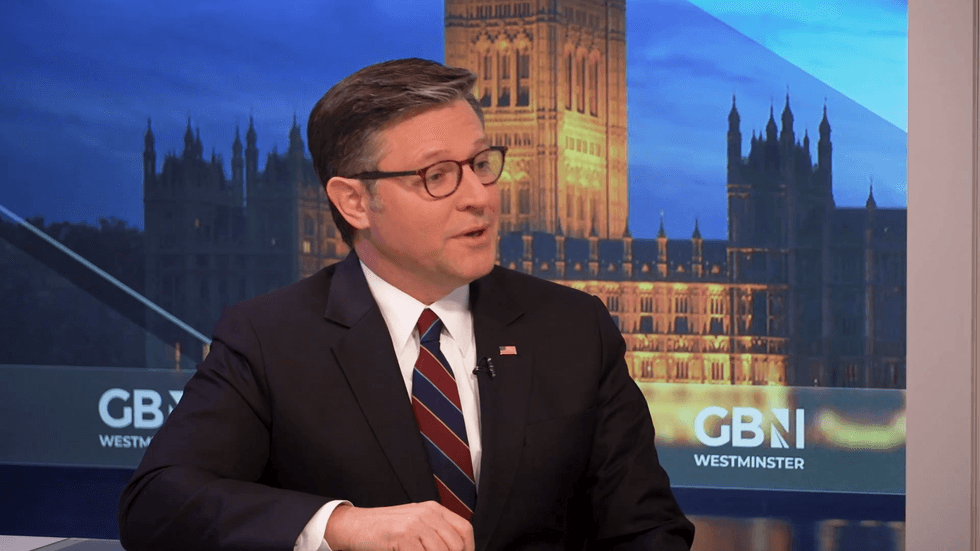
US Speaker Mike Johnson said that the President remained committed to Nato and global security
|GB NEWS
"Yes, of course, the Europeans haven’t paid enough, and Trump has done well to get them to pay more but this is the biggest fracture in our relationship since Suez in 1956.”
Speaker Johnson pushed back on the idea that the dispute posed a long-term danger to the US-UK “special relationship”, insisting the President remained committed to Nato and global security.
He argued that Mr Trump’s comments on Greenland should be taken “seriously, not literally”, and said the President was focused on ensuring the Arctic was adequately protected as its strategic importance grows.
“I don’t think it’s a threat to Nato or to this special relationship in the long run,” Mr Johnson said, adding that Mr Trump had “done more for Nato than anyone in history” by pressuring allies to increase defence spending to five per cent of GDP.
However, Nigel remained unconvinced, warning that public threats against allies rather than quiet diplomacy risked a "serious rupture".
“If we don’t get past this,” he said, “it genuinely would be a rupture.
”Greenland is the largest island in the world and is located in the Arctic, covering about 2.2 million square kilometres (836,330 square miles) around six times the landmass of Germany.
Despite its size, it has a population of just under 56,000, making it the least densely populated territory globally. Most residents are indigenous Inuit.
The island’s position between North America and the polar region gives it significant strategic value, particularly for missile detection systems and surveillance of shipping routes.
In the Cold War era, the US examined the possibility of placing nuclear weapons on Greenland, but the idea was later dropped due to technical constraints and objections from Denmark.
More From GB News