










Military drones entered restricted airspace above Dublin and headed towards Volodymyr Zelensky's aircraft on Monday evening, according to reports that emerged on Thursday.
Five drones in total are reported to have violated a no-fly zone - with Russia among a list of potential culprits behind their launch.
The unidentified aircraft had set off from an area northeast of Dublin and remained airborne for approximately two hours.
Authorities have not identified who operated the drones or where they are now located.
Security officials believe the drones were intended to disrupt the Ukrainian leader's arrival in Ireland.
The UAVs had their lights switched on, suggesting those responsible wanted them to be noticed.
"They had the capability and intent. They could have taken action at any moment of their choosing," a security source said.
The Ukrainian President's flight touched down at Dublin Airport at 11pm, arriving slightly ahead of schedule.
Thanks to the early arrival, his aircraft avoided the drones, which had reached the exact location where his plane was expected to be.
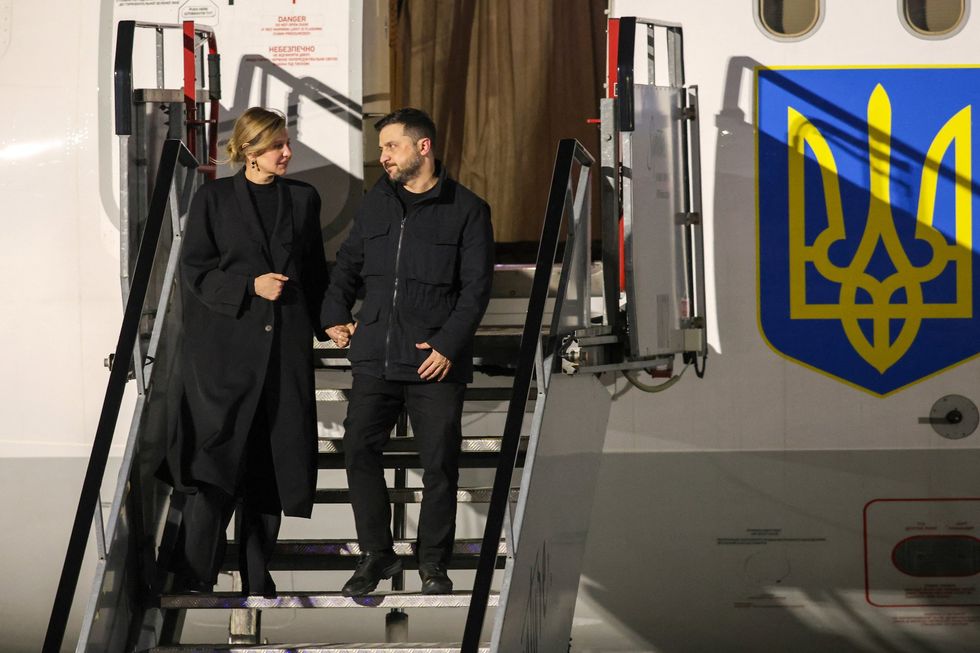
The Ukrainian President's flight touched down at Dublin Airport at 11pm
|GETTY
Sources confirmed to The Irish Times that Mr Zelensky was never in danger due to the early landing.
Investigators have now classified the incident, first revealed by The Journal, as a potential act of hybrid warfare.
Russian security services are considered the most probable culprits, though sources told the newspaper there was no direct evidence linking Moscow to the operation.
Barry Andrews, a Fianna Fail MEP, said: "It is a criminal offence to operate a drone within this area without permission."
UKRAINE - READ THE LATEST:

Russian security services are considered the most probable culprits
| REUTERS
Security officials believe the drones were intended to disrupt the Ukrainian leader's arrival in Ireland
|GETTY
The Irish defence department declined to comment, citing operational security concerns.
After breaching the restricted zone, the drones circled above the LE William Butler Yeats, an Irish Navy vessel secretly positioned off Dublin in the Irish Sea.
Crew members on deck spotted the illuminated aircraft against the night sky.
But shockingly, the ship lacked air radar equipment, forcing lookouts to identify the threat with their own eyes.
Then, they decided not to attempt shooting down the drones.
The vessel had no means to disable them electronically, with machine guns its only air defence capability.
One of the Irish Air Corps' 24 aircraft was patrolling the area - but did not engage the UAVs.
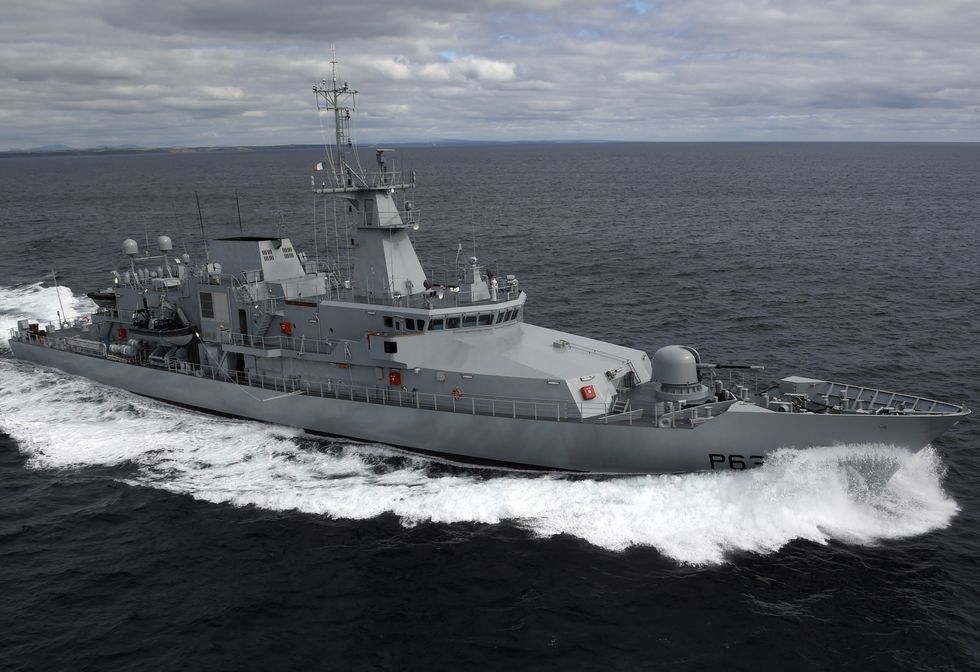
After breaching the restricted zone, the drones circled above the LÉ William Butler Yeats
|IRISH DEFENCE FORCES
The Taoiseach and ministers for justice and defence received briefings on the incident within hours.
It remains unclear whether Mr Zelensky was informed about the security breach.
The security operation for the Ukrainian leader's visit stretched Ireland's military resources to their limits.
Ireland's navy operates just eight ships, though a March report revealed only four could sail due to severe personnel shortages.

The Taoiseach (right) and ministers for justice and defence received briefings on the incident within hours
|GETTY
Dublin allocates the smallest proportion of GDP to defence of any EU member state, spending just 0.24 per cent compared to the European average of 1.74 per cent.
The proudly neutral country depends on the RAF to intercept aircraft threatening its airspace.
However, its Government has now called for defence spending to triple in the coming years.
Plans are underway to purchase between eight and 14 fighter jets at a cost exceeding £2billion, which would be Ireland's first such acquisition in half a century.
Its naval fleet is also set to double to 12 vessels under proposed reforms.
Our Standards: The GB News Editorial Charter
More From GB News