








Donald Trump has confirmed the US will launch "bigger and better" strikes on Iran if the Islamic Republic refuses to sign a "real agreement" to end the conflict in the Middle East.
The US President hinted at launching a large-scale aerial bombardment of Iran earlier today following a disagreement between Tehran and Washington over the Strait of Hormuz.
He wrote: “All US Ships, Aircraft, and Military Personnel, with additional Ammunition, Weaponry, and anything else that is appropriate and necessary for the lethal prosecution and destruction of an already substantially degraded Enemy, will remain in place in, and around, Iran, until such time as the REAL AGREEMENT reached is fully complied with.
While Mr Trump said it is “highly unlikely” that an agreement will not be reached, he warned "the 'Shootin’ Starts’, bigger, and better, and stronger than anyone has ever seen before” if Tehran fails to make concessions.
Mr Trump added: “It was agreed, a long time ago, and despite all of the fake rhetoric to the contrary - NO NUCLEAR WEAPONS and, the Strait of Hormuz WILL BE OPEN & SAFE.
“In the meantime our great Military is Loading Up and Resting, looking forward, actually, to its next Conquest. AMERICA IS BACK!”
The US President's threat comes after Iran and the US struck a two-week ceasefire on Tuesday.
Since then, however, strikes across the Middle East have continued, with Lebanon and Israel continuing to fire at one another.
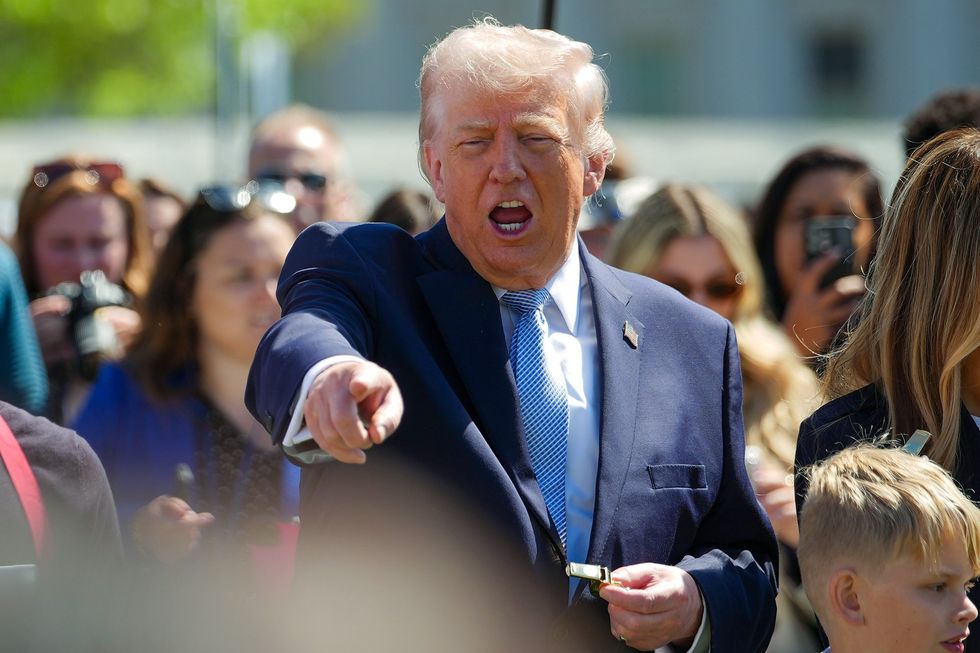
Despite the ceasefire, President Trump will keep American military assets 'in and around Iran'
|GETTY
Kuwait was also subject to Iranian strikes on Wednesday morning.
The US and Iran now appear to be questioning the terms of the agreement, with the Islamic Republic calling Israeli attacks on Lebanon a “grave violation” of the ceasefire.
Iran’s deputy foreign minister, Saeed Khatibzadeh, told the BBC that Iran notified the Oval Office of Tehran's concerns last night.
“You cannot have a cake and eat it at the same time," Mr Khatibzadeh said.
LATEST DEVELOPMENTS
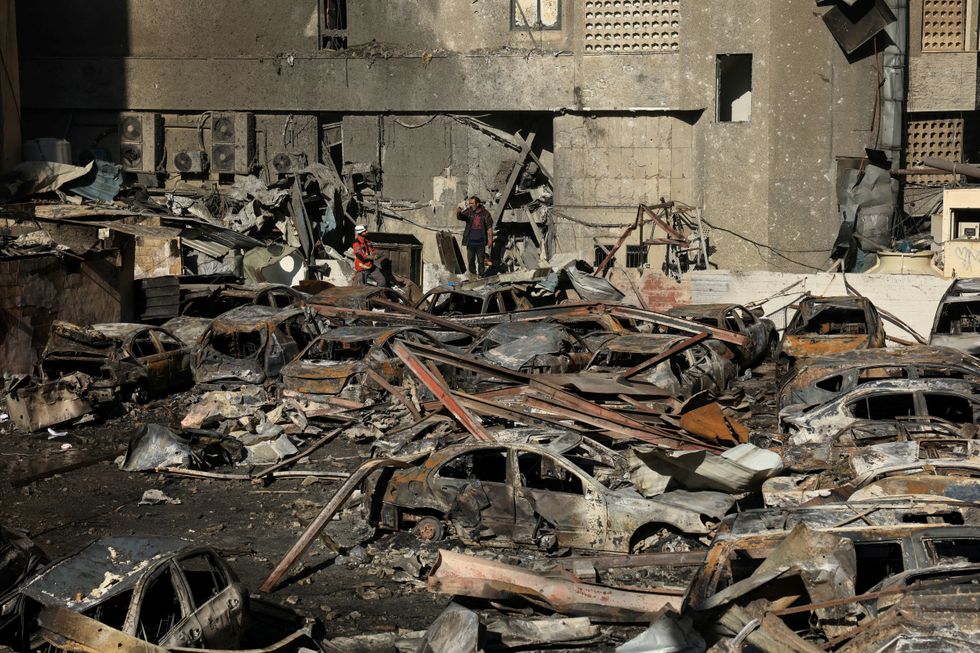
The aftermath of Israeli strikes on Wednesday in Al-Mazraa, Beirut
|REUTERS
He added: “You cannot ask for a ceasefire and then accept terms and conditions, accept all the areas that a ceasefire is applied to, and name Lebanon, exactly Lebanon in that, and then your ally [Israel] just starts a massacre.”
The Iranian official argued the US “must choose” between war or peace, and said that the Islamic Republic was “very much focusing on the wellbeing of the whole Middle East” when questioned on whether Tehran would pull out of negotiations.
He concluded that Iran will only ensure safe passage of vessels through the Strait of Hormuz “after the United States actually withdraws this aggression”.
UK Foreign Secretary Yvette Cooper has weighed in on the ongoing aggression from Israel, saying she is “deeply troubled” by the strikes on Lebanon and urged the country to be part of the ceasefire.
Speaking on Times Radio, she said: “One of the things I do feel very strongly about is we want to see Lebanon included in the ceasefire.
“We want it extended to cover Lebanon, because otherwise that will destabilise the whole region, and also it’s just the right thing to do."
A maritime map shows very little shipping traffic passing through the Strait of Hormuz, despite premature reports yesterday that the critical waterway was opening up.
The ceasefire struck between the US and Iran hinged on the opening up of the shipping lane, as global oil prices spiralled after the strait was blocked on March 2.
Since then, the global price of oil has fluctuated as the ceasefire becomes increasingly delicate.
On Wednesday, the price of oil plummeted by 15 per cent, sitting at just under $92 a barrel.
However, on Thursday, the price rose again by two per cent, to $96.53 a barrel.
Amid fears of spiralling prices, Sir Keir Starmer is currently in the Gulf for talks with the Crown Prince of Saudi Arabia, Mohammed Bin Salman.
The Prime Minister hopes the visit will give "confidence" to allies to pass through the Strait of Hormuz and eventually alleviate pressures exerted on Britons from the ongoing fuel crisis.